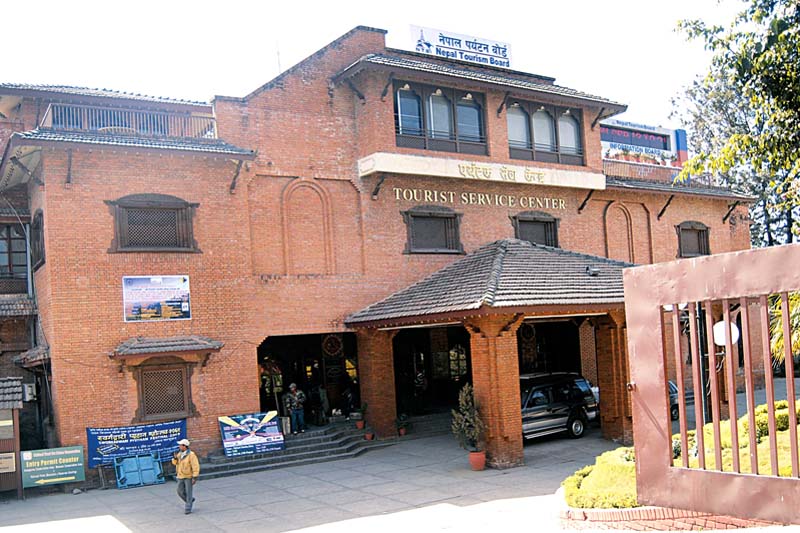
The Nepal Tourism Board (NTB) has issued a comprehensive travel advisory for all tourists entering Nepal through land border points, urging travelers to strictly follow official procedures and safety guidelines to ensure a smooth, safe, and hassle-free travel experience.
The advisory comes amid increasing cross-border movement of tourists, particularly pilgrims and overland travelers visiting Nepal’s major religious and tourism destinations. NTB emphasized that proper documentation, vehicle preparedness, health precautions, and respect for local culture are essential for a safe journey throughout the country.

Mandatory Entry Formalities at Border Points
According to the advisory, all foreign tourists entering Nepal via land borders must secure the required entry permits either online or physically through Nepal’s Customs Department upon arrival at the border. Travelers are required to provide Nepali customs officials with a detailed passenger list, including names, age, gender, duration of stay, and destinations they plan to visit during their time in Nepal. Authorities have also made it mandatory for all vehicles and luggage to undergo security checks before entry.
For Indian nationals, NTB clarified that a visa is not required for entry into Nepal. However, travelers must carry valid identification documents, including either a passport or a voter identification card, which must be presented to Nepali officials at the border.
Vehicle Safety and Road Conditions Require Special Attention
The tourism board has urged travelers entering Nepal with private or commercial vehicles to ensure their vehicles are in excellent mechanical condition throughout the trip. Nepal’s road network, particularly in hilly and mountainous regions, consists of narrow roads with sharp turns and steep terrain. Drivers, especially those operating Indian vehicles in Nepal, are advised to have sufficient driving experience and knowledge of Nepal’s geography, road conditions, and weather patterns before undertaking long-distance travel.
Health Precautions and Financial Regulations for Travelers
NTB has advised tourists to remain cautious about health and emergency preparedness while traveling in Nepal. Although hospitals and health posts are available in urban and city areas, travelers are strongly encouraged to carry first aid kits and ensure they have their regular medications throughout their journey.
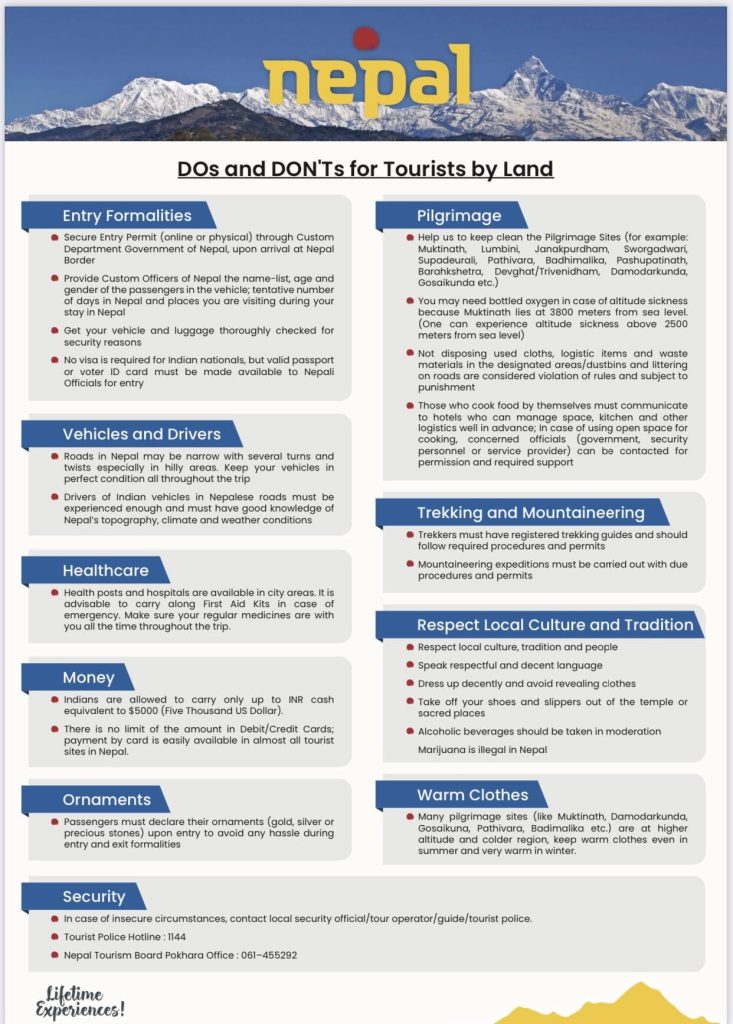
The advisory also highlighted financial regulations for Indian travelers, stating that individuals are allowed to carry cash up to the equivalent of USD 5,000 while entering Nepal. However, there are no restrictions on debit or credit card usage, with card payment facilities widely available at most tourist destinations. Passengers carrying gold, silver, or other valuable ornaments must declare these items upon entry to avoid complications during customs clearance while entering or exiting the country.
Special Guidelines for Pilgrimage and High-Altitude Travel
Nepal receives thousands of religious pilgrims every year visiting sacred destinations such as Muktinath Temple, Lumbini, Pashupatinath Temple, Pathivara Devi Temple, and Gosainkunda Lake. NTB has requested pilgrims to maintain cleanliness at all religious sites and dispose of waste materials responsibly.
Travelers visiting high-altitude destinations like Muktinath, situated at approximately 3,800 meters above sea level, are advised to carry bottled oxygen if necessary and remain aware of altitude sickness symptoms, which can begin above 2,500 meters. Those planning to cook their own food during pilgrimage trips are required to coordinate in advance with hotels or local authorities to arrange suitable cooking spaces and obtain necessary permissions if using open areas.
Trekking, Cultural Respect, and Tourist Safety Remain a Priority
For trekkers and mountaineers, NTB has made it mandatory to hire registered trekking guides and obtain all necessary permits before beginning trekking or expedition activities. The tourism board has also reminded travelers to respect Nepal’s local culture, traditions, and religious practices by dressing modestly, using respectful language, removing footwear before entering temples, and consuming alcohol responsibly.

Authorities also reminded visitors that marijuana remains illegal in Nepal. Since many religious and trekking destinations are located in colder high-altitude regions, tourists have been advised to carry warm clothing even during the summer season. For any emergency or security concerns, travelers can contact local authorities, tour operators, guides, or Nepal’s Tourist Police Hotline at 1144.
Promoting Safe and Responsible Tourism
With Nepal preparing for increased regional tourism movement, the Nepal Tourism Board stated that responsible tourism practices are essential to preserving the country’s natural beauty, cultural heritage, and sacred destinations. The advisory reinforces Nepal’s commitment to providing visitors with safe travel experiences while encouraging sustainable and respectful tourism across the country.