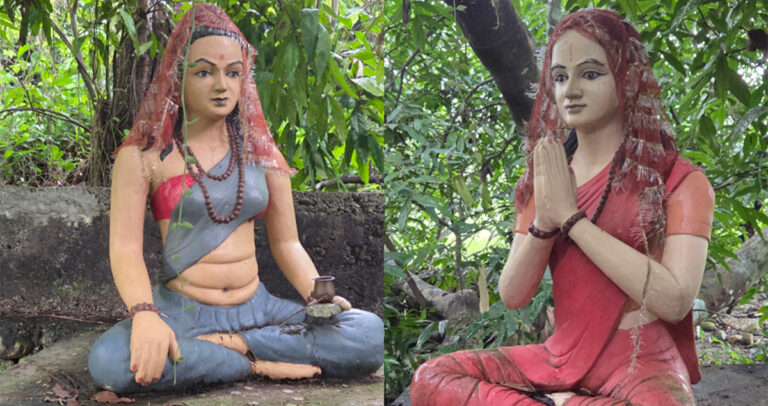
Sita Ashok Vatika in Palase, Raksirang Rural Municipality 3 of Makwanpur is being developed as a distinctive religious and cultural tourism destination, with plans to connect the site’s Ramayana heritage with the area’s natural attractions and local traditions. The site, marked by statues of Sita and Trijata beneath naturally growing Ashoka trees, offers a setting associated with the ancient Ramayana narrative and is being envisioned as a place where visitors can experience both religious significance and the surrounding natural landscape.
Sita And Trijata Statues Add Religious Significance
The statues of Sita and Trijata were constructed through the initiative of the Division Forest Office, Rapti Manahari, with management support from Bharyang Kalika Community Forest and coordination from Raksirang Rural Municipality. The statues were consecrated on July 3, 2023 , in the presence of the then Bagmati Province Chief Yadav Chandra Sharma. Flowers, garlands, sacred offerings and other religious materials received from Janaki Mandir in Janakpurdham, along with holy water brought from the Dudhmatī River, were used during the consecration ceremony, adding to the site’s religious importance.

The presence of naturally growing Ashoka trees has further strengthened the site’s connection with the Ramayana tradition. According to Hem Bahadur Thapa, chief of the Division Forest Office, Rapti Manahari, there is a plan to preserve the existing Ashoka trees and plant additional saplings to gradually develop the area as an Ashoka Vatika. The office is also working toward improving the surrounding area and infrastructure so that the site can function as an organized religious tourism destination rather than remaining only a place of religious interest.
Trijata’s Role Strengthens The Ramayana Connection
The site has been named Sita Ashok Vatika, and the statues of Sita and Trijata are regarded by local residents as a rare representation with strong religious and cultural significance. Although some religious figures initially questioned the placement of a demoness alongside Sita, local residents have emphasized Trijata’s compassionate role in the Ramayana. Despite belonging to Ravana’s side, Trijata is described in religious traditions as having supported Sita during her captivity and provided her with encouragement at a time of great distress.
According to the traditional accounts, after Ravana abducted Sita and took her to Lanka, Trijata was assigned to look after her. Rather than allowing Sita to lose hope, Trijata reportedly reassured her by sharing positive signs about Rama and Lakshmana’s advancing victory and the possibility of Sita being reunited with Rama. The statues were created by Harka Bahadur Blon of Sukoura, Makwanpur Gadhi Rural Municipality 7, who spent approximately two and a half months completing the work.
Raksirang Plans A Wider Tourism Circuit
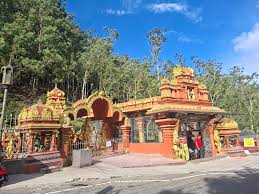
Raksirang Rural Municipality is looking beyond the development of Sita Ashok Vatika alone and has adopted a broader vision of combining religion, nature and local culture. According to Ward Chairperson Uttam Waiba of Raksirang,3, the long term objective is to establish the area as an important tourism destination by connecting Sita Ashok Vatika with attractions such as Jalpati Waterfall, Chamere Cave and Bharyang Kalika Temple.
Bharyang Kalika is already an important religious attraction in the area. A large annual fair is held there on Mangsir Purnima, drawing devotees and visitors from different parts of the country. According to Waiba, people travel from as far as Biratnagar in eastern Nepal to Butwal in western Nepal to participate in the festival, with around 30,000 visitors reportedly attending on the occasion. Many devotees visit the temple with the belief that worshipping there can help fulfil their wishes, giving the site an established religious tourism base that could complement the emerging Sita Ashok Vatika attraction.
Ram And Ravana Themed Development Planned
The local government has also proposed a larger Ramayana themed tourism project to make the area more visually and culturally engaging for visitors. A long-term plan is being prepared to construct a representation of Ravana’s palace within the Sita Ashok Vatika complex, recreating the setting in which Sita is traditionally believed to have been held after her abduction. On the opposite side, at Pachbhaiya, authorities envision constructing Rama’s palace along with a large statue of Hanuman, creating a connected attraction based on key characters and episodes from the Ramayana.
A Detailed Project Report (DPR) has already been prepared for the proposed development, with the estimated cost placed at around NPR 150 million (NPR 15 crore). Ward Chairperson Waiba said the broader objective is to develop the area into a destination where visitors travelling through Bagmati Province can spend at least a full day exploring its religious, cultural and natural attractions. He also expressed expectations that the local, provincial and federal governments would provide the necessary support to implement the proposed development.

Linking Nature, Culture And Religious Tourism
Local stakeholders believe the area’s potential extends beyond the Ramayana connection. Journalist Ram Kumar Elan said that Sita Ashok Vatika, Jalpati Waterfall and the Chepang Museum, among other attractions, could be developed together as a significant tourism destination. Such an integrated approach could allow visitors to experience the area’s religious heritage alongside its natural landscape and the cultural identity of the local community.
With coordinated investment in infrastructure, accessibility and visitor facilities, stakeholders believe Raksirang could attract both domestic tourists and visitors from neighbouring India. In particular, the area could be promoted as a stop for Indian tourists travelling to Hetauda, encouraging them to extend their visit and explore the religious and cultural attractions of Raksirang. The planned development therefore represents an effort not only to preserve the area’s religious heritage but also to create a sustainable tourism destination capable of generating wider economic opportunities for the local community.