A new wave of conservation efforts has begun in Dhaulagiri Rural Municipality, following the discovery of the rare Chir Kalij (Lophura leucomelanos) bird in wards 3 and 4, Dar and Mudi. The finding was confirmed through a detailed study conducted by the Bird Conservation Association of Nepal, which identified seven pairs of Chir Kalij in Dar and three pairs in Mudi.
Researcher Birat Rajak, a member of the study team, stated that after the discovery a year ago, the association has launched awareness programs at both the community and school levels to promote the protection of the rare species. “Since Chir Kalij is a rare and threatened bird, we have started initiatives to increase its population and awareness about its ecological importance,” Rajak said.

Local Awareness and Education Initiatives
To promote conservation at the grassroots, students from Dhaulagiri Secondary School in Mun and Butti Vikas of Mudi have been oriented about the Chir Kalij’s characteristics and its conservation needs. Quiz competitions were also organized to engage young learners in wildlife awareness.
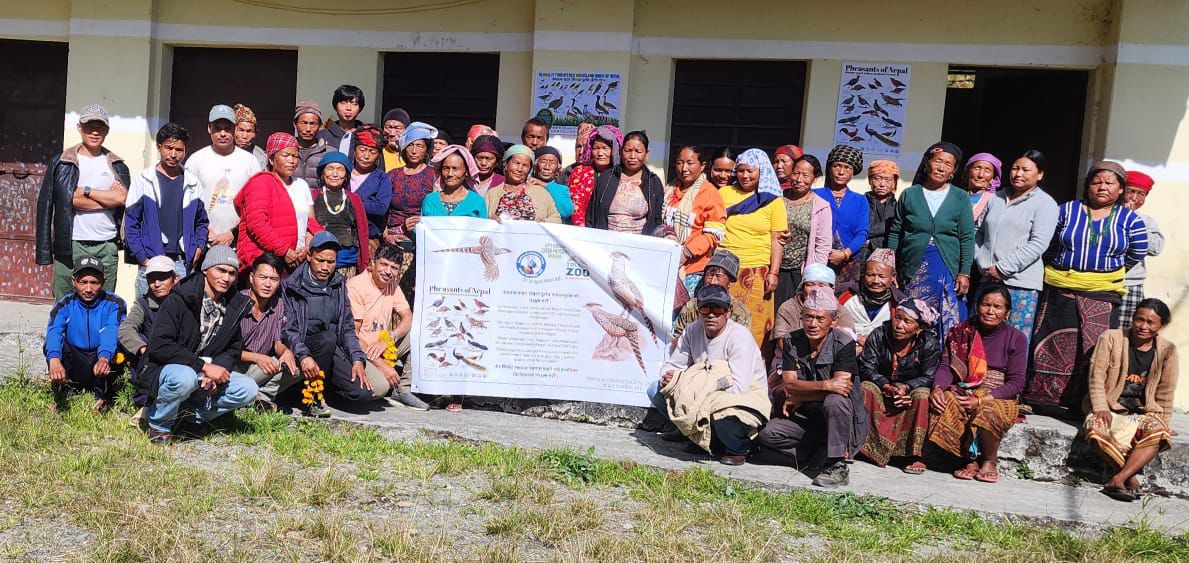
Similarly, members of Ranikhola and Darkhola Community Forest User Groups participated in a conservation education training program held in Dar. The training focused on sustainable forest practices, preventing poaching, and creating safe habitats for the species.
During the program, Chairperson of the Biodiversity Conservation Society, Laxman Paudel, and ornithologists Keshav Chokhal and Birat Rajak shared insights about the Chir Kalij’s identification, ecological role, and conservation urgency.
Threats to Chir Kalij Survival
Despite its rediscovery, the Chir Kalij faces multiple threats, including illegal hunting, uncontrolled forest fires, and climate change. Researcher Keshav Chokhal emphasized that these factors have led to a decline in the species population.
He explained, “In addition to poaching, egg collection from nests, trapping, and taking chicks home for rearing have become serious issues. Forest fires that occur during the breeding season, when the bird lays and hatches eggs, pose one of the biggest risks.”
The Chir Kalij’s population is estimated to be fewer than one thousand across Nepal, according to the Bird Conservation Association’s latest study. The bird was officially listed as an endangered species under Nepal’s National Parks and Wildlife Conservation Act, 1972 (2029 BS).
Conservation Efforts Expand Across Regions
Over the past five years, the Bird Conservation Association, with support from Tuleidos, has been conducting continuous studies and conservation projects in Dhaulagiri Municipality and the Kaligandaki Basin of Mustang’s Ghansa area.
In a recent field study, researchers recorded 18 pairs of Chir Kalij in the Kaligandaki Basin, highlighting the need for immediate protective action. Conservation groups have been monitoring habitat patterns, promoting forest fire prevention, and engaging locals in species protection.
Importance of Protecting Chir Kalij
According to Chairperson Laxman Paudel, conserving the Chir Kalij will not only help preserve biodiversity and maintain environmental balance but also support rural economies through eco-tourism. “By protecting this rare species, we are also protecting our ecosystem and creating opportunities for sustainable tourism that can benefit local communities,” Paudel said.
The bird typically inhabits areas between 1,400 and 3,600 meters above sea level, preferring rugged slopes rather than lowland regions. While it looks similar to the common Kalij, experts note several differences, the male Chir Kalij has a longer tail, red eyes, and black plumage with white speckles, whereas the female is smaller with a shorter tail.
Its name, Chir Kalij, derives from its unique call, a sharp “chir-chir” sound heard twice daily, before sunrise and after sunset. The species nests on steep cliffs, laying between 7 and 15 eggs during the Baisakh to Ashadh (April to July) breeding season.

Endangered Yet Symbolic of Himalayan Biodiversity
The Chir Kalij’s habitat extends beyond protected areas like the Annapurna Conservation Area, Dhorpatan Hunting Reserve, and Rara National Park, reaching into parts of Parbat, Myagdi, Baglung, Karnali, and Far-Western Nepal.
Conservationists believe that strengthening community-based protection and curbing illegal hunting are key to preventing the species from extinction. Nepal’s efforts to preserve the Chir Kalij reflect a broader goal to protect Himalayan biodiversity and promote harmony between humans and nature.