Ratnechaur, located in Beni Municipality–1 of Myagdi district, has recently emerged as a favored destination for domestic tourists, transforming from a quiet agrarian settlement into a vibrant rural tourism hub. Once known mainly for its red soil and dependence on traditional agriculture, Ratnechaur is now gaining recognition as a scenic tourist village, attracting a growing number of visitors every year.
Seasonal Attraction Draws Growing Crowds
From Kartik to Magh, Ratnechaur witnesses a steady influx of both domestic and occasional international tourists. During Kartik and Mangsir, visitors are drawn to the expansive fields of ripened paddy swaying gently in the breeze, set against the stunning backdrop of the Dhaulagiri Himalayan range. The panoramic views of rural landscapes from Myagdi, Baglung, and Parbat further enhance the experience. As winter progresses into Poush and Magh, the fields turn golden with blooming mustard flowers, making the area an ideal spot for picnics, leisure walks, and nature photography.
Rise of Social Media Tourism
Situated between the district headquarters of Beni and Baglung, Ratnechaur has become especially popular among young visitors eager to create TikTok videos and travel reels. Resident Shankar Mahat shared that tourist activity has increased significantly over the past four years. “This place used to be deserted until a few years ago,” he said. “Now, up to 2,000 visitors arrive daily. The increased footfall has boosted local businesses and economic activities.”

Natural Beauty and Scenic Landscapes
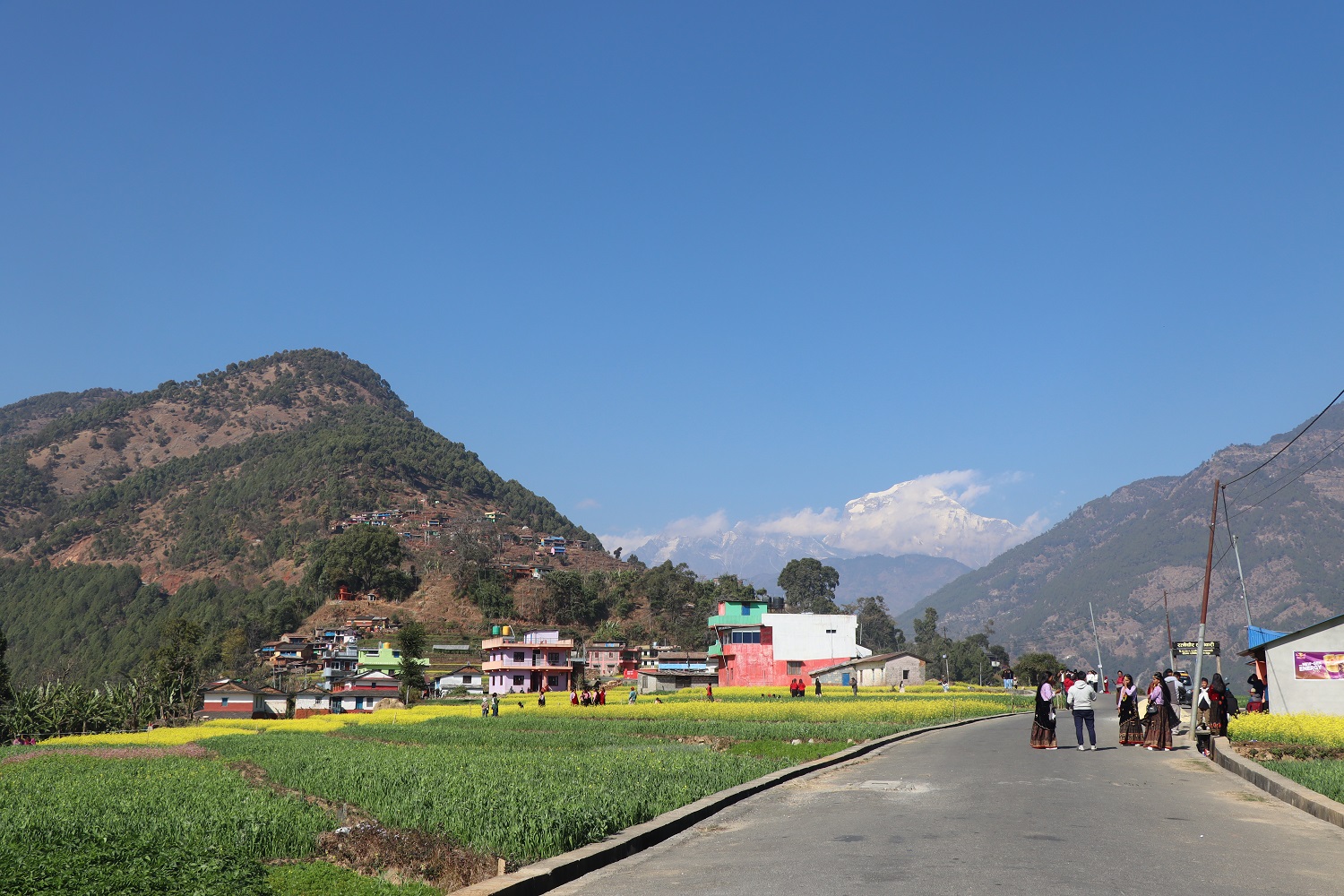
Visitors are captivated by the contrasting scenery that Ratnechaur offers. To the north, the snow-capped Himalayan peaks shimmer like silver, while to the east, vast flatlands are covered with bright yellow mustard flowers. The smooth blacktopped Beni–Baglung road running through the middle of the fields has become an added attraction, offering picturesque views and easy accessibility.
Currently, Ratnechaur is adorned with blooming mustard fields that have transformed the village into a vibrant yellow landscape. According to visitor Sagar Bhattarai from Kushma, the combination of the Dhaulagiri range, green farmlands, and golden mustard blossoms has further enhanced the area’s natural charm.
View of the Seventh-Highest Mountain
Ratnechaur offers a clear view of Mount Dhaulagiri, the world’s seventh-highest peak, standing at 8,167 meters. The sight of the towering Himalayan giant rising above flat mustard fields and smooth asphalt roads has become a unique visual identity for the village. Additionally, scenes of bees and butterflies hovering over mustard flowers add to the liveliness of the rural environment.
Visitors can be seen relaxing along the roadside and field edges, enjoying the scenery. The interspersed greenery of growing wheat amid yellow mustard fields has also drawn widespread attention. Youths and families alike are busy filming videos, dancing, and capturing moments for social media.
Opportunities and Challenges
According to local youth Kushal Sharma, the number of visitors increases significantly on Fridays, Saturdays, and public holidays. However, locals have expressed concerns over damage to mustard and wheat crops caused by visitors entering the fields. Residents have urged tourists to avoid stepping into cultivated land and to respect agricultural spaces while enjoying the scenery.
Infrastructure and Cultural Appeal
Another attraction for visitors is the 388-meter-long suspension bridge connecting Ratnechaur with Kudule (Fedi) of Baglung. Ward Chairperson Tek Bahadur Thapa noted that the bridge, along with lush greenery, smiling Himalayan views, and golden fields, has contributed to tourism promotion and supported local trade and livelihoods.
To promote Ratnechaur and preserve local culture, a one-day grand cultural program is scheduled for Magh 16. Local leader Netra Mahat informed that the event will be organized with support from Ratnechaur residents living both within Nepal and abroad, featuring renowned folk singers and performers.

Traditional Attire Creating Local Income
Tourists visiting Ratnechaur often wear the traditional attire of various ethnic groups, including Magar, Chhetri, Thakali, and Brahmin, to take photos and videos. This trend has created new income opportunities for locals. Businessman Ram Krishna Pun shared that he rents out traditional dresses for NPR 200 to 350 per hour. “I have 15 pairs of Magar dresses, and 10 to 15 people rent them daily,” he said.
Women’s cooperatives, restaurants, and shops in Ratnechaur have also begun renting ethnic costumes. Restaurant operator Thapa additionally offers photography services, charging NPR 20 per photo. Visitor Rashmi Rana from Baglung described her experience as memorable, saying that photos taken in traditional attire amid mustard and wheat fields with Mount Dhaulagiri in the background felt like a living canvas.
With its blend of natural beauty, agriculture-based tourism, cultural experiences, and growing infrastructure, Ratnechaur is steadily establishing itself as a promising rural tourism destination in western Nepal.