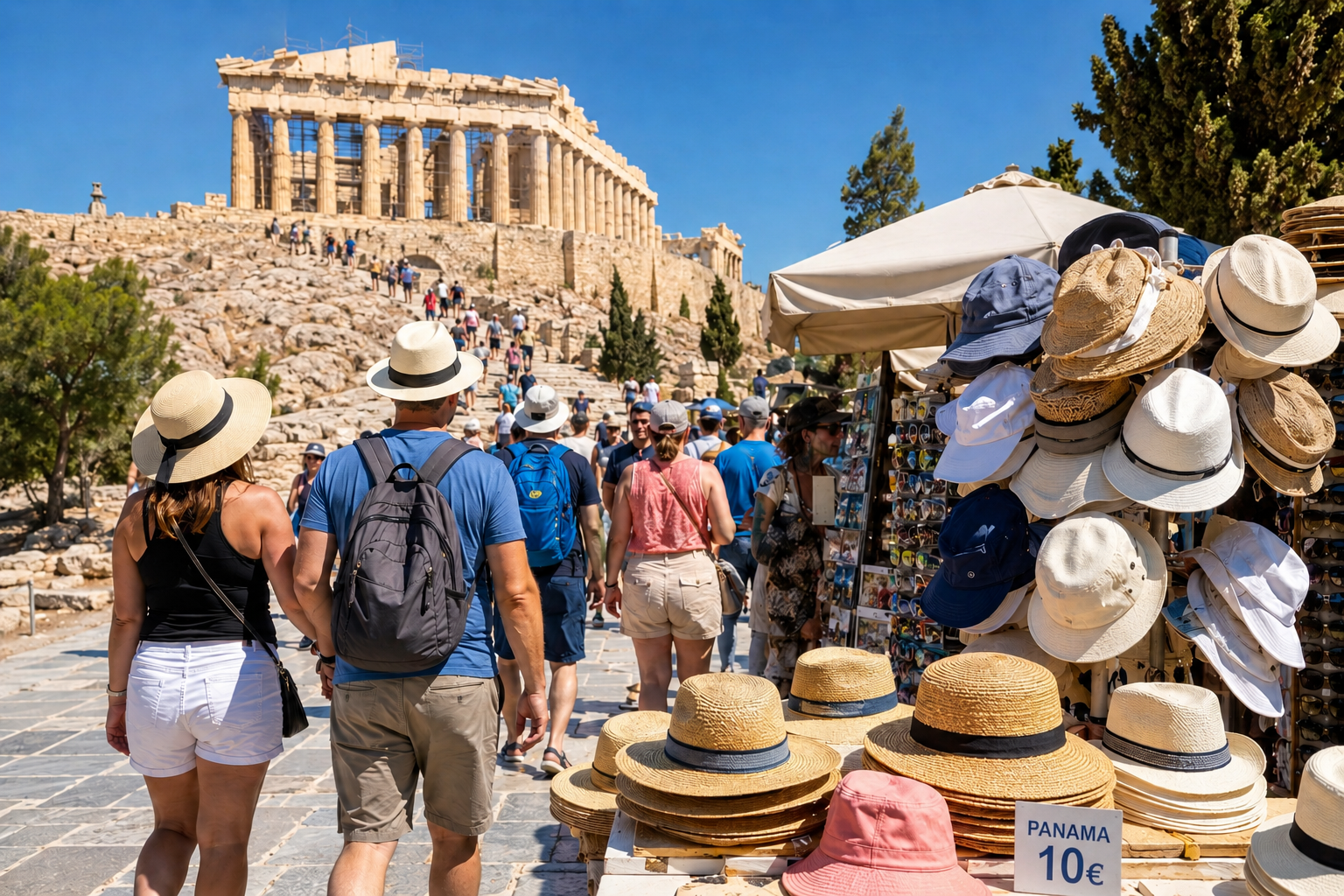
Rising temperatures in Greece’s capital, Athens, are changing the way tourists prepare for sightseeing, with hats becoming an increasingly popular and practical item among visitors exploring the city’s archaeological attractions. As intense summer sunshine continues across Athens, tourists heading toward the Acropolis are increasingly turning to hats to protect themselves from prolonged exposure to the sun. Straw hats, Panama hats, baseball caps and bucket hats are now prominently displayed at shops and kiosks along the uphill route to the historic site.
Tourists Seek Protection From Intense Sun
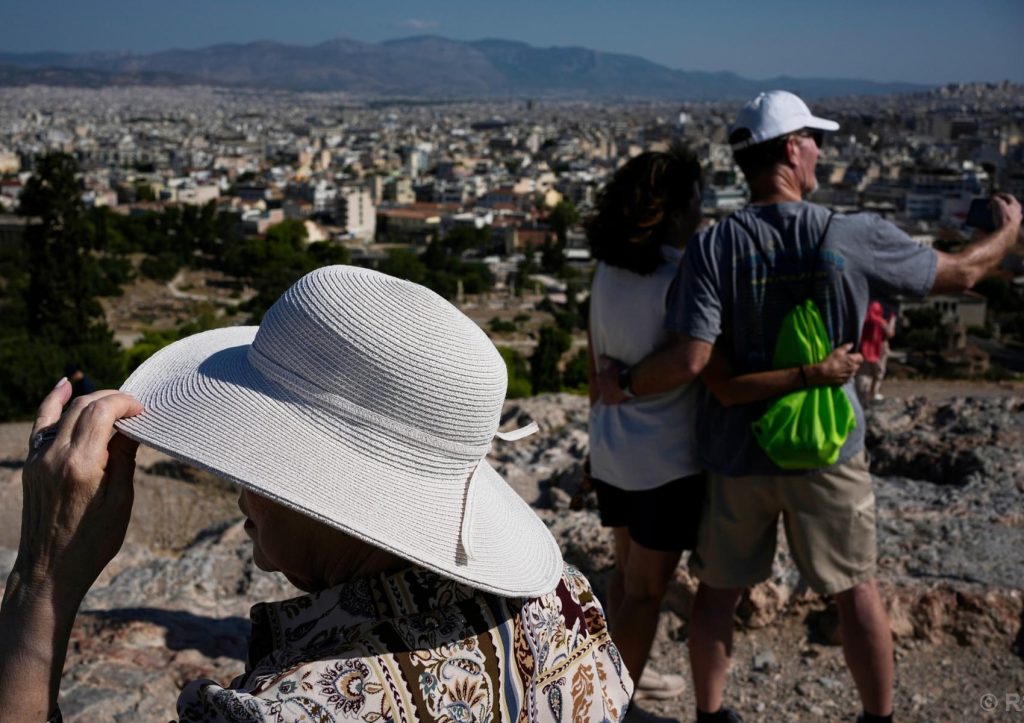
The growing demand for hats reflects the challenges tourists face while visiting Athens during periods of extreme heat. Visitors exploring the Acropolis often spend several hours outdoors, where shade can be limited, and temperatures can rise above 30 degrees Celsius. With much of the archaeological site exposed to direct sunlight, tourists are increasingly treating sun protection as an essential part of their sightseeing preparation. Australian visitor Jack Yosif said the intense sunshine had already affected his face and that wearing a hat had quickly become a normal part of his daily activities in Athens. He noted that tourists appear to be increasingly aware of the need to protect themselves from the sun while sightseeing.

Acropolis Continues to Attract Millions
Despite the challenging summer conditions, Athens remains one of Europe’s major cultural and tourism destinations. The Acropolis attracted approximately 4.6 million visitors in 2025, demonstrating the continued popularity of Greece’s most famous archaeological landmark. The large number of visitors, combined with increasingly hot weather, has made heat protection an important consideration for tourists spending extended periods at outdoor heritage sites.
Greece Welcomes Millions of Visitors
The growing demand for sun-protection products comes as Greece continues to experience strong tourist arrivals. Around 38 million tourists visited Greece last year, according to the information provided in the report. The continued flow of visitors despite periods of extreme heat has prompted health professionals to encourage tourists to take greater precautions. Visitors are being advised to remain hydrated, use sunscreen, seek shade whenever possible and avoid prolonged exposure to the strongest afternoon sunlight.
Red Cross Volunteers Assist Tourists
Health and safety support is also being provided around the Acropolis. Red Cross volunteers have been assisting visitors by distributing sunscreen, drinking water, informational leaflets and hats. Their efforts are aimed at helping tourists cope with the heat and understand the risks associated with prolonged exposure to high temperatures. Health professionals have particularly warned visitors about excessive exposure to ultraviolet radiation and heatstroke, both of which can pose serious risks during hot summer days.
Hat Sales Rise Around Tourist Areas
The increase in demand is also being felt by businesses selling hats in central Athens. Konstantinos Malios, who operates a kiosk at Syntagma Square, said hat sales have increased in recent years as more tourists seek protection from the intense sun. According to him, prices for commonly available hats range from approximately €6 to €20, making them an affordable purchase for visitors who may not have brought adequate sun protection with them. The wide range of styles also allows tourists to combine practical protection with fashion while exploring the city.

Traditional Straw Hats Find a New Market
The trend has also benefited local hat makers producing more traditional designs. Hatmaker Lisa Sarigianidou produces traditional-style straw hats, with prices starting at around €50. Specially designed pieces can cost more than €100, depending on their style and craftsmanship. She said people’s attitudes toward hats have changed, with visitors increasingly viewing them not merely as fashion accessories but as useful protection against the sun.
Heat Is Becoming Part of the Tourism Experience
The situation in Athens highlights a broader challenge facing destinations that attract large numbers of visitors during increasingly hot summer periods. For tourists visiting archaeological and cultural sites, especially those with limited shade, simple precautions such as wearing a hat, applying sunscreen, carrying water and planning outdoor activities around the hottest hours can make sightseeing safer and more comfortable. For Athens, the growing popularity of hats is therefore more than a retail trend. It reflects how tourists and the tourism industry are adapting to hotter conditions while the city continues to welcome millions of visitors to its historic attractions.