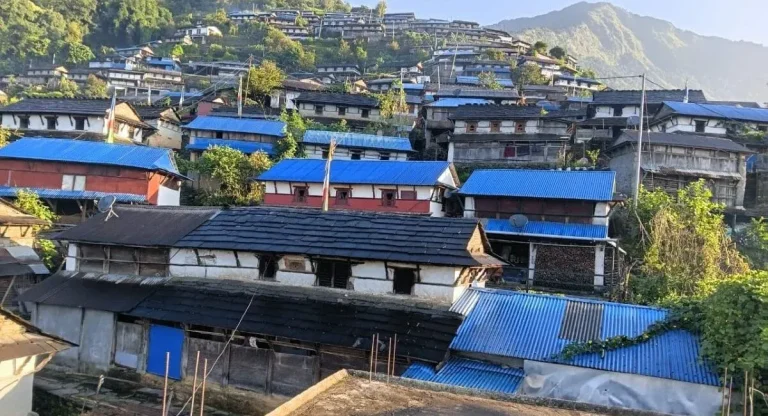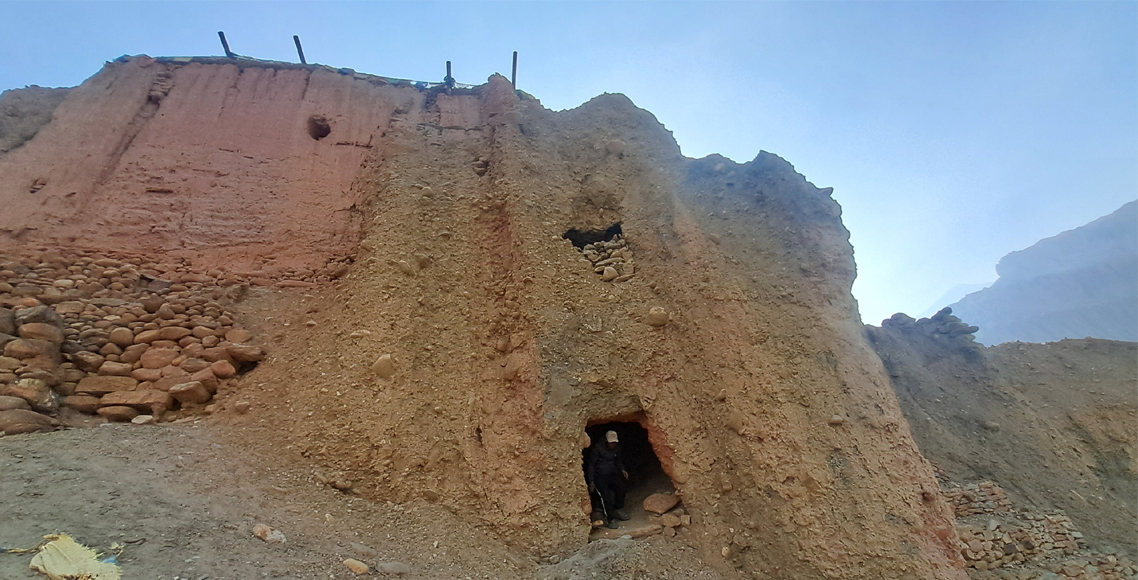
A remarkable ancient monastery carved into a red cliff in Chhusang, Baragung Muktichhetra Rural Municipality–3, has drawn attention for its historical and archaeological significance. The site, known as Minchi Lhwang Monastery, is believed to be more than 1,200 years old based on historical analysis of the statues preserved inside the cave structure. Located along the Jomsom–Kagbeni–Korala road, the monastery sits inside a naturally formed cave on a steep hillside, making it both a sacred and geographically fragile heritage site.

Six Local Families Responsible for Daily Worship
The monastery is traditionally owned and managed by six families from Chhusang village, who take turns performing daily evening prayers and lighting butter lamps inside the cave shrine. This community-based stewardship has ensured the continuity of religious practices for generations.
Resident Shyam Gurung explains that the cave was carved by ancestors, though its exact age remains uncertain to the current generation. Local oral history suggests that the ancestors migrated from Manang, bringing their deities with them and establishing the sacred site.
Historical Statues and Ancient Artwork Inside the Cave
The monastery houses significant religious artifacts across multiple levels. The upper section contains clay Buddha statues believed to be over 800 years old, while a stone statue of Green Tara placed in a framed setting is estimated to be around 1,200 years old.
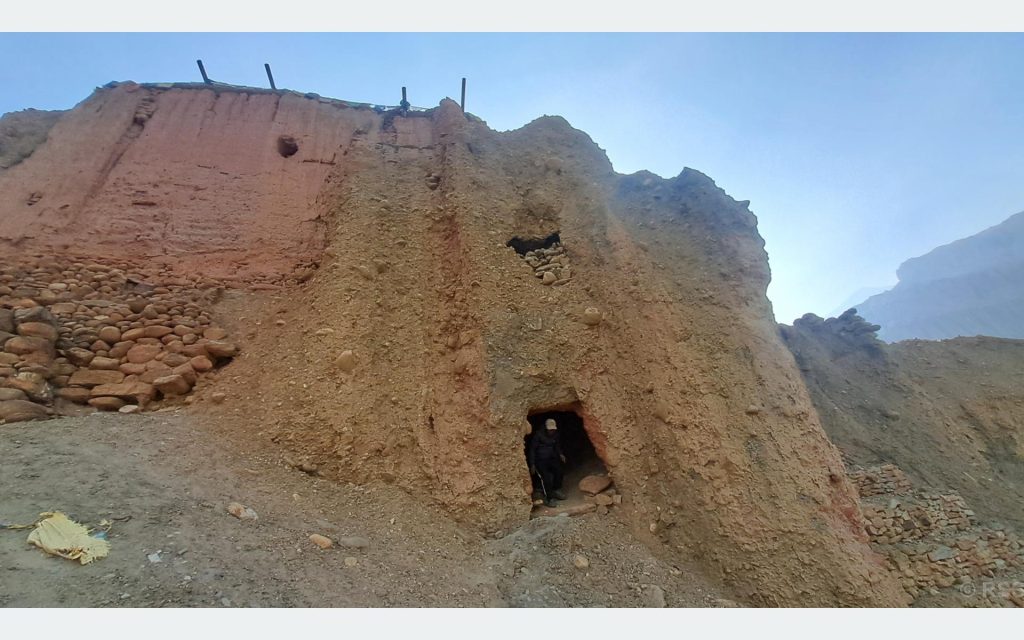
Altogether, the cave contains more than a dozen statues representing different forms of Buddha. The interior walls and ceilings also feature ancient paintings made with earth-toned natural pigments, which blend seamlessly with the surrounding rock structure. A donation box has been placed for visitors, and the collected funds are used for maintenance work, including clearing snow from the cave roof during the winter months.
Fragile Cliffside Location Raises Preservation Concerns
The monastery is located on a steep 100-meter-high earthen cliff, making it vulnerable to erosion and landslides. Gurung has expressed concern over the long-term stability of the site and has urged authorities to step in for its protection and conservation. Despite these risks, the structure remains intact, continuing to serve as both a place of worship and a historical monument.
International Interest and Need for Conservation Support
The site includes a circumambulation path and is accessible via two wooden ladders leading to the upper levels of the cave. Researchers from different countries have previously visited the monastery to study its architecture and historical significance. Some have also provided technical and financial assistance for minor restoration efforts. Gurung emphasized that further government intervention is necessary as the structure continues to age and faces environmental threats.

Potential to Become a Cultural Tourism Destination
Although currently little known to the wider public, the monastery is located just a five-minute walk from the main road, making it easily accessible for visitors. Locals believe that with proper promotion and preservation, the site could become a major cultural tourism destination in the Mustang region. Gurung added that the monastery not only serves as an ancestral place of worship but also holds strong potential to generate income and support the local economy through tourism development, if appropriately conserved and showcased.