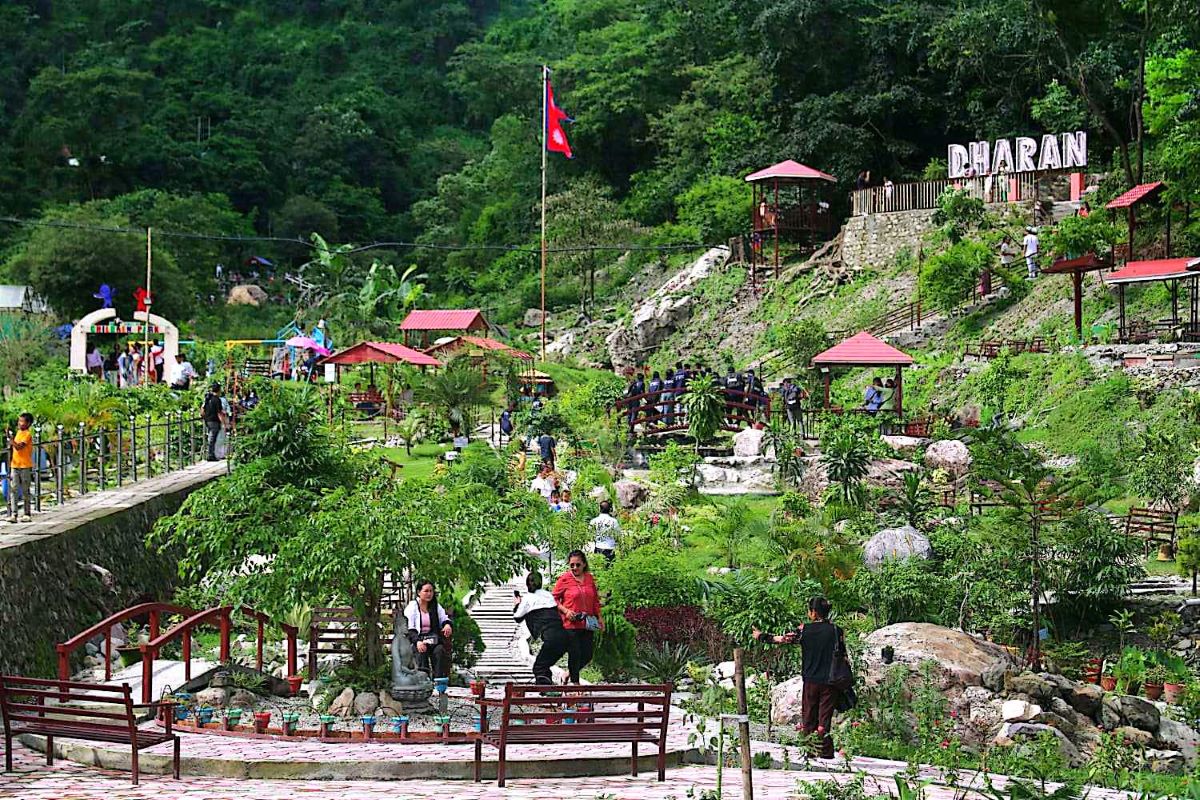
Shram Sanskriti Park has rapidly emerged as one of the most successful examples of community-based tourism development in Nepal, transforming from a locally driven public initiative into one of the most visited destinations in Dharan. Situated along the scenic banks of the Sardukhardu River, near the Khahare Khola area between Dharan Sub-Metropolitan City wards 13 and 20, the park has become an increasingly popular recreational destination attracting thousands of domestic tourists, especially during weekends and public holidays.
What makes the park particularly remarkable is not just its growing popularity, but the fact that it was built primarily through community volunteer labour, local donations, and municipal budget allocation, creating a rare example of participatory tourism development where ordinary citizens themselves became builders of a tourism asset that now contributes directly to local economic growth.
Over a relatively short period, the park has evolved beyond being simply a public recreational area and is now widely recognized as one of Dharan’s strongest emerging tourism destinations, proving that local governments and communities can create sustainable tourism products without relying solely on expensive private investments or large-scale infrastructure development.
Park Generates More Than Rs 11.9 Million Revenue in a Single Fiscal Year
According to the latest audit report published by Dharan Sub-Metropolitan City, Shram Sanskriti Park has generated an impressive Rs 11.924 million in revenue up to June 22 of the current fiscal year, highlighting its growing importance not only as a tourism attraction but also as a valuable economic asset for the municipality. The financial report further shows that approximately Rs 4.4 million has been spent on operating and managing the park during the same period, meaning the park has already begun making a strong positive financial contribution to local government revenue.

For a public tourism project built primarily through community participation, the revenue figures represent a significant achievement and demonstrate the Shram Sanskriti Park’s rapidly increasing popularity among visitors from Dharan and neighboring districts. Local officials have described the revenue performance as one of the strongest examples in recent years, showing how properly managed public tourism infrastructure can become financially sustainable while simultaneously improving urban recreational spaces. The earnings generated by the park have strengthened confidence that community-driven tourism projects can create measurable economic returns when supported by proper management and consistent visitor interest.
Unique History Rooted in Community Labour and Collective Public Participation
The story of Shram Sanskriti Park is deeply connected to the spirit of collective community participation, making it very different from conventional tourism infrastructure projects often funded entirely by governments or private investors. The park was developed through a powerful combination of Shramdan (voluntary physical labour), local citizen participation, donor contributions, and budget support from Dharan Sub-Metropolitan City. Residents from the surrounding communities physically participated in construction work, contributed resources, and collectively helped transform the riverside area into a modern recreational destination.
Unlike traditional top-down development models, the project grew from grassroots-level public involvement where local citizens did not merely act as beneficiaries but became direct contributors in building the attraction itself. This unique development process has created a strong emotional connection between residents and the park, turning it into a symbol of community ownership, civic responsibility, and collective achievement. Today, visitors entering the Shram Sanskriti Park are not simply seeing another landscaped public area, but a living example of how ordinary citizens helped create a destination that now contributes both economically and socially to the identity of Dharan city.
Former Mayor Harka Sampang Played Central Role in Park’s Creation
A major driving force behind the creation of Shram Sanskriti Park was former Dharan Mayor Harka Sampang, who played a fundamental and highly visible role in conceptualizing and leading the project during his tenure. Harka Sampang envisioned the park as a landmark project built entirely around the principle of “Shramdan,” the dignity of labour and collective community effort. Rather than depending exclusively on large government budgets or private contractors, he promoted a model in which citizens themselves actively participated in building public infrastructure through voluntary labour contribution. Unlike many political leaders who oversee projects from administrative offices, Harka Sampang became directly involved in physical construction activities, personally working alongside local volunteers and supervising labour efforts on-site.
His leadership style attracted widespread public attention because he encouraged grassroots participation while mobilizing local communities to contribute not just financially, but physically toward creating something beneficial for the city’s future. The project soon became one of his signature development initiatives and has since evolved into one of Dharan’s most visible examples of citizen-led development. Today, many residents credit Harka Sampang’s unconventional but community-centered leadership for transforming an ordinary riverside area into one of eastern Nepal’s fastest-growing tourism destinations.
Domestic Tourism Driving Strong Visitor Growth Momentum
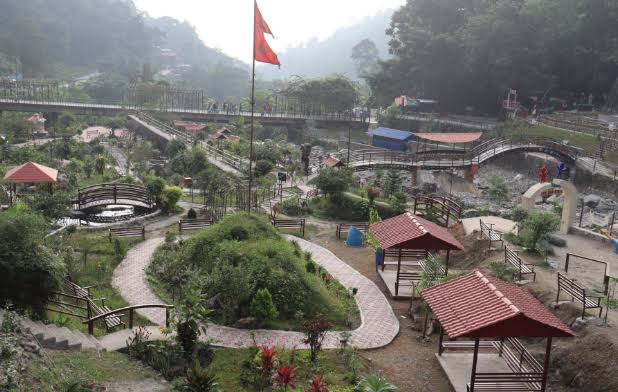
One of the biggest factors behind the success of the park has been the rapidly growing number of domestic visitors. The park has become especially popular among families, youth groups, students, and short-distance travelers seeking affordable recreational experiences within eastern Nepal. Visitors from Dharan itself, as well as nearby districts, frequently visit the destination for family outings, casual relaxation, photography, walking, sightseeing, and social gatherings.
Its attractive riverside setting, well-maintained green environment, artistic design structures, flower gardens, walking spaces, and peaceful atmosphere have turned the Shram Sanskriti Park into one of the most preferred weekend leisure destinations in the region. Domestic tourism has become particularly important because it provides consistent visitor flow without depending solely on international tourist arrivals, making the local tourism economy more resilient and sustainable. As visitor numbers continue increasing, the park is quickly becoming a central pillar in Dharan’s expanding urban tourism landscape.
Artistic Design and Natural Beauty Create Strong Visitor Appeal
Located in Dharan Ward 13, the Shram Sanskriti Park has gained widespread praise for its artistic design and visually attractive landscape development. Visitors are often drawn by the park’s vibrant floral arrangements, creatively designed structures, riverside scenery, and peaceful natural surroundings. The integration of artistic elements with natural beauty has helped create a highly photogenic destination that appeals strongly to younger travelers who actively seek visually attractive, social media-friendly travel experiences.
The scenic location along the Khahare Khola riverbank further enhances the destination’s attractiveness by providing visitors with an environment that combines urban accessibility with natural tranquility. This combination of artistic creativity and natural beauty has played a major role in the park’s rapidly growing popularity among both domestic tourists and an increasing number of international visitors exploring eastern Nepal.
Dharan Strengthens Position as Eastern Nepal Tourism Hub
Dharan has long served as one of eastern Nepal’s major urban centers and gateway destinations, known for its cultural diversity, religious landmarks, hill access routes, educational institutions, and growing tourism potential. The emergence of Shram Sanskriti Park has significantly strengthened Dharan’s tourism profile by adding a completely new recreational attraction to the city’s existing tourism portfolio.
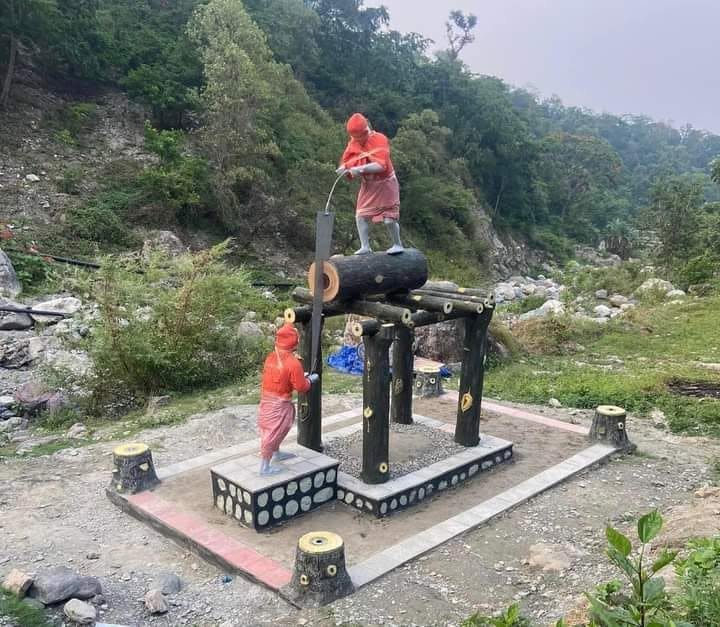
Until recently, Dharan’s tourism identity relied heavily on religious sites, nearby hill destinations, marketplaces, and transit-based tourism connected to eastern Nepal’s mountain regions. The growing success of the Shram Sanskriti Park demonstrates that the city is now capable of creating entirely new tourism products rather than relying solely on traditional attractions. Municipal authorities have increasingly prioritized tourism development as part of Dharan’s broader economic development strategy, and the park’s financial success has provided a practical example that this strategy can deliver real economic results.
Local Businesses Benefiting from Rising Tourist Footfall
The rapid growth of the Shram Sanskriti Park is also creating wider economic benefits beyond municipal revenue collection. As visitor numbers rise, local businesses surrounding the park area are experiencing increased demand for services including food stalls, tea shops, snack vendors, transportation providers, parking facilities, small retailers, and informal hospitality services.
Weekend crowds visiting the park generate significant economic activity as tourists spend money before, during, and after their visits. The revenue collected directly by the municipality represents only part of the Shram Sanskriti Park’s total economic impact. The broader value lies in the surrounding local economy that benefits from growing visitor movement. If managed properly, Shram Sanskriti Park has the potential to become an important economic engine supporting small-scale entrepreneurship and local household incomes in Dharan.
Community Ownership Offers Powerful Model for Sustainable Tourism Development
One of the most important long-term strengths of the park lies in its strong community ownership model. Because residents physically participated in building the destination, they naturally feel responsible for protecting, maintaining, and promoting it. This creates a much stronger foundation for long-term sustainability compared with tourism projects where communities remain disconnected from development processes.
In many tourism destinations, residents feel excluded from planning decisions. However, the opposite has happened at Shram Sanskriti Park, where the Shram Sanskriti Park’s identity itself is built around labour, participation, and local pride. This development model offers an important lesson for municipalities across Nepal: tourism infrastructure becomes more meaningful and sustainable when communities are treated not merely as beneficiaries, but as builders and stakeholders. The success of Dharan’s community-built park could serve as a blueprint for other local governments seeking innovative and inclusive tourism development models.

Future Growth Depends on Better Management and Infrastructure Expansion
Despite its success, growing visitor numbers now bring new management responsibilities for Dharan municipality. As the park continues attracting larger crowds, authorities will need to strengthen cleanliness management, waste disposal systems, environmental protection measures, crowd control, parking management, visitor safety systems, public toilets, signage, and overall maintenance standards.
Public tourism destinations can quickly lose popularity if visitor experience begins deteriorating because of overcrowding or poor maintenance. Municipal authorities will therefore need to reinvest part of the park’s growing revenue into improving facilities while maintaining transparency regarding financial management. Given that the park was built through public labour contribution and community trust, long-term management accountability will remain extremely important. If managed effectively, Shram Sanskriti Park could evolve from simply being a weekend recreational attraction into one of Nepal’s strongest examples of successful community-based tourism development.
A New Tourism Model for Nepal’s Municipalities
The success of Shram Sanskriti Park represents something much bigger than the success of a single public park. It demonstrates that tourism development in Nepal does not always require massive infrastructure projects, luxury hotels, mountain expeditions, or internationally promoted destinations. Smaller municipalities can create valuable tourism assets by identifying local strengths, mobilizing communities, improving public spaces, and building attractions rooted in local identity.
Dharan’s experience shows that community participation, civic pride, and proper management can transform ordinary public land into economically productive tourism infrastructure. As Nepal continues exploring more inclusive tourism development models, Shram Sanskriti Park may well become one of the country’s strongest examples of how local communities can build tourism success from the ground up.