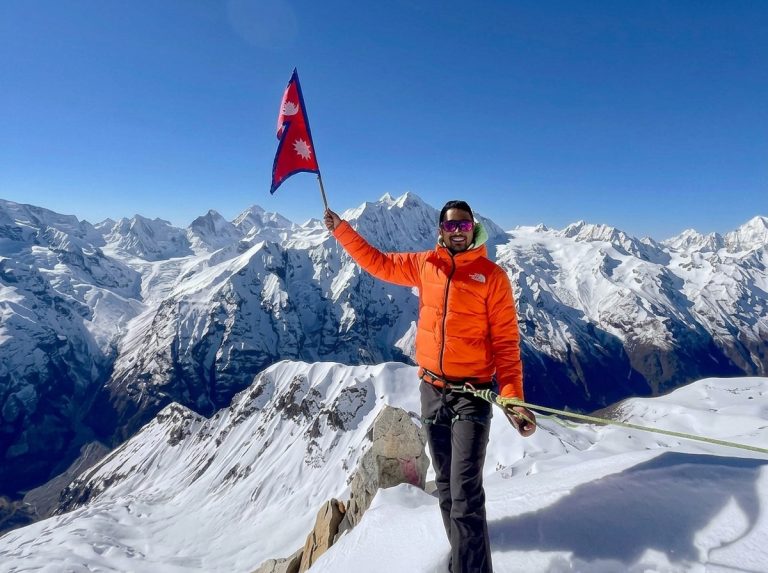
Nepal has officially begun issuing permits to climb Mount Everest during the spring season, marking the official start of the world’s most popular mountaineering window. According to the Department of Tourism, a total of 33 climbers across four different groups have already received clearance to scale the world’s highest peak as of Friday.
The spring season is historically the most sought-after period for Everest ascents due to favorable weather conditions on the mountain. This year, the department has reported that among the 33 permit holders for Everest, three are female and 30 are male.

Surge in Overall Mountain Permits and Royalty Collection
Beyond Sagarmatha (the Nepali name for Everest), the Department of Tourism has issued permits for a total of 12 different Himalayan peaks this season. As of Friday, a cumulative 170 climbers from 24 expedition teams have received permission to climb various mountains across the country.
The breakdown of permits shows significant interest in other iconic peaks alongside Everest. The data indicates that Ama Dablam has attracted the second-highest number of climbers, with 34 individuals across three groups securing permits. Annapurna I follows closely, with 27 climbers from four teams receiving clearance.
Other peaks seeing activity include:
- Dhaulagiri: 17 climbers (2 groups)
- Lhotse & Makalu: Various teams preparing for ascents.
The government has collected a substantial revenue of NPR 108.73 million (approximately USD 829,000) in royalty fees from these permits alone. Mount Everest contributed the lion’s share of this figure, accounting for NPR 73.7 million in royalties.
Mountain Conditions and Route Status
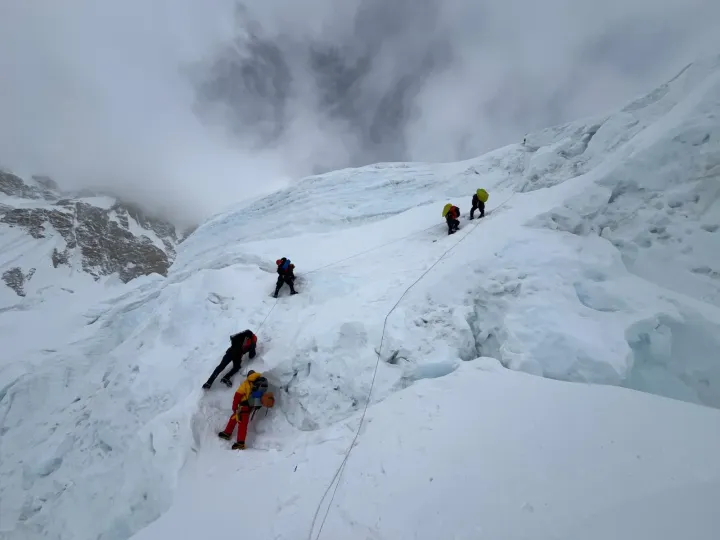
While the administrative process is in full swing, the physical challenge of opening the routes has begun. On Mount Everest, the “Icefall Doctors” (expert Sherpa climbers employed by the Sagarmatha Pollution Control Committee) are currently working to fix ropes and ladders through the treacherous Khumbu Icefall, which connects Base Camp to Camp II.
However, progress has been slowed due to adverse weather conditions. Reports from Base Camp indicate that strong winds and persistent heavy snowfall are making it difficult for the team to secure ladders over the deep crevasses of the icefall.
High-Altitude Teams on Standby
In preparation for the final summit push, the Expedition Operators Association of Nepal (EOAN) has assembled a dedicated 10-member rope-fixing team. This elite squad is on standby to establish the summit route on both Everest (8,848.86m) and the adjacent Lhotse (8,516m) once the weather stabilizes.
The team, announced on March 24, is led by Mingma Tenje Sherpa. Other members include Pam Dorjee Sherpa, Chhomba Tenji Sherpa, Pasang Tashi Sherpa, Mingma Nurbu Sherpa, Lopsang Bhote, Furtenzi Sherpa, Guru Bhote, Mingma Dorchi Sherpa, and Pasang Tenjing Sherpa.

First Expeditions and Season Outlook
The very first Everest permit for the Spring 2026 season was issued to “TAG-1,” a 10-member international team organized by Tag Nepal Treks & Expedition. The team is led by American climber Michael Tyler Bennett and includes climbers from the United States, Ireland, and Canada.
With the season only just underway and the weather window for summits typically occurring in mid-to-late May, authorities expect the number of permits and royalty collections to rise significantly in the coming weeks as more international teams arrive in the Khumbu region.