Everest’s slopes are set to welcome the first climbers of the 2026 spring season. The Department of Tourism (DoT) under the Ministry of Culture, Tourism, and Civil Aviation has officially opened the spring 2026 Himalayan climbing season by issuing the first permit for Mount Everest. This marks the beginning of what is expected to be a busy and closely monitored climbing season on the world’s highest peak.
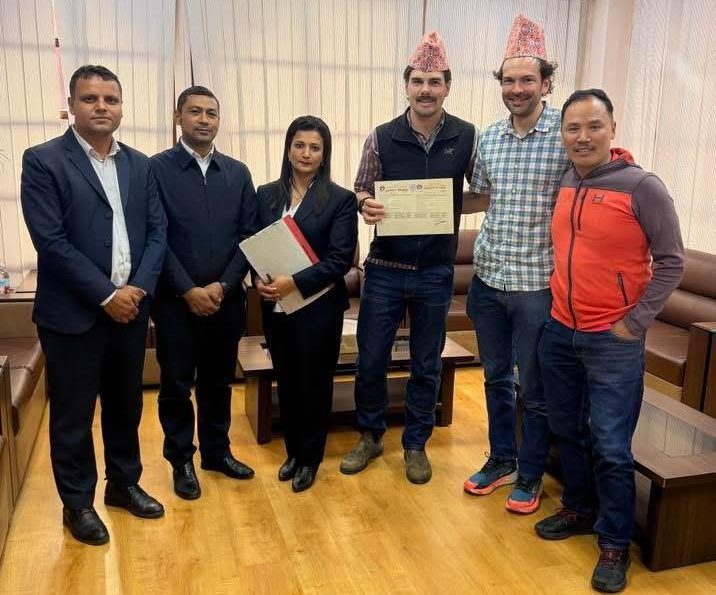
The permit, granted to TAG-1 (Everest/Lhotse) Spring 2026, allows a 75-day expedition organized by Tag Nepal Treks & Expedition Pvt. Ltd. to attempt the summit. DoT officials handed over the permit in a formal ceremony, extending best wishes to the team for a safe and successful climb.

Expedition Details: International Team Targets Everest
The Everest expedition is led by 30-year-old American climber Michael Tyler Bennett and includes nine members from the United States, Ireland, and Canada. The full roster is:
- Andrew Nolan (47, Ireland)
- Andrew Paul Dawson (34, Canada)
- Erik Ryan Christensen (36, USA)
- Jan Kanclirz (48, USA)
- Nicole Kissane Santiago (41, USA)
- Diarmuid Padraig Morrissey (61, Ireland)
- Rahim Karim Charania (43, USA)
- Walter Watts Kelleher II (39, USA)
The team is scheduled to depart Kathmandu on April 1, following the classic Lukla–Namche–Khumjung–Dingboche–Lobuche–Base Camp route before ascending via the Everest Normal Route.
Tendi Sherpa, Managing Director of TAG Nepal Treks & Expedition, confirmed that his agency had secured the first permit of the season, highlighting the company’s longstanding expertise in organizing high-altitude expeditions.
Route Preparations Underway on Everest
Preparations on the mountain are already in progress. Tshering Sherpa, Chief Executive Officer at the Sagarmatha Pollution Control Committee (SPCC), reported that a team of icefall doctors has been assigned to open the route from Base Camp to Camp II. They are currently fixing ropes and ladders in the Khumbu Icefall and higher sections of the route.
“Strong winds and heavy snowfall have been delaying progress, but our team is working diligently to ensure the route is safe for climbers,” Tshering Sherpa said.
Summit Route Teams Deployed
Above Camp II, the Expedition Operators Association of Nepal (EOAN) has organized a dedicated team to prepare the summit routes on both Everest and Lhotse. EOAN General Secretary Rishi Ram Bhandari confirmed that operators have already set up Base Camp and transported essential logistics, including food, tents, and safety equipment, to support the season’s climbing operations.
These preparations are critical, as the Khumbu Icefall and higher-altitude sections present some of the most dangerous challenges on the mountain, requiring careful attention to route fixing and safety management.
Focus on Safety and Environmental Responsibility
The DoT, SPCC, and EOAN emphasize that safety remains the top priority for all expeditions this season. Climbers are required to follow strict guidelines, including proper acclimatization, weather monitoring, and adherence to environmentally responsible practices to protect the fragile Himalayan ecosystem.
Authorities have also urged climbers to respect waste management rules and ensure that all trash, human waste, and unused equipment are properly removed from the mountain. The SPCC continues to coordinate with expedition operators to maintain clean and sustainable climbing practices.

A Busy Everest Season
With the first permit issued, the spring 2026 season is now officially underway. DoT officials expect dozens of other international and domestic expeditions to follow in the coming weeks. The combination of experienced climbers and well-prepared route teams is expected to contribute to a safer and more efficient climbing season on Everest and Lhotse.
As the TAG-1 team embarks on its journey, the mountaineering community in Nepal and around the world will closely watch their progress, marking the start of another remarkable chapter in the ongoing legacy of Himalayan climbing.