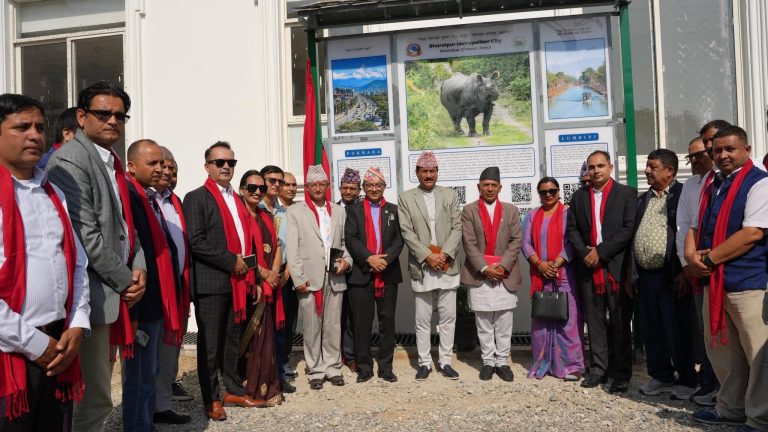
With the theme “Let’s Preserve Culture, Contribute to Tourism Promotion”, the third edition of the Teej Cultural Festival 2082 began today in Nepal’s tourism capital, Pokhara. Organized by the Tourism Entrepreneur Women Association Nepal (TEWAN), the event is taking place at Barahighat, Lakeside, with a mission to connect the cultural authenticity of Teej to tourism promotion. The festival aims to showcase the vibrant traditions of Teej while enhancing Pokhara’s appeal as a hub for both domestic and international visitors.
A Festive Start with a Cultural Rally
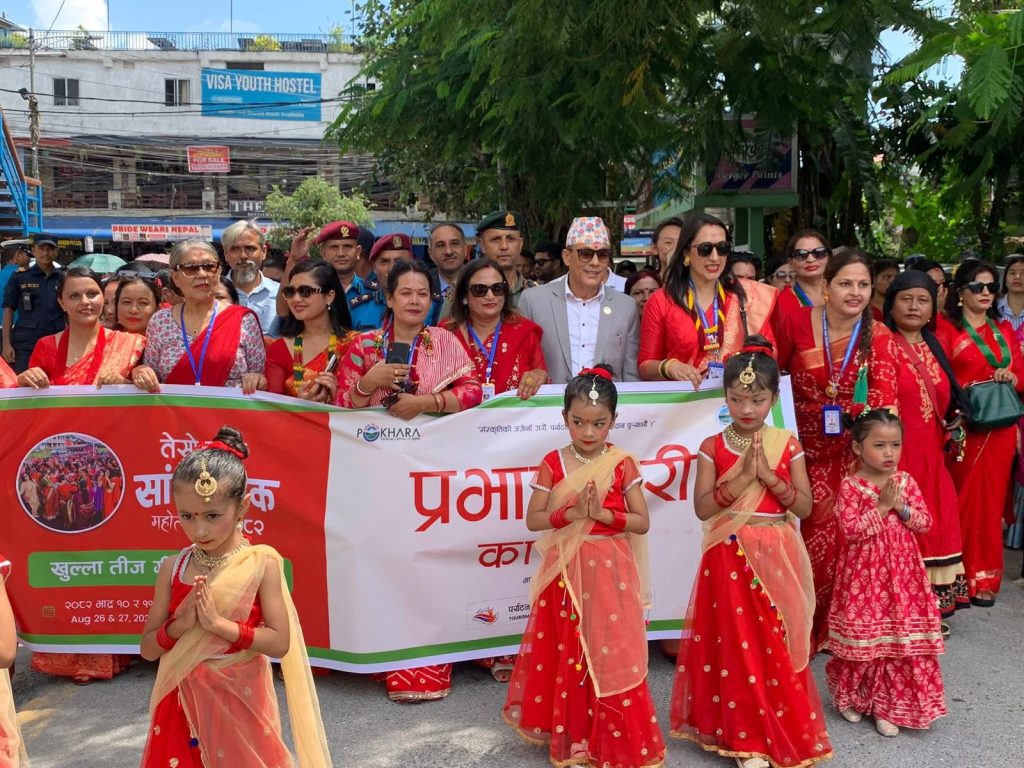
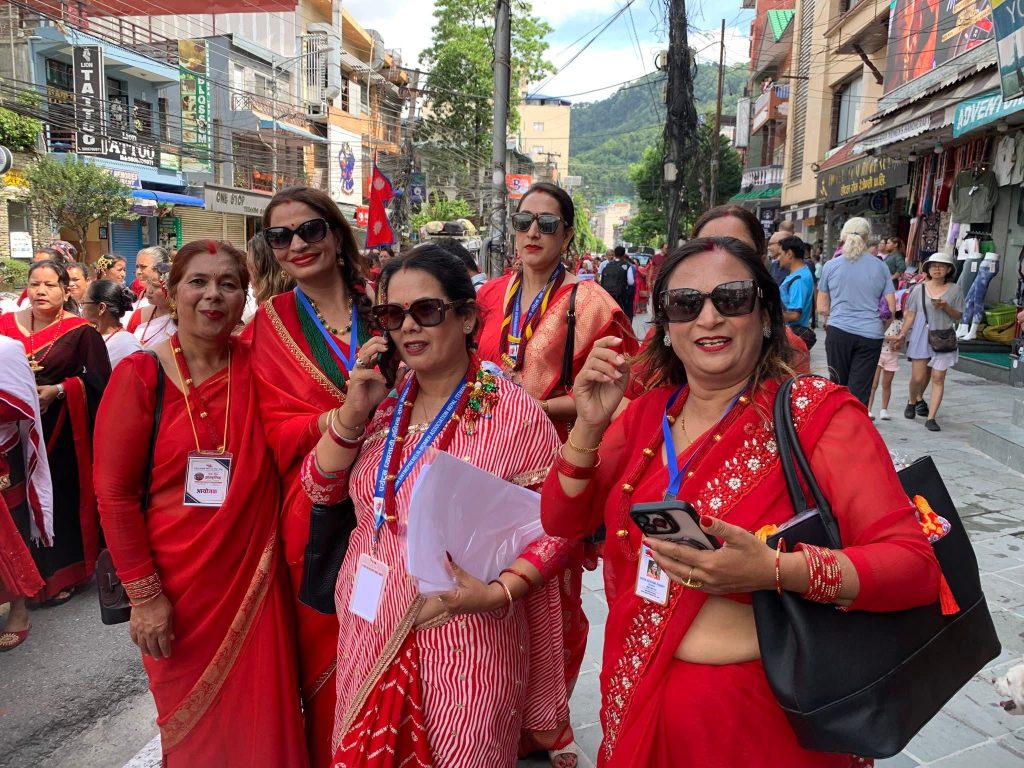
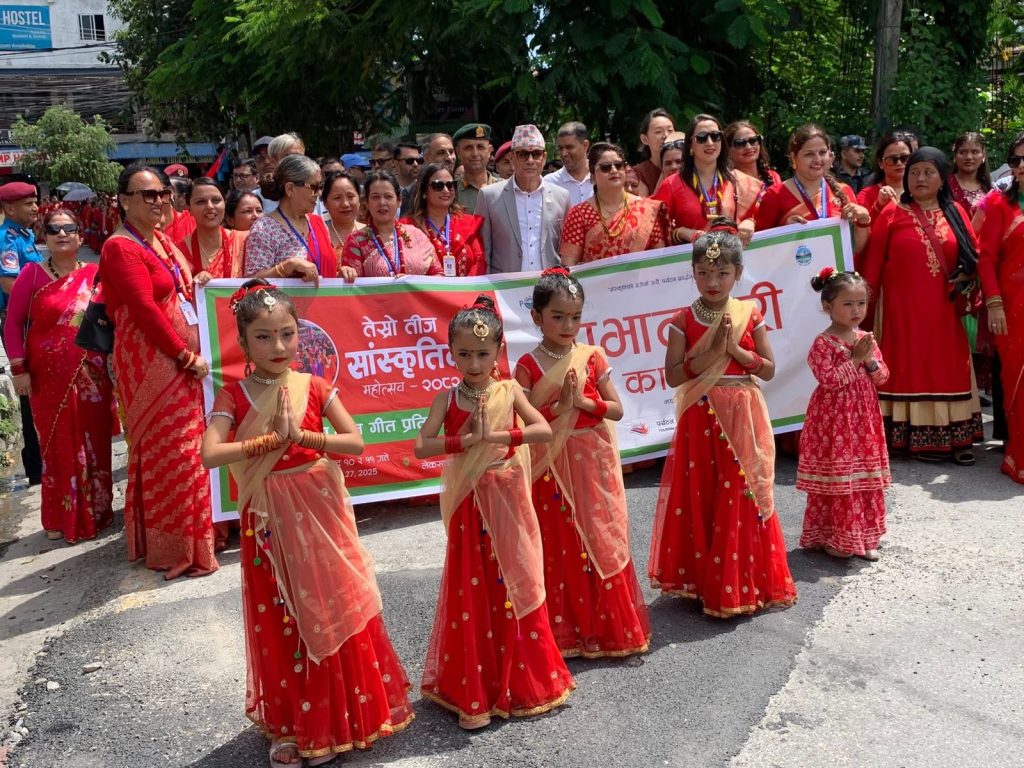
Ahead of the formal inauguration, the morning atmosphere in Lakeside was filled with music, colors, and excitement as a grand rally set off from Hallanchowk. Accompanied by the traditional naumati baja and various cultural tableaus, the rally saw enthusiastic participation from tourism entrepreneurs, mothers’ groups, women’s organizations, and multiple cultural troupes. The procession transformed Lakeside into a lively celebration space, immersing locals and tourists alike in the Teej spirit.
Leaders Call for Preserving Teej’s Authenticity
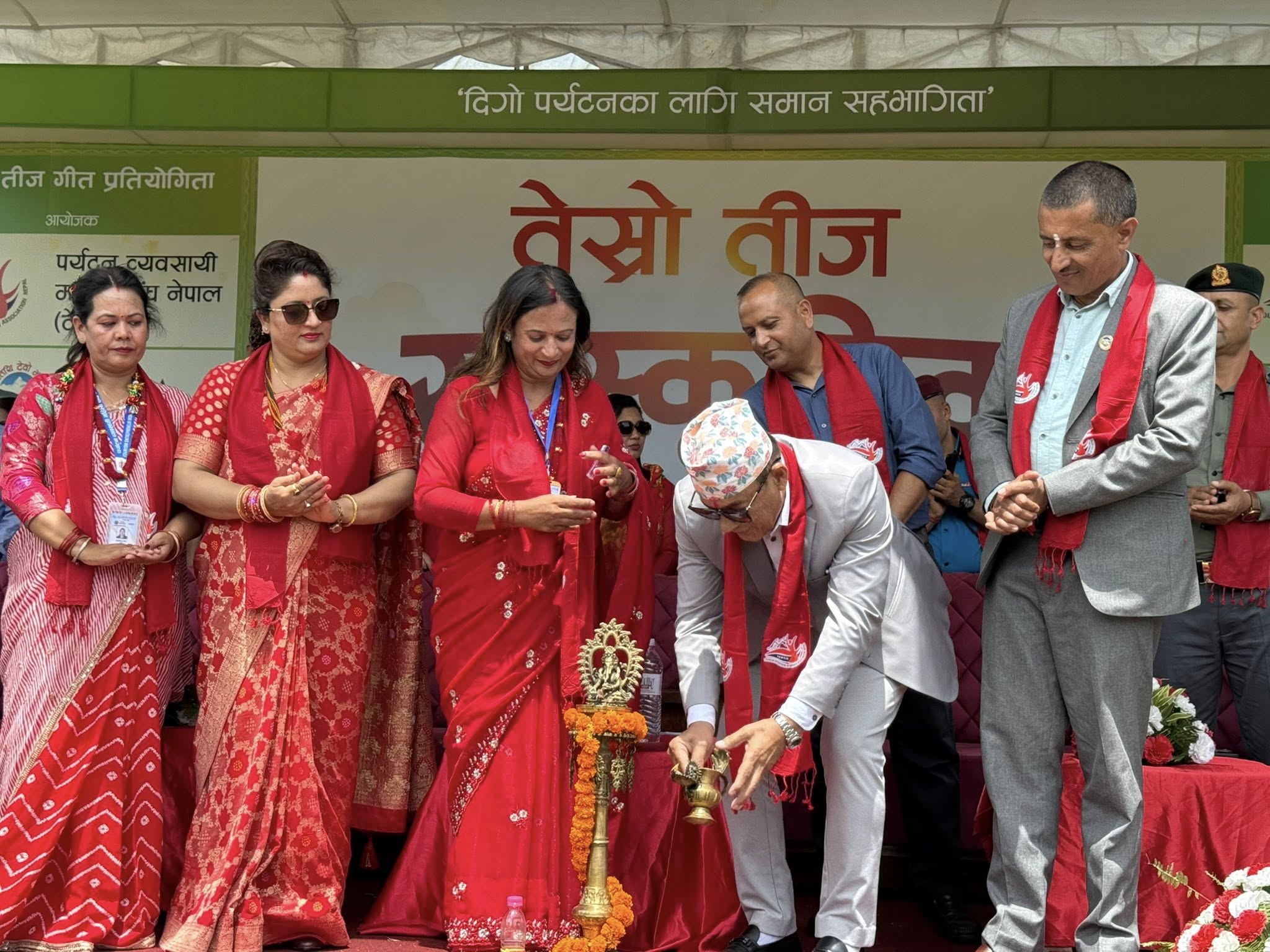
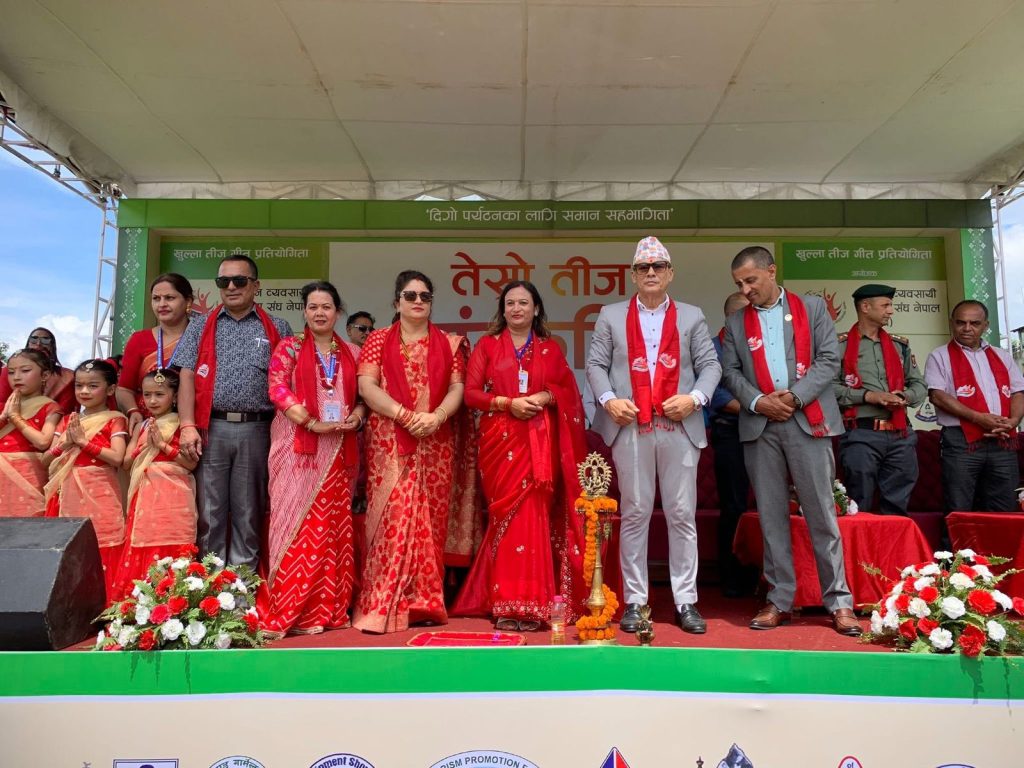
The festival was inaugurated by Bindukumar Thapa, Minister for Social Development, Youth, and Sports of Gandaki Province. In his address, Minister Thapa expressed concern over the growing trend of making Teej excessively glamorous and expensive, warning that such practices risk diluting its traditional values. “Events like this play an important role in cultural preservation while also promoting women’s leadership and capacity building,” he stated.
Gandaki Province Assembly member Prakash Baral emphasized that only planned and strategic development could truly build the nation, while Kaski’s Chief District Officer Rudradevi Sharma remarked that Teej has played a significant role in organizing women and supporting leadership development within the community.
Musical Highlights and Cultural Performances
Adding to the festive mood, celebrated folk singer Haridevi Koirala performed a selection of traditional Teej songs during the inauguration ceremony. Her soulful voice and heartfelt lyrics captivated the audience, bringing the essence of Teej’s devotion, resilience, and joy to life. The performance not only entertained but also reinforced the cultural heritage that the festival seeks to preserve.
Open Teej Song Competition as Main Attraction
The two-day festival’s primary highlight is the Open Teej Song Competition, which has drawn considerable attention from the public and participants alike. According to festival coordinator Shanta Timilsina, the winning group will receive a cash prize of NPR 35,000, the runner-up will be awarded NPR 25,000, and the third-place group will take home NPR 20,000. Additionally, ten groups will receive consolation prizes of NPR 4,000 each, while a special award will be given to the group with the best dance performance.
The competition aims to encourage artistic creativity while keeping traditional Teej music alive in its authentic form. Many participating groups are expected to blend classic melodies with innovative choreography, adding fresh appeal without losing the festival’s cultural roots.
Linking Faith, Tradition, and Tourism
The choice of venue near Taal Barahi Temple and along the Fewa Lake shore, where the pristine waters reflect the towering Machhapuchhre, was intentional. The festival’s underlying message is clear: Nepal’s religion, culture, and traditions should be deeply connected with tourism development. By combining spiritual heritage with natural beauty, the event creates an immersive experience for visitors while promoting the idea that cultural preservation can directly benefit tourism.
This festival is the brainchild of past TEWAN president Mrs. Kamala Giri, who is also the conceptual founder of the program. First conducted in 2080 BS, the Teej Cultural Festival has grown into a major annual event under her guidance. Her vision has always been to create an event where faith, tradition, and culture are not only celebrated but also leveraged as powerful tourism assets.
Women’s Empowerment Through Cultural Platforms
TEWAN President Shobha Neupane Pandey highlighted that the festival’s purpose goes beyond entertainment. “The Teej Cultural Festival helps preserve Nepal’s unique women-centered traditions while also contributing to both domestic and international tourism promotion,” she said. She further explained that the second day of the festival will feature fun-filled sports competitions such as tug-of-war, pot-breaking contests, and a sari race, which are expected to draw large crowds and encourage community participation.
In addition to cultural and recreational events, two special talk shows will be held focusing on women’s empowerment. These sessions aim to provide a platform for sharing experiences, discussing challenges, and exploring opportunities for women in tourism, entrepreneurship, and leadership.
A Platform for Cultural Tourism Promotion
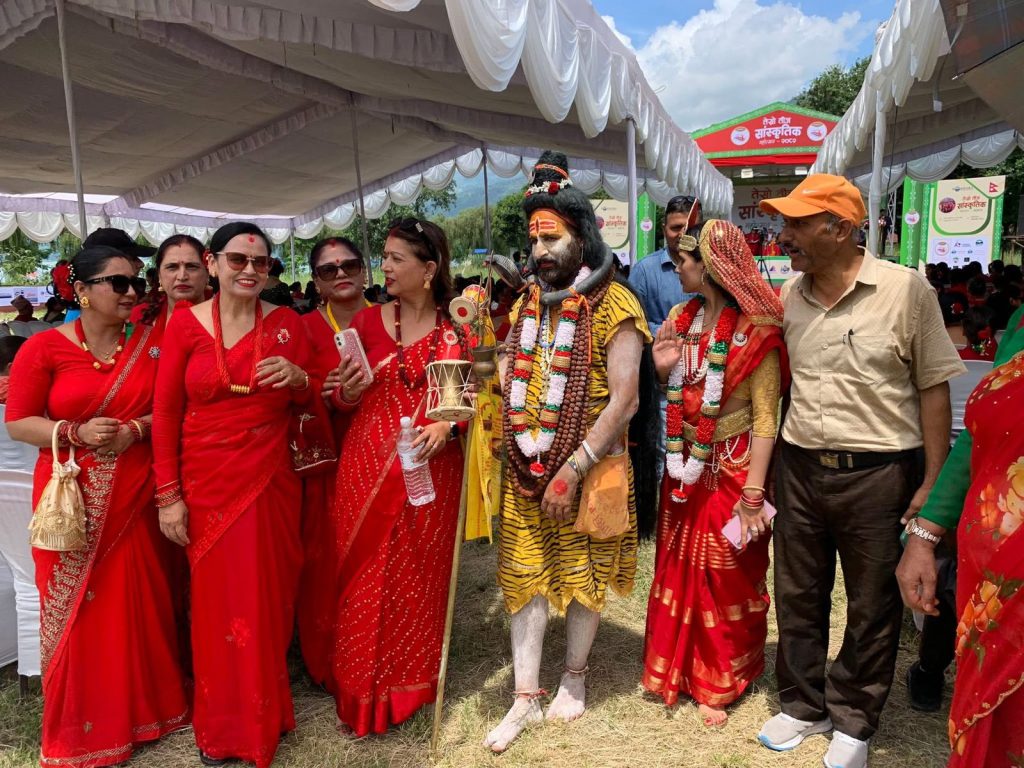
By hosting the Teej Cultural Festival in a tourism hotspot like Pokhara, organizers aim to create a platform where culture and tourism work hand in hand. The location at Barahighat offers a picturesque lakeside setting that attracts both locals and foreign tourists, providing them with a unique opportunity to experience Nepal’s cultural richness firsthand. Festival-goers can enjoy traditional music, dance, and local cuisine while soaking in the scenic beauty of Fewa Lake and the surrounding mountains.
Community Participation and Economic Impact
The festival has also brought economic opportunities for local vendors, artisans, and small businesses. Stalls selling traditional dresses, jewelry, handicrafts, and local delicacies have been set up along the festival grounds, attracting visitors who wish to take home souvenirs or enjoy authentic Nepali snacks. Such events not only preserve cultural traditions but also stimulate the local economy, creating jobs and income for small-scale entrepreneurs.
Preserving the Spirit of Teej Amid Modern Trends
While modernization has brought glamour and global exposure to Teej celebrations, the festival organizers and participants agree on the importance of preserving its original values, devotion, solidarity, and community bonding. Through competitions, performances, and discussions, the Teej Cultural Festival seeks to strike a balance between maintaining authenticity and embracing modern expressions of joy.
Looking Ahead
The Third Teej Cultural Festival 2082 is not only a celebration of music, dance, and tradition but also a strategic effort to promote Pokhara as a center for cultural tourism. With its blend of entertainment, education, and empowerment, the festival reflects the evolving role of cultural events in enhancing Nepal’s tourism identity. If successful, such initiatives could inspire similar festivals in other regions, each highlighting unique local traditions while contributing to the country’s overall tourism and cultural heritage promotion.