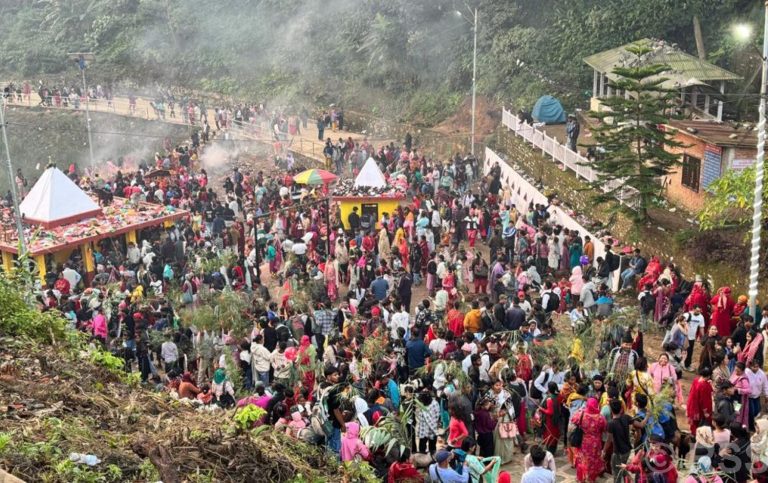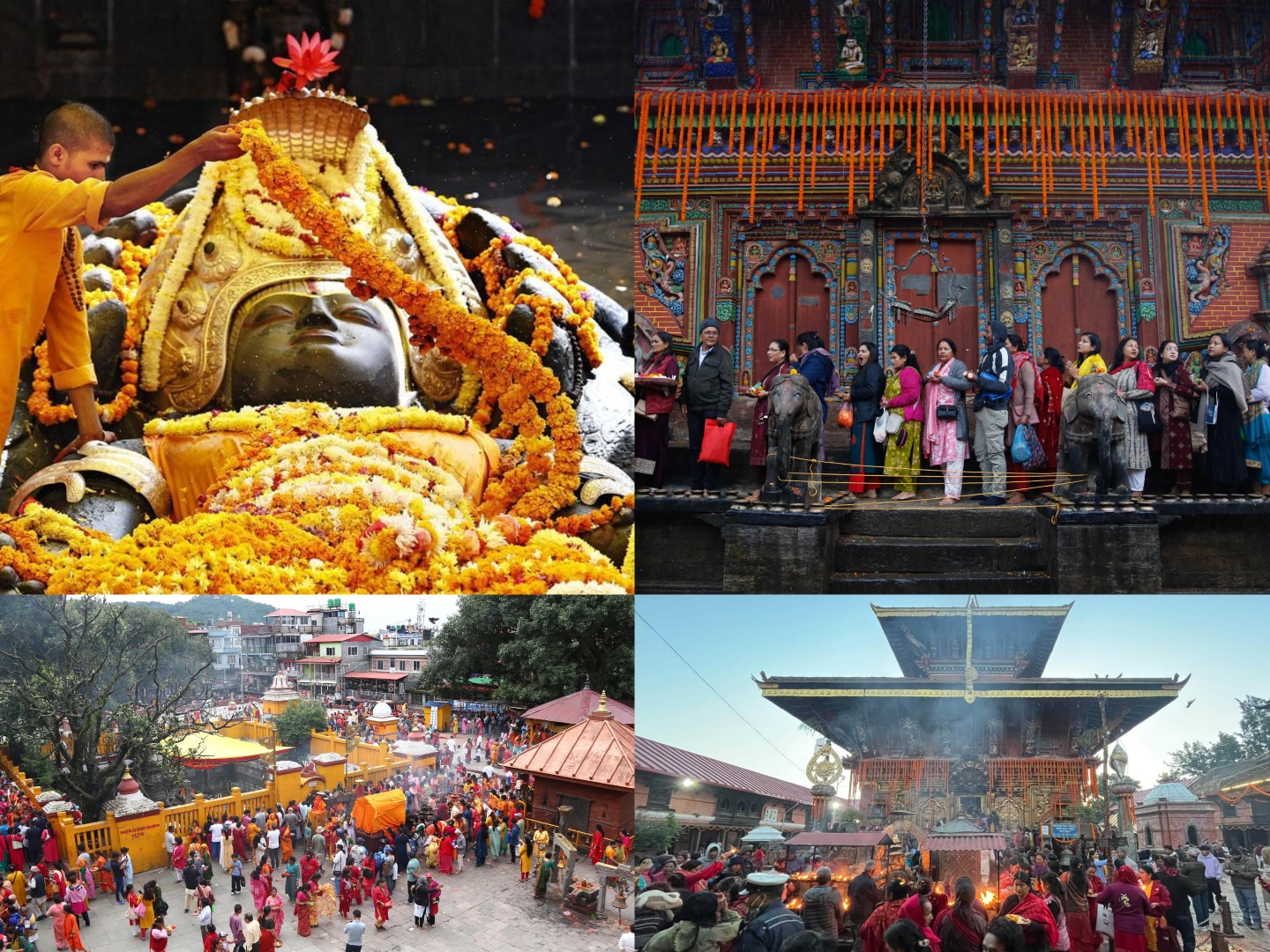
Thousands of devotees gathered at Narayan temples across Nepal from early Thursday morning to observe Haribodhini Ekadashi, a major Hindu religious festival marking the awakening of Lord Vishnu after his four-month cosmic sleep. The festival witnessed particularly large crowds at the four Narayan temples of Kathmandu Valley, including Changunarayan Temple in Bhaktapur and Budhanilkantha Narayansthan in Kathmandu, as devotees visited sacred sites to offer prayers, perform rituals and seek blessings. The religious occasion also attracted visitors to temples across the country, highlighting Nepal’s rich religious heritage and the significance of pilgrimage tourism.
Devotees Gather at Four Narayan Temples
The four Narayan temples of Kathmandu Valley—Changunarayan, Shesh Narayan, Ichangu Narayan and Bishankhu Narayan witnessed a steady influx of devotees from early morning. According to religious traditions, visiting all four temples on Haribodhini Ekadashi is believed to bring spiritual merit and fulfil wishes, prompting devotees from different parts of the country to travel to the valley for the occasion.
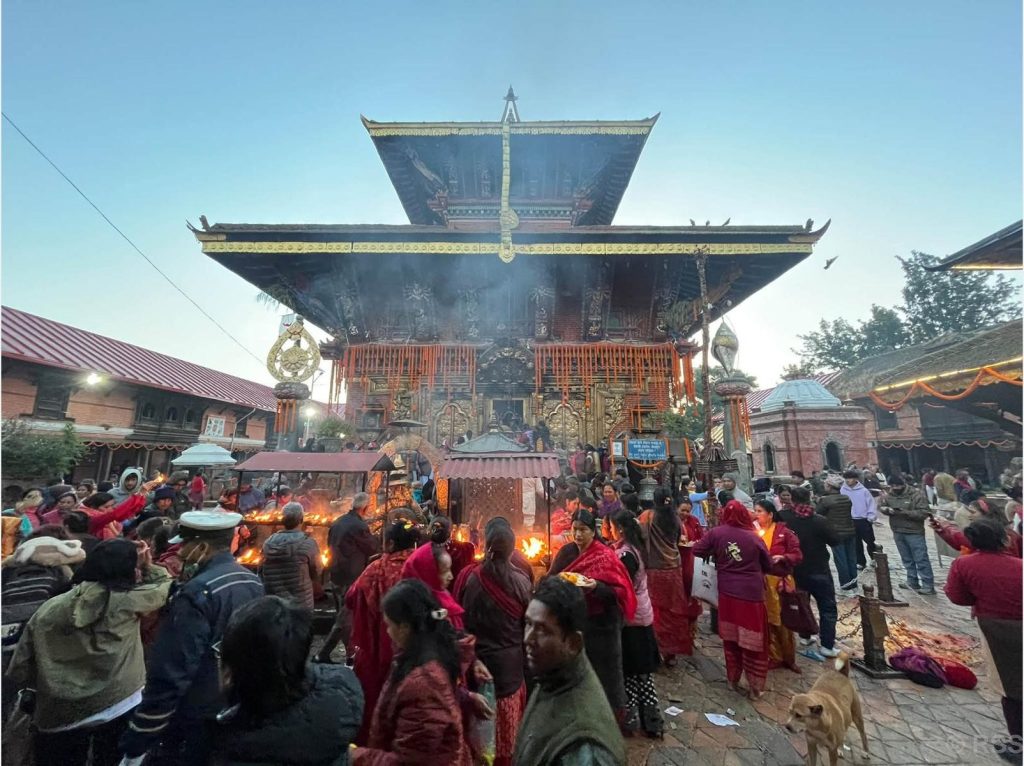
Changunarayan Temple, regarded as the oldest among the four Narayan temples, received devotees from as early as 2:00 AM. The 1,800-year-old temple, located in Changunarayan Municipality-4 of Bhaktapur, is one of Nepal’s most significant historical and religious monuments and is listed as a UNESCO World Heritage Site. Devotees believe that visiting Changunarayan first among the four Narayan temples is particularly auspicious, while those unable to visit all four can receive spiritual blessings by worshipping at Changunarayan alone.
The temple premises were decorated with marigold garlands and illuminated with colourful lights, creating a festive atmosphere for the religious celebration. Changunarayan Municipality also mobilised volunteers, scouts, municipal police and security personnel to facilitate worship and manage the large number of visitors. Traffic and road arrangements were coordinated through five access points, including Dekocha and Byasi in Bhaktapur Municipality, Telkot and Duwakot in Changunarayan Municipality, and Mulpani in Kathmandu.
Budhanilkantha Narayansthan Welcomes Thousands of Pilgrims
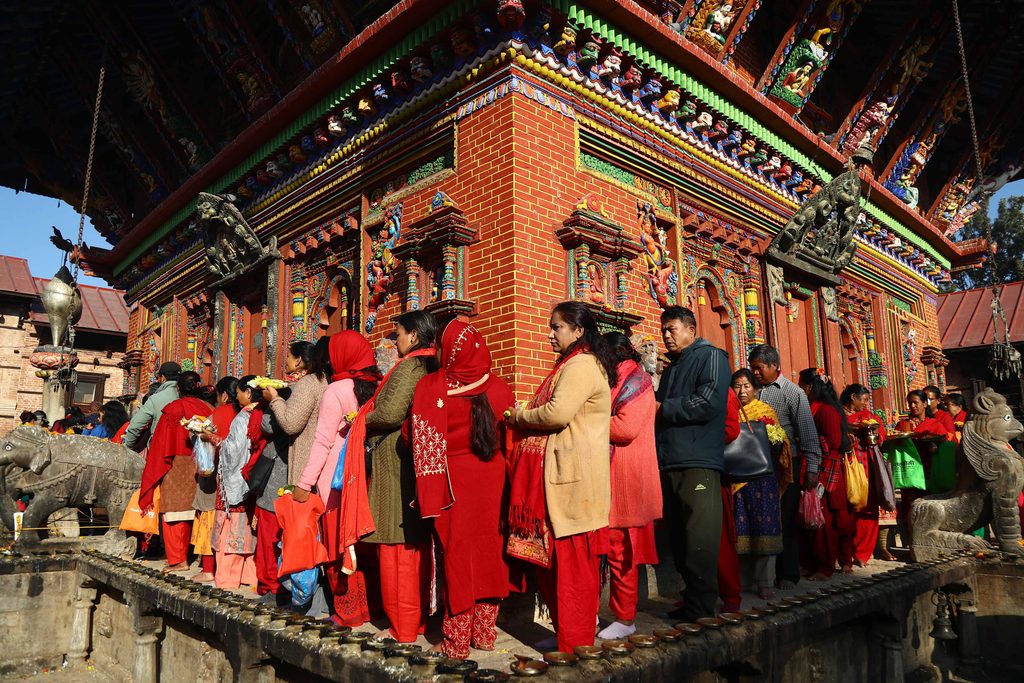
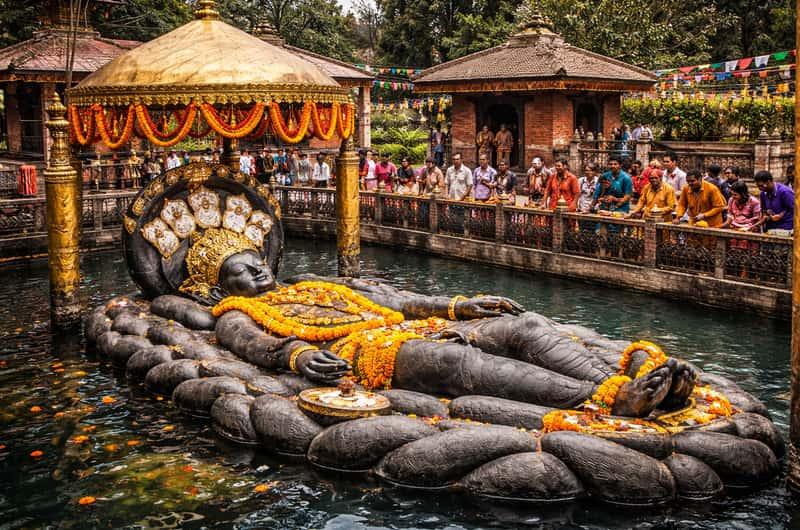
Budhanilkantha Narayansthan, located in the northern part of Kathmandu Valley, also experienced a significant influx of devotees beginning shortly after midnight. The temple opened its doors to visitors at 1:30 AM after pilgrims began arriving from around 1:00 AM, according to Mahant Nigamananda Swami. The temple is renowned for its remarkable stone sculpture of Lord Vishnu reclining on a water pond, making it one of Nepal’s most prominent religious and cultural attractions. The unique sculpture, depicting Vishnu resting on the cosmic serpent, draws both domestic and international tourists throughout the year.
The temple authorities arranged facilities to accommodate more than 500,000 devotees during the day’s celebrations. Thousands of visitors had already completed special prayers and worship by 6:00 AM. The temple also scheduled special worship rituals during the morning, temporarily closing access to visitors between 1:30 AM and 8:15 AM for the ceremony. A special religious fair is being held at Budhanilkantha Narayansthan from Haribodhini Ekadashi through Kartik Shukla Purnima, which falls on November 24. The temple is also hosting a week-long religious festival and Bhagwat recitation programme from November 18 to 24, attracting pilgrims and visitors seeking spiritual experiences.
Religious Tourism and Cultural Heritage
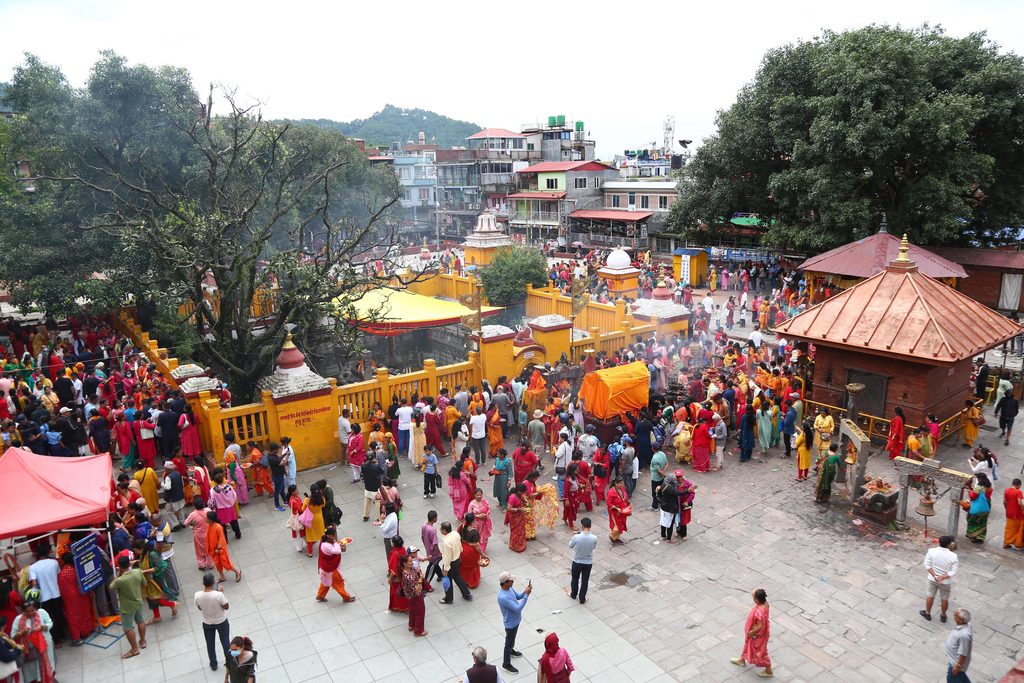
Haribodhini Ekadashi is observed on the eleventh day of the bright lunar fortnight of Kartik and marks the end of the four-month period during which Lord Vishnu is believed to rest in the cosmic ocean. The festival is also associated with the ceremonial marriage of Tulsi, a sacred plant, with Lord Damodar, a form of Vishnu. The religious occasion brings together traditions of worship, fasting, temple visits and cultural celebrations, with devotees travelling to sacred sites throughout Nepal. In Kathmandu Valley, besides the four Narayan temples and Budhanilkantha, devotees also visited Narayan temples in the Narayanhiti Palace area, Handigaun, Hanuman Dhoka, the Pashupati area and Narayantar in Gokarneshwar Municipality.
The widespread participation in Haribodhini Ekadashi celebrations reflects Nepal’s enduring religious heritage and the importance of sacred destinations in the country’s tourism landscape. Historic temples, traditional rituals and festivals continue to attract domestic visitors and international travellers interested in Nepal’s spiritual, cultural and architectural heritage.