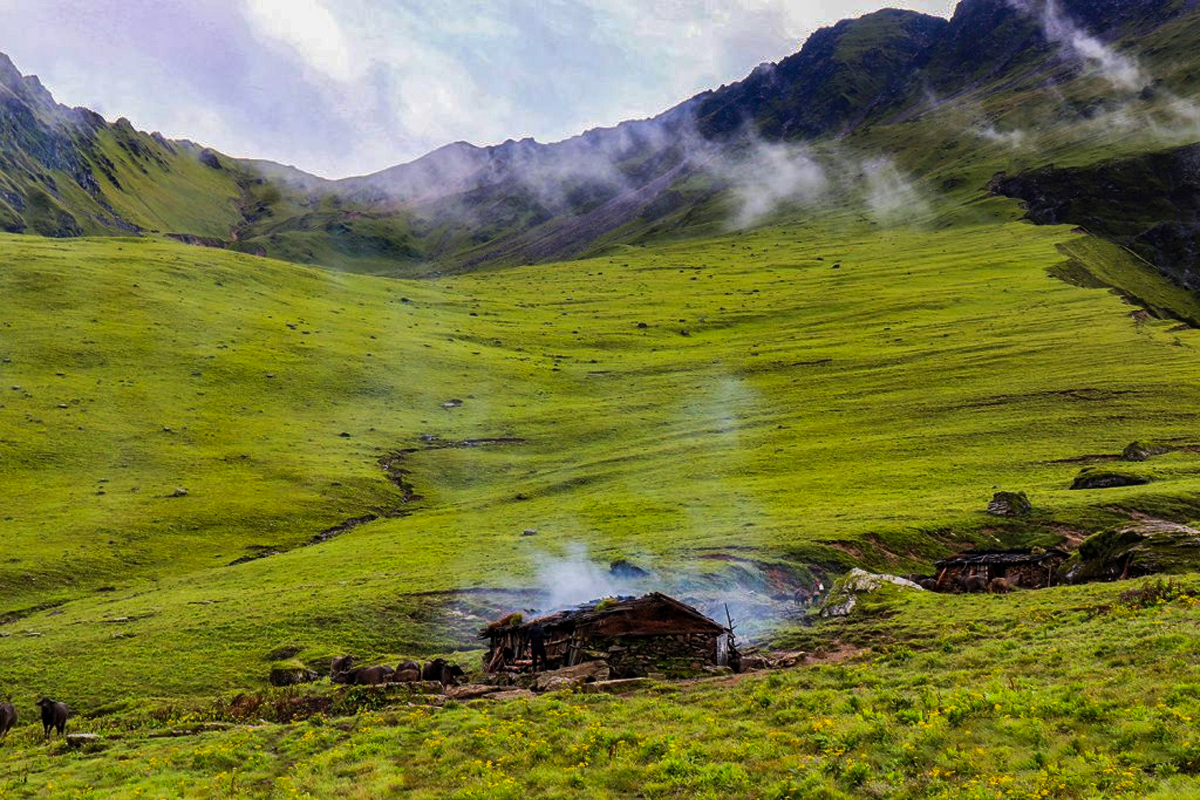
The serene and secluded tourist destination of Dhorpatan in Baglung has seen a remarkable rise in tourist footfall in recent years, significantly boosting the income of local shepherds. As trekkers explore the scenic routes toward Bukipatan, a popular alpine grazing meadow, the increasing number of visitors has opened new doors for local economic activities.
The shepherds of Dhorpatan, who traditionally depended solely on dairy and meat production for subsistence or limited local trade, are now witnessing a direct monetary benefit from the growing tourism. Many of these visitors not only pass through but also choose to stay and eat in the shepherds’ temporary settlements along the trails.
Local Dairy Products See Increased Consumption
With tourists spending time in the highlands of Bukipatan, the demand for local produce like milk, curd, butter, and meat has surged. Trekking groups and solo adventurers are now opting for a more immersive experience by staying in traditional shepherd huts and enjoying authentic mountain meals prepared using local buffalo milk, ghee, and sheep meat.
Shepherds like 72-year-old Dev Bahadur Bk from Bukipatan recall a time when they had to carry butter all the way down to Dhorpatan to sell, and surplus products like buttermilk (mohi) were often wasted. But now, he says, “Tourists are full in Bukipatan during the monsoon season. Even buttermilk, which was once thrown away, is sold at a good price. We even make milk pudding (kheer) right here in the sheds for tourists.”
Mobile Tea Stops Create New Income Streams
Not only the settlements at Bukipatan but also the midway shelters like Cheptedhunga have turned into lucrative spots. Local herder Guman Singh Kumai has been selling tea made from fresh buffalo milk to trekkers passing by. He charges Rs. 100 per glass and has been able to serve up to 100 glasses in a single day during the peak season.
With three buffaloes and 60 goats under his care, Kumai operates a mobile tea stall from his temporary shelter. “People find the tea made from Bukipatan buffalo milk very tasty,” he said. “There’s no need to make ghee anymore during this season, as the milk is directly consumed as tea. Even buttermilk and curd, once thrown away, now fetch a good price.”
Bukipatan Becomes a Trekker’s Haven
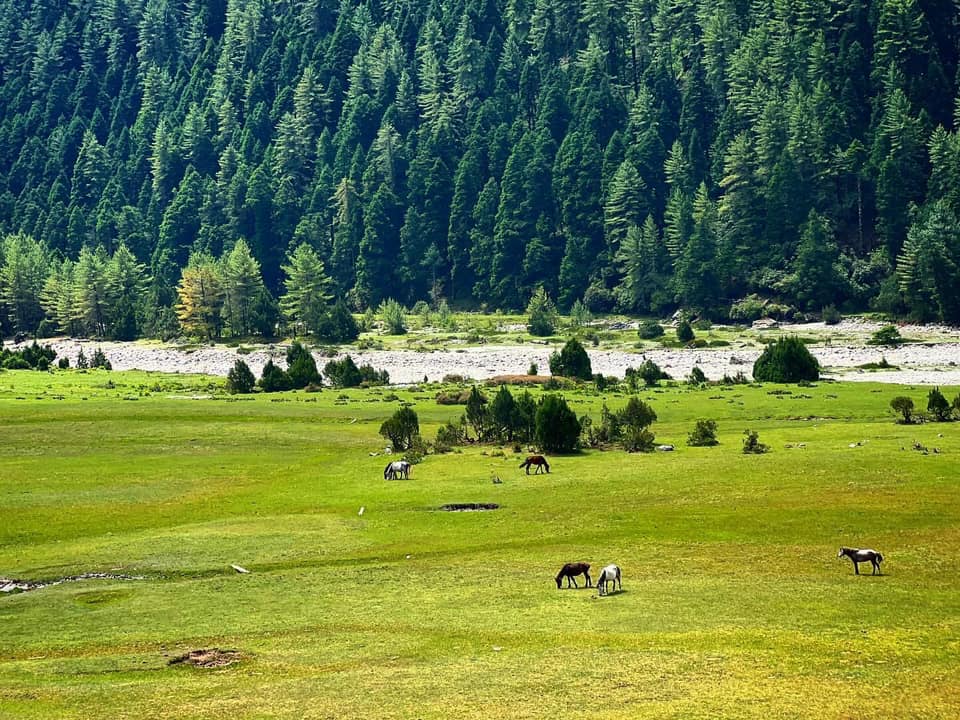
With around 8,000 tourists visiting Dhorpatan in the past year alone, Bukipatan has experienced an unprecedented wave of internal tourism. What was once primarily a hunting reserve visited by foreign tourists has now transformed into a multi-dimensional attraction with a growing number of domestic trekkers.
Bukipatan, located at elevations ranging from 2,900 meters to over 4,000 meters above sea level, now draws visitors not just for its landscape but also for its cultural and natural significance. The trekking routes through Jaljala and Bukipatan, coupled with other attractions like the Dhorbaraha Temple and Nisheldhor Valley, have significantly broadened the tourism appeal of the area.
Rural Tourism Revitalizing Local Economy
As the tourism industry in Dhorpatan diversifies, opportunities for rural economic growth are blossoming. In addition to home stays, horse riding services, and tea houses, the rise of tourism has also made shepherding more profitable than ever before. Tourists’ preference for unique and rustic experiences has turned traditional pastoral settlements into valuable micro-hospitality hubs.
The shepherds no longer see themselves only as livestock caretakers but also as micro-entrepreneurs. The consumption of dairy and meat products right at the source has reduced the logistical burden of transporting goods to market, saving time and money while increasing profitability.
A Sustainable Path Forward
Dhorpatan’s transformation into a thriving tourist destination is a testament to how eco-tourism, if managed sustainably, can revitalize local economies without compromising cultural and ecological balance. The story of the shepherds of Bukipatan highlights the positive impact of tourism not just on business owners and tour operators, but on the grassroots communities that have long inhabited and cared for these remote landscapes.
As infrastructure improves and awareness grows, Dhorpatan and its surroundings are poised to become models for sustainable mountain tourism in Nepal, where nature, culture, and livelihoods blend seamlessly.