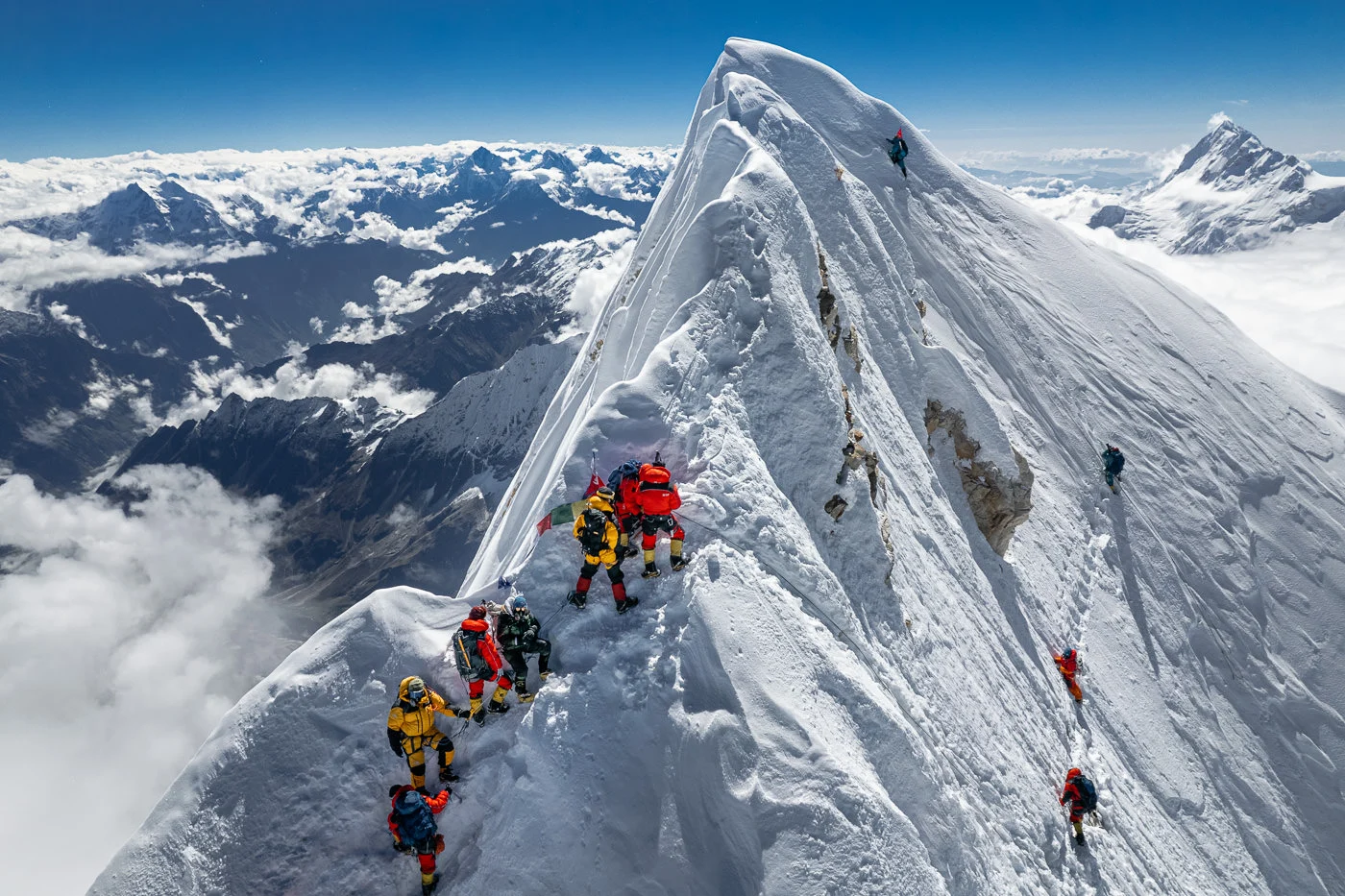
A total of 236 climbers from 49 countries and territories have received permits to climb in Nepal this spring, according to data released by the Department of Tourism under the Ministry of Culture, Tourism and Civil Aviation. The figures, covering the period from March 1 to April 5, 2026, reflect a robust start to the spring climbing season, with 31 teams registered across 15 peaks.
Of the total climbers, 171 are male, and 65 are female, generating total royalties of $1,349,930 USD (equivalent to NPR 202,200,717) for the government. The numbers indicate continued strong international interest in Nepal’s Himalayan peaks, despite recent challenges facing the tourism sector.

Everest Accounts for 81 Percent of Royalty Revenue
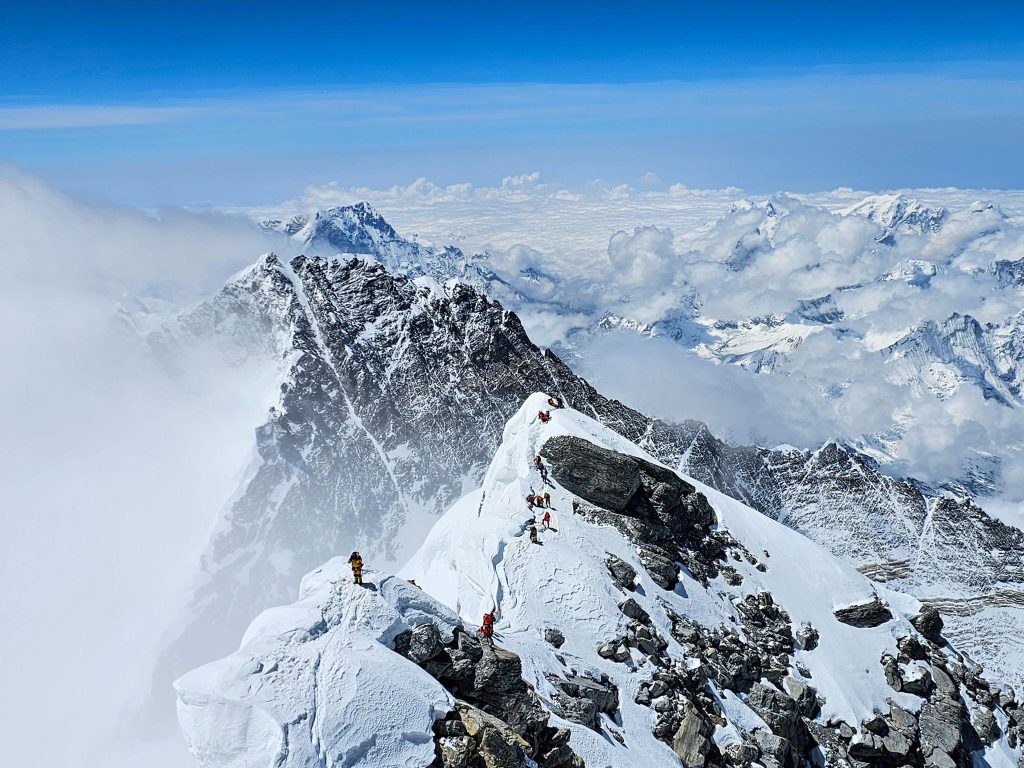
Sagarmatha (Mount Everest) has attracted the highest concentration of permitted mountaineers this season, with 73 climbers across eight teams, 56 male and 17 female, cleared to attempt the world’s highest peak. The mountain alone accounts for $1,095,000 USD in royalties, representing roughly 81 percent of all revenue collected to date this season.
This dominance is unsurprising given Everest’s status as the ultimate prize for mountaineers worldwide, but the concentration of revenue also highlights the economic importance of the peak to Nepal’s mountaineering sector. Expedition operators report that bookings for Everest remain strong, with the spring window offering the most favorable weather conditions for summit attempts.
Ama Dablam Second Most Popular Peak by Headcount
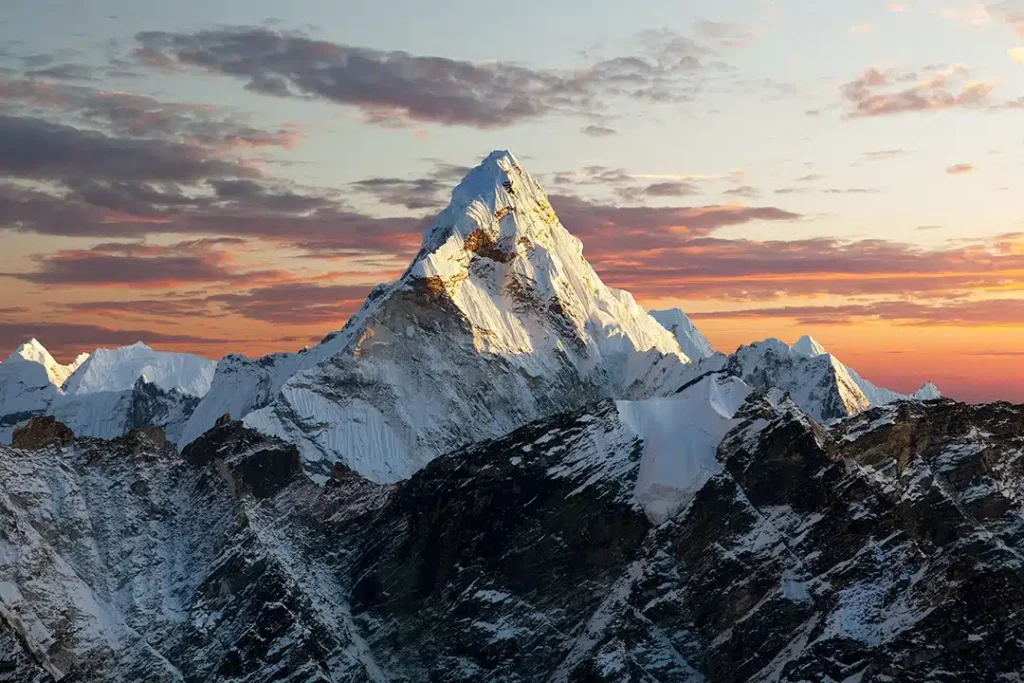
Ama Dablam, the iconic Khumbu peak known for its stunning pyramid shape and technical climbing challenges, is the second most popular objective by headcount this season, with 34 climbers across three teams registered for the peak. The mountain, which stands at 6,812 metres (22,349 feet), has long been a favorite among experienced climbers seeking a technically demanding yet achievable summit.
Annapurna I has drawn 27 climbers across four teams, while Dhaulagiri I has 17 climbers, and Himlung Himal has 15. Lhotse, the world’s fourth-highest peak, has 12 climbers permitted, followed by Annapurna IV with eight climbers and Makalu I with five. Tengkoma and Khangri Shar round out the season’s roster with three and two climbers respectively, demonstrating the diversity of objectives that Nepal’s Himalayan landscape offers, from the world’s highest summit to lesser-known but equally challenging peaks.
Germany Leads Source Markets for Climbers
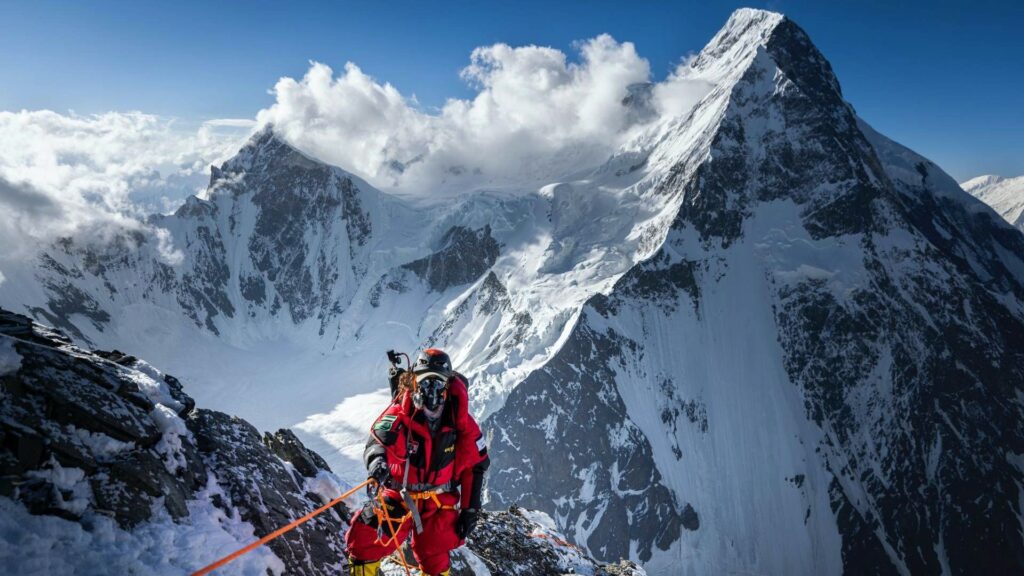
Germany leads the list of source countries for mountaineers this season, with 37 mountaineers, 28 male and 9 female, securing permits. The United States follows closely with 25 mountaineers (21 male, 4 female), while Canada ranks third with 17 climbers (13 male, 4 female). Poland has 15 climbers permitted, with all but one being male, reflecting the country’s strong tradition in high-altitude mountaineering.
The United Kingdom has 12 mountaineers registered this spring, while Ireland and Russia each have 11 climbers, and India has 10. These figures indicate that European and North American markets continue to dominate Nepal’s mountaineering tourism, though Asian representation is also notable.
Asian Nations Show Growing Presence
Vietnam, with nine permitted climbers, ranks among the more active Asian nations, alongside Japan (six climbers), China (four), and Nepal (three mountaineers registered under foreign expedition permits). The presence of climbers from emerging Asian markets suggests a gradual diversification of source countries, which could provide long-term stability for Nepal’s mountaineering sector.
Other countries represented include Switzerland with eight climbers, Australia and France with seven each, and Spain with four. Finland and Norway each have two climbers, while American Samoa has a single registered climber. The broad geographic spread, spanning Europe, North America, Asia, and the Pacific, underscores Nepal’s enduring appeal as the world’s premier mountaineering destination.

Season Remains Active with More Data Expected
The season remains active, with mountaineers currently undergoing acclimatization rotations and preparing for summit pushes later this month and into May. The Department of Tourism will publish updated permit and summit data as the season progresses. Expedition operators report that weather conditions have been generally favorable so far, though high-altitude winds remain a critical factor in determining summit windows. As in previous years, the majority of summit attempts on Everest and other high peaks are expected to occur during the narrow window of favorable weather typically observed in mid-to-late May.
The Department of Tourism has also reminded all expedition teams to adhere to safety protocols, waste management regulations, and communication requirements, as part of ongoing efforts to improve both climber safety and environmental sustainability in Nepal’s mountains. With 236 mountaineers already permitted and more expected to register as the season continues, Nepal’s spring 2026 climbing season is shaping up to be one of the busiest in recent years, providing a much-needed boost to the country’s adventure tourism economy.