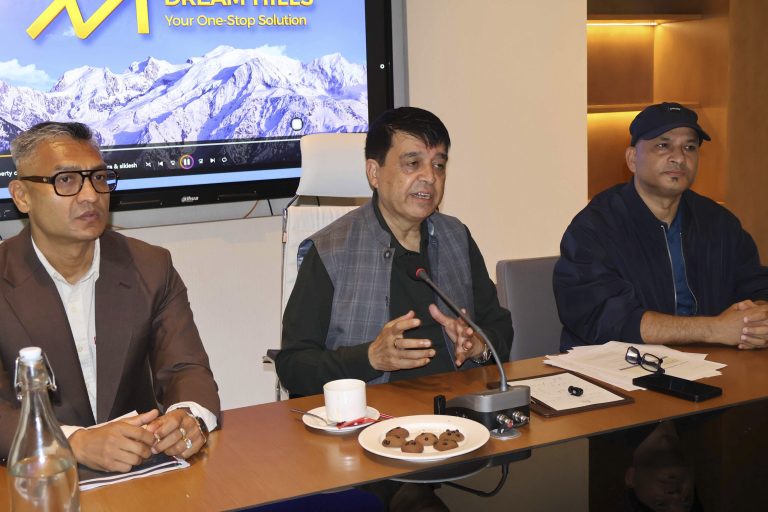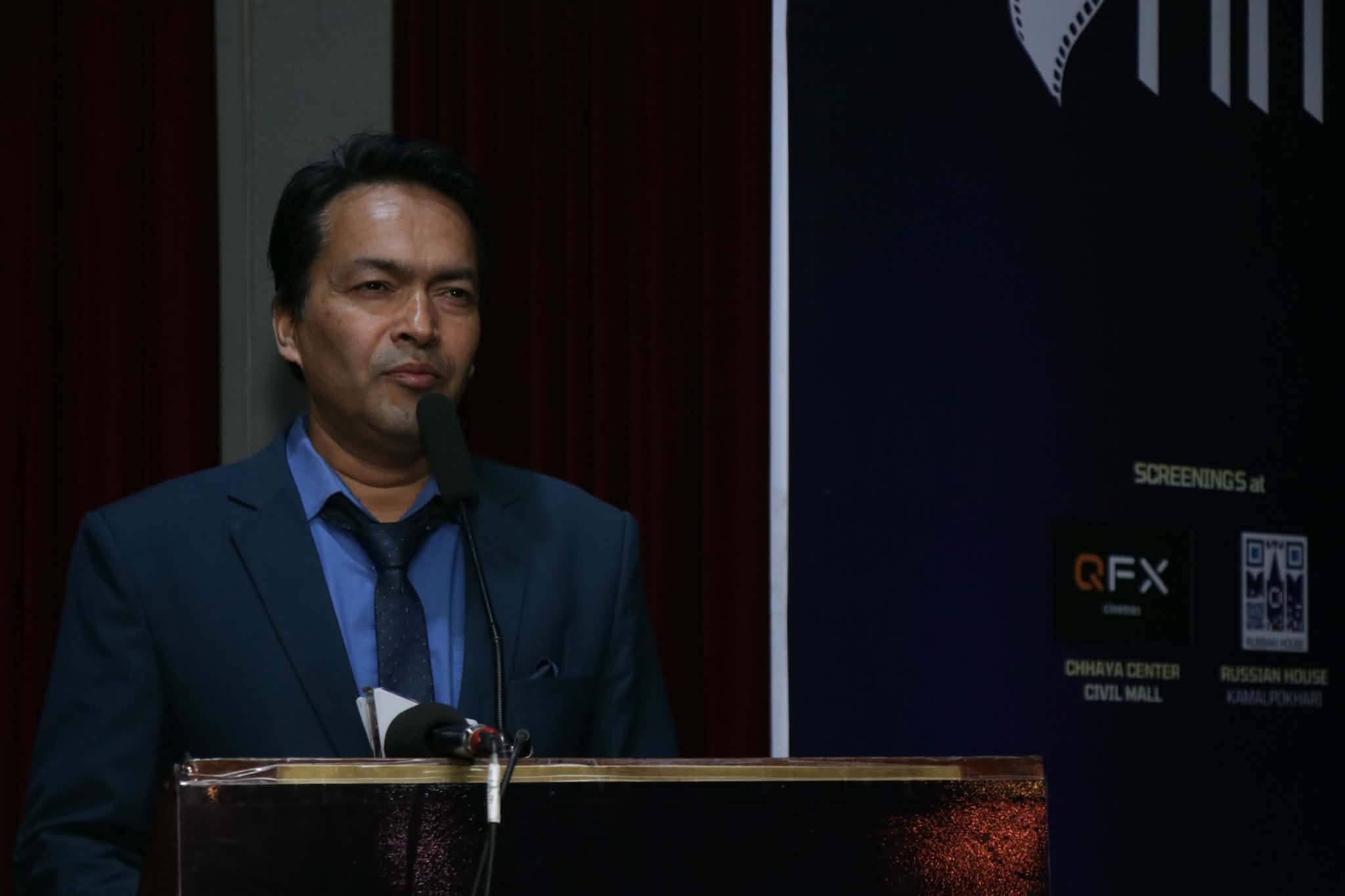
Surya Thapaliya, Senior Manager of the Nepal Tourism Board (NTB), has stated that Nepali films must speak to the country’s mood, emphasizing that beautiful visuals alone are insufficient for promoting Nepal as a destination. Speaking at a session titled “Nepal Through Visuals” on the fourth day of the ninth edition of the Nepal International Film Festival (NIFF), Thapaliya highlighted the critical need for storytelling that captures the emotional and cultural essence of the nation. He argued that while Nepal is blessed with stunning landscapes, the country’s promotion must go beyond postcard-perfect imagery and instead convey the deeper moods that define Nepali life, whether peaceful, mysterious, or full of struggle.
Visuals Must Convey Nepal’s Mood, Says Senior Manager
“The visuals we present must speak the ‘mood’ of the country,” Thapaliya said during his address. “That mood can sometimes be peaceful, sometimes mysterious, and sometimes even full of struggle.” He stressed that visuals alone, no matter how spectacular, cannot create the emotional connection that inspires travelers to visit a destination.

Instead, he called for a cinematic approach that integrates narrative, emotion, and philosophy into every frame. According to Thapaliya, Nepal is not just a collection of mountains and temples but a living, breathing nation with stories of joy, hardship, resilience, and hope, all of which deserve to be told through the lens of filmmakers.
Digital Age Presents Both Challenges and Opportunities
Thapaliya noted that in today’s digital age, there is both a challenge and an opportunity to tell an entire country’s story within two minutes or even shorter videos. With the rise of short-form content on platforms like Instagram Reels, TikTok, and YouTube Shorts, attention spans have shortened, but the demand for authentic, emotionally resonant storytelling has never been higher.
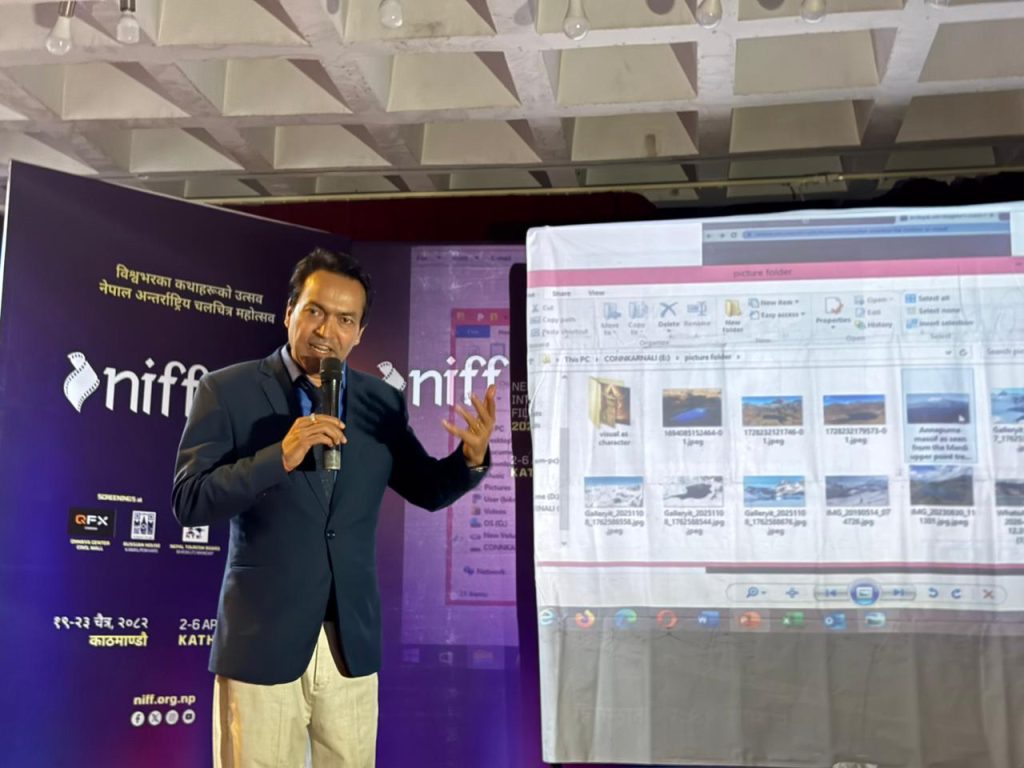
“We must show Nepal through a cinematic lens,” he said. “Because every lens carries a different story.” He urged content creators and filmmakers to move beyond generic beauty shots and instead focus on crafting narratives that capture specific moments, places, and emotions, whether it is the quiet determination of a porter on a mountain trail, the vibrant energy of a festival in a medieval square, or the serene contemplation of a monk at dawn.
Nepal as ‘Divine Land’ with Unmatched Diversity
Describing Nepal as a “Divine Land,” Thapaliya remarked that Nepal is the only country in the world where the diversity from the flat plains of the Terai to the world’s highest mountains can fit within a single frame. This geographical and cultural diversity, he argued, is Nepal’s greatest asset. However, he cautioned that these visuals should not be limited to mere beauty display. “The visuals must connect with a story. Without a story, they have no meaning,” he said. He called for filmmakers to use this diversity not just as a backdrop but as an integral part of the narrative, where landscapes are not passive settings but active participants in the stories being told.
Filmmakers Must Tell Stories of Darkness Alongside Light
Drawing an analogy from cinema, Thapaliya asked, “Is cinema possible without darkness? Certainly not.” He argued that just as films require both light and shadow to create depth and meaning, Nepal’s promotional content must also tell stories of the country’s darker sides alongside its brightness. This includes narratives of challenge, struggle, and reality, not to discourage visitors but to present an authentic, honest, and relatable portrait of the nation. “Now we must tell the stories of Nepal’s dark side along with its light,” he said.
He emphasized that travelers today, especially younger generations, are increasingly seeking authentic experiences rather than sanitized, picture-perfect vacations. They want to understand the real challenges and triumphs of the places they visit, and cinema/film is one of the most powerful media to provide that understanding.
Need to Move Beyond Mountains, Temples, and Natural Beauty
Thapaliya pointed out that Nepali films must now include not only mountains, temples, and natural beauty but also stories of challenge, struggle, and reality to promote Nepal’s tourism. He noted that while Nepal’s iconic imagery remains valuable, over-reliance on the same visuals has led to audience fatigue and a perception of Nepal as a one-dimensional destination.
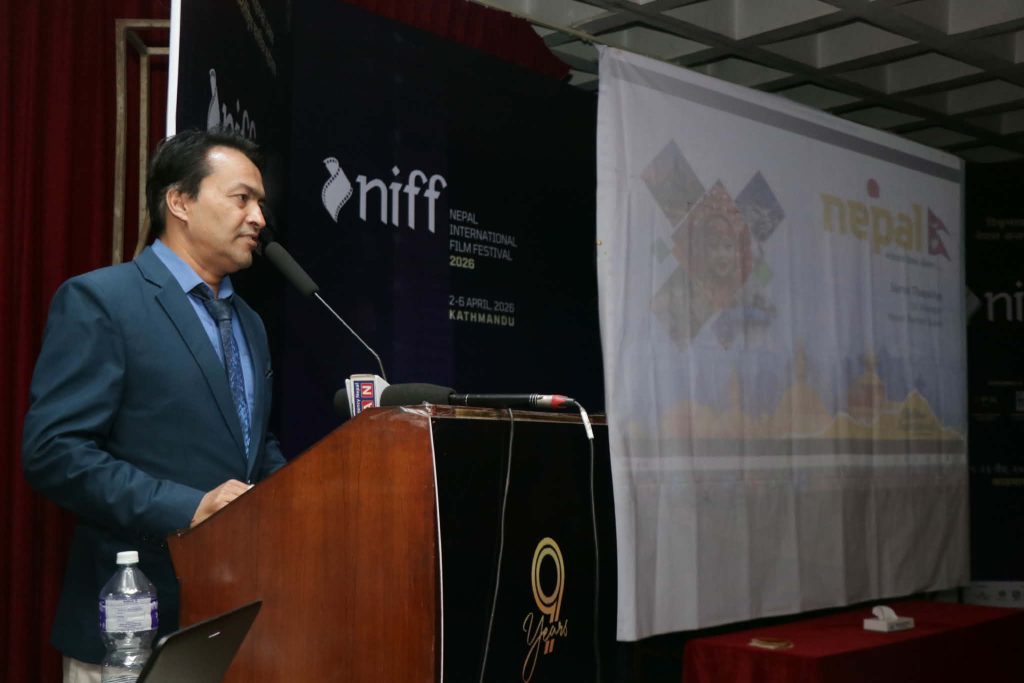
By incorporating stories of everyday life, social issues, environmental challenges, and human resilience, filmmakers can create content that resonates on a deeper level and differentiates Nepal from other destinations that offer similar mountain or cultural experiences. He also called for a complete ban on artificially generated images and visuals created through artificial intelligence (AI) in tourism promotion, arguing that such fabricated content undermines authenticity and misleads potential visitors.
Visual Philosophy Must Be the Guiding Principle
According to Thapaliya, visual philosophy, or the philosophy of visuals, must now become the main guiding principle for tourism promotion. This means moving beyond technical considerations of lighting, composition, and color grading to ask deeper questions: What does this image say about Nepal? What emotion does it evoke? What story does it tell? How does it make the viewer feel about visiting this country? He argued that in an increasingly competitive global tourism market, destinations that can create emotional resonance through their visuals will have a decisive advantage over those that merely showcase beauty.
Transforming Nepal from a Postcard Destination to a Storytelling Destination
Thapaliya emphasized that cinema must play a crucial role in transforming Nepal from a “postcard destination” to a “storytelling destination.” A postcard destination, he explained, is one that people admire from a distance but may never feel compelled to visit.

A storytelling destination, by contrast, is one that people connect with emotionally, intellectually, and spiritually, a place they feel they already know before they arrive, because they have experienced its stories through films, videos, and other visual media. He noted that the ability to deliver deep emotional experiences through short videos will be decisive in today’s competitive tourism market.
As attention spans shrink and content consumption becomes increasingly fragmented, the creators who can tell powerful, authentic stories in brief formats will capture the hearts and travel budgets of audiences worldwide. For Nepal, he concluded, the path forward lies not in hiding its struggles or presenting a polished, artificial version of itself, but in embracing the full, messy, beautiful reality of a nation that has always been more than just its mountains.