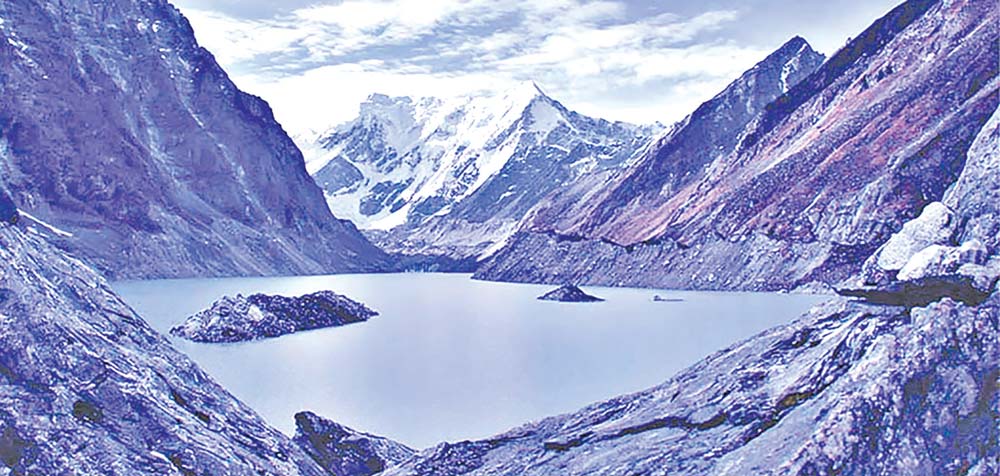
Recent findings from the International Centre for Integrated Mountain Development (ICIMOD) reveal that 42 glacial lakes in Koshi Province are facing critical risks, raising concerns about potential catastrophic events in the region. The warning was issued during a discussion held today in Khandbari, the headquarters of Sankhuwasabha, where ICIMOD experts shared insights from their 2020 report titled “Risks Arising from Rapid Changes in Nepal’s Glaciers and Glacial Lakes.”
High-Risk Lakes Identified in Koshi Province
During the event, ICIMOD expert Sharad Prasad Joshi explained that Nepal is home to 2,069 glacial lakes, of which only 42 in the Koshi region are classified as highly at risk. Highlighting the severity of the situation, Joshi cautioned that a potential burst of any of these lakes could result in significant loss of life and extensive damage to infrastructure, emphasizing the urgent need for vigilance and preparedness.

In Sankhuwasabha district, four glacial lakes, including those in the Bhotkhola and Makalu areas, have been identified as particularly high-risk. Among these, the Talopokhari glacial lake in the Talobarun area is considered the most vulnerable. According to Joshi, Talopokhari spans approximately three kilometers in length and has a maximum depth of 206 meters, with surrounding areas ranging between 15 to 25 meters deep.
Collaborative Risk Reduction Efforts
In response to these threats, ICIMOD is collaborating with the Department of Hydrology and Meteorology and UNDP Nepal to develop risk reduction strategies targeting the four high-risk glacial lakes in Sankhuwasabha. The initiatives also include a large pond located in lower Barun, which is part of the comprehensive plan to mitigate potential hazards.
Joshi emphasized that a glacial lake outburst could put numerous settlements and infrastructure in the Arun Valley at immediate risk. In addition, he warned that 13 glacial lakes originating from Tibet could pose a threat to northern areas of the district, further underlining the urgency of disaster preparedness.
Vulnerable Communities and Awareness Programmes
Addressing the social impact of potential disasters, Neera Shrestha Pradhan from ICIMOD highlighted that women, children, and the elderly are often the most severely affected during catastrophic events. She stressed the importance of implementing awareness campaigns and capacity-building programmes aimed at these vulnerable groups to ensure their safety in the event of a glacial lake outburst.
Call for Proactive Measures
The discussion also featured remarks from Suman Shakya, head of the District Coordination Committee of Sankhuwasabha, who emphasized the necessity of proactive action. Shakya called for coordinated efforts among government agencies, local communities, and development partners to address the high-risk scenario, reduce disaster vulnerabilities, and ensure the safety of the region’s population and infrastructure.

The Growing Threat of Climate Change
Experts at the event reiterated that climate change is accelerating the melting of glaciers and increasing the formation of new glacial lakes, thereby intensifying risks in the Himalayan region. Continuous monitoring, early-warning systems, and community-based disaster preparedness are considered vital to mitigating these threats.
The ICIMOD report and today’s discussion underscore the urgent need for comprehensive risk management measures in Koshi Province. With 42 glacial lakes classified as high-risk, especially Talopokhari in Sankhuwasabha, authorities are called upon to take immediate preventive and awareness-building actions. Proactive strategies, collaboration with national and international partners, and community engagement remain key to safeguarding lives and property against potential glacial lake outburst floods in the region.