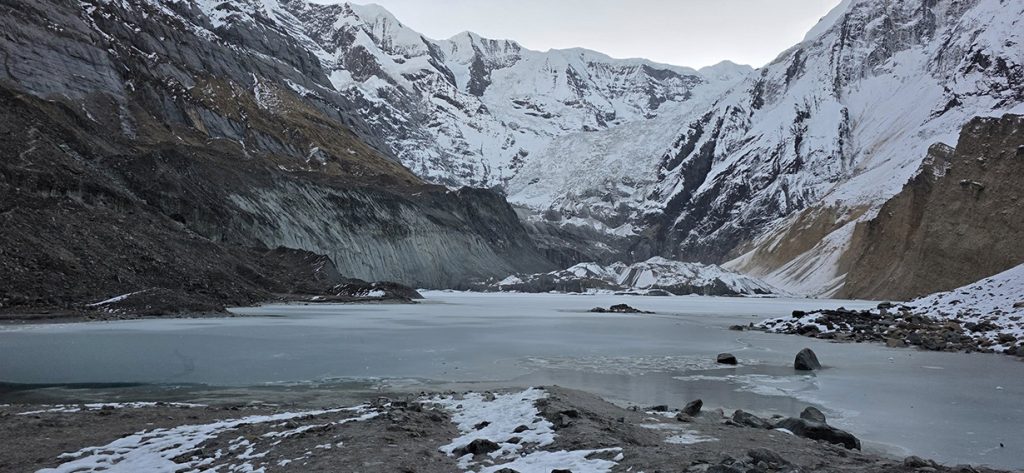
The iconic Panchakunda Lake, located in Annapurna Rural Municipality–4, Narchyang, at the Annapurna Base Camp region, has completely frozen due to plunging winter temperatures. With the lake turning into a solid sheet of ice, trekkers and locals say people can now walk across its hardened surface.
Situated at an altitude of 4,100 meters above sea level and spread across nearly 20,000 square meters, the lake has become one of the most captivating attractions for visitors trekking toward Annapurna Base Camp or attempting Annapurna peaks.

A Glacier Lake With a Unique Identity
Panchakunda Lake lies within a glacier basin and derives its name from its striking winter appearance. During the coldest months, the lake forms distinct natural patterns resembling five separate ponds, earning it the title “Panchakunda,” meaning “five sacred ponds.”
According to Tej Gurung, an engineer and researcher of the Maurice Herzog Trail, the lake was originally named Dikicho Taal by Sherpas who accompanied mountaineers in the 1950s. Gurung explained that the unique structure of the lake has long been a subject of fascination among climbers, trekkers, and local communities.
Two-Day Trek From Narchyang via Maurice Herzog Trail
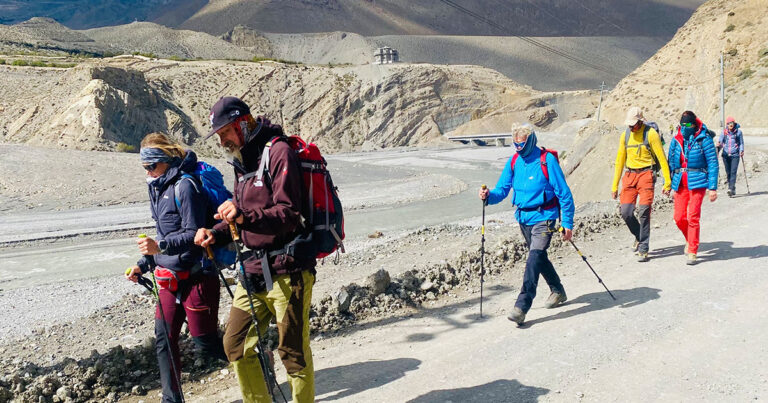
Trekkers can reach Panchakunda Lake through a two-day journey from Narchyang via the historic Maurice Herzog Trail. This trail holds significant mountaineering heritage as it follows the original route used by French climber Maurice Herzog, who became the first person in history to summit Annapurna I on June 3, 1950.
In 2011 (2068 BS), the route was officially recognized and named in Herzog’s honor, helping preserve its historical significance. Today, the trail remains one of the most scenic yet moderately challenging routes in the Annapurna region.
A Panoramic Viewpoint of Major Himalayan Peaks
From the Panchakunda Lake area, trekkers can enjoy sweeping, circular views of some of the greatest Himalayan giants, including:
- Annapurna Himalaya
- Mount Nilgiri
- Tilicho Peak
- Mount Fishtail (Machhapuchhre)
- Frank Peak
The route itself offers equally breathtaking features. Trekkers pass the banks of the Mistrikhola River, traverse high waterfalls, walk beneath towering icy cliffs, and encounter unique alpine landscapes rich in rare flora and fauna. From Narchyang’s Humkhola, vehicles are available to reach the trailhead, after which a 22-kilometer hike leads adventurers to the Annapurna Base Camp and the frozen lake.
Ice-Covered Lake Enhances the Beauty of Annapurna Region
Trekkers currently visiting the base camp report that the frozen expanse of Panchakunda Lake adds a magical charm to the already breathtaking winter scenery. Sandip Khatri, a visitor from Beni who recently completed the trek, said that the surrounding snow-laden mountains and the glittering ice sheet have turned the entire region into a “mesmerizing Himalayan amphitheater.”
Local hotel entrepreneur Micheal Pun shared that although the lake’s frozen form is drawing excitement, the number of trekkers has significantly dropped as temperatures continue to fall. He noted that the biting cold has reduced the usual trekking flow on the Annapurna circuit.
Winter Tourism Declines but Seasonal Rush Was Strong
During the festive months of Dashain, Tihar, and Chhath, the area witnessed a daily arrival of 200 to 300 trekkers, driven by peak-season tourism. However, the harsh winter climate has brought numbers down to around 50 trekkers per day, according to local businesses.

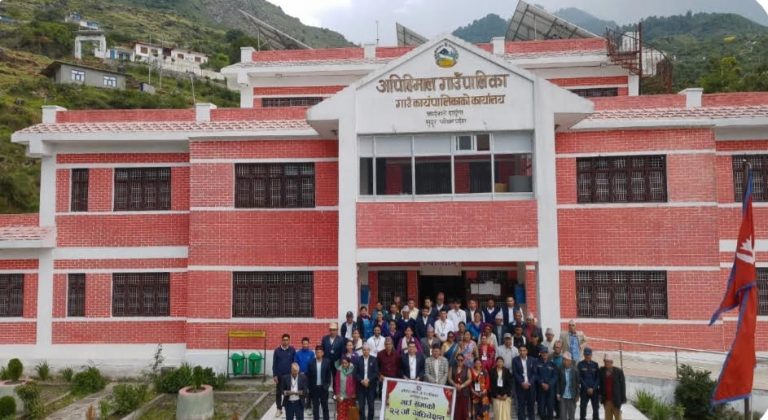
In the autumn season of Ashwin–Kartik, more than 15,000 tourists visited Annapurna Base Camp, confirmed Lok Bahadur Pun, Ward Chairperson of Annapurna Rural Municipality–4. He added that Panchakunda Lake, especially when frozen, remains one of the primary attractions for trekkers seeking unique natural landscapes.
A Rare Winter Marvel in the Himalayas
With its untouched snowy surroundings, glacial terrain, and the dramatic transformation of the lake into a frozen wonder, Panchakunda Lake continues to stand out as a distinctive winter marvel in Nepal’s Himalayas. Locals and trekking guides believe that if promoted properly, the frozen lake could become one of the region’s top winter tourism highlights.