A six-month Chinese language training program targeted at tourism entrepreneurs in Nepal is set to begin from Monday, as part of ongoing efforts to strengthen Nepal–China tourism cooperation and cultural ties.
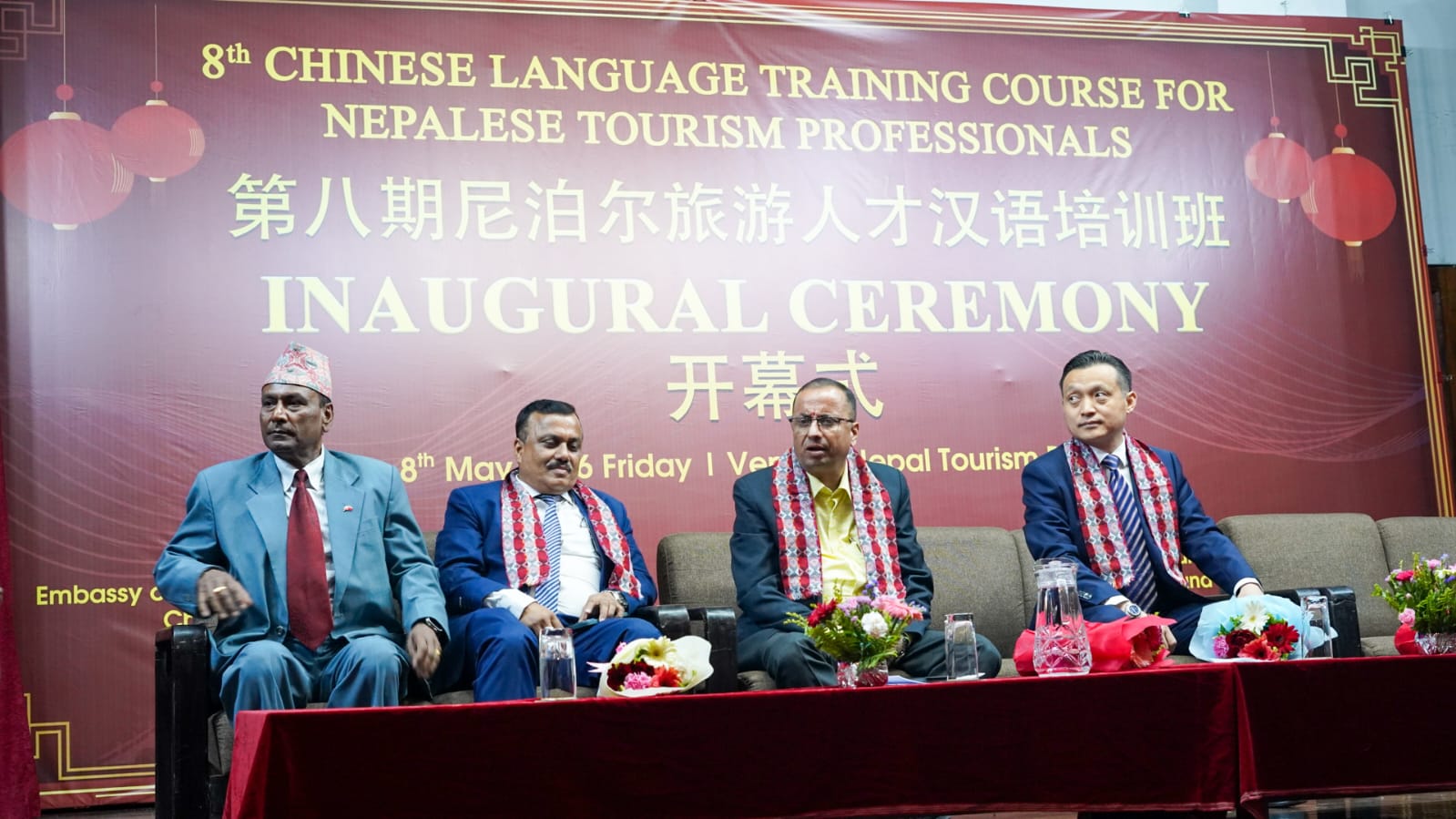
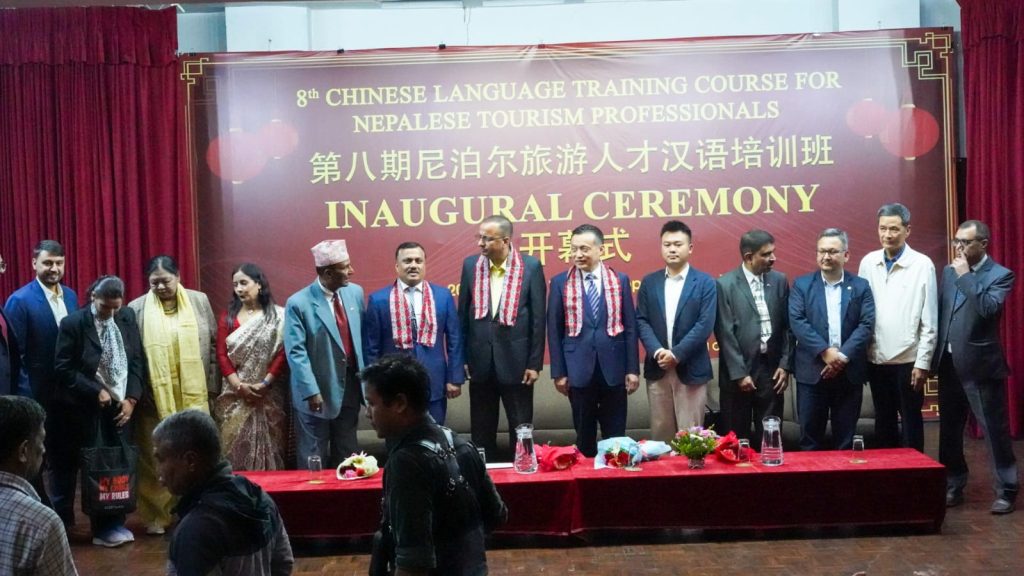
The program, titled the “8th Chinese Language Training for Nepali Tourism Entrepreneurs,” was announced during a press conference and inauguration ceremony held on Friday at the Nepal Tourism Board hall in Kathmandu.
Around 80 Participants from Tourism Sector and Government Agencies
According to organizers, around 80 participants, including tourism entrepreneurs and government officials, will take part in the training sessions. The classes will be conducted every Monday from 5 PM to 7 PM, starting from 28 Baisakh 2083.
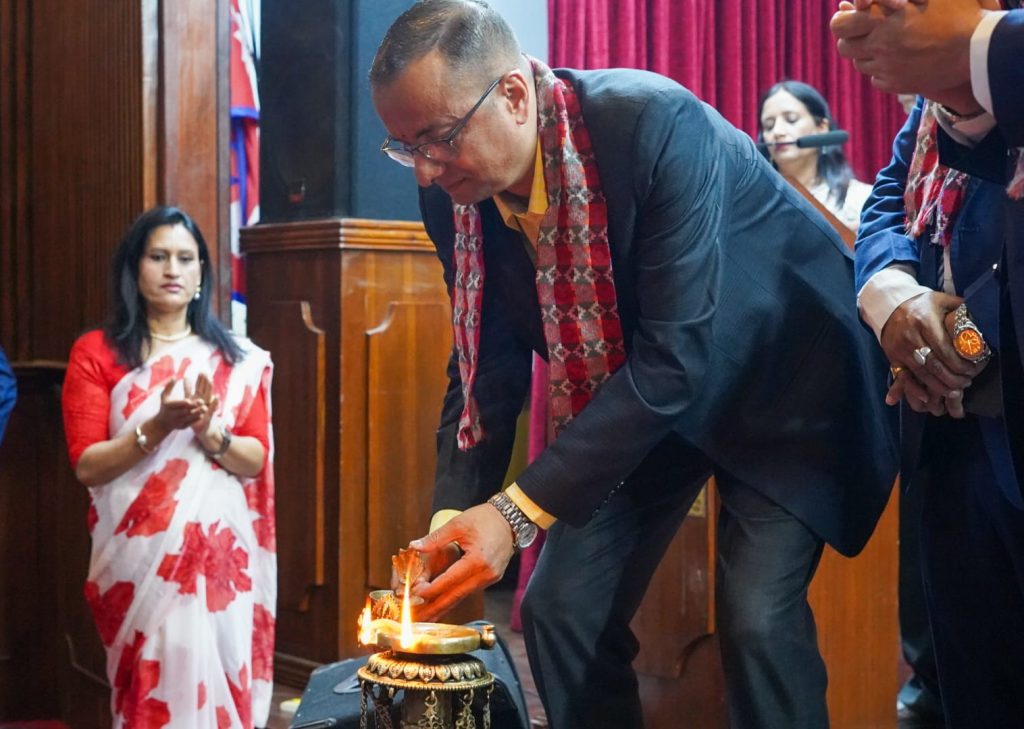
The opening ceremony was attended by senior officials including Mukunda Prasad Niraula, Secretary at the Ministry of Culture, Tourism and Civil Aviation; Chinese Ambassador to Nepal Zhang Maoming; and Hikmat Singh Ayer, Acting CEO of the Nepal Tourism Board.
Other dignitaries included officials from the Department of Tourism, representatives of the Nepal–China Cultural and Educational Council, and members of the Chinese Cultural Center in Nepal.
Language as a Bridge Between Two Nations
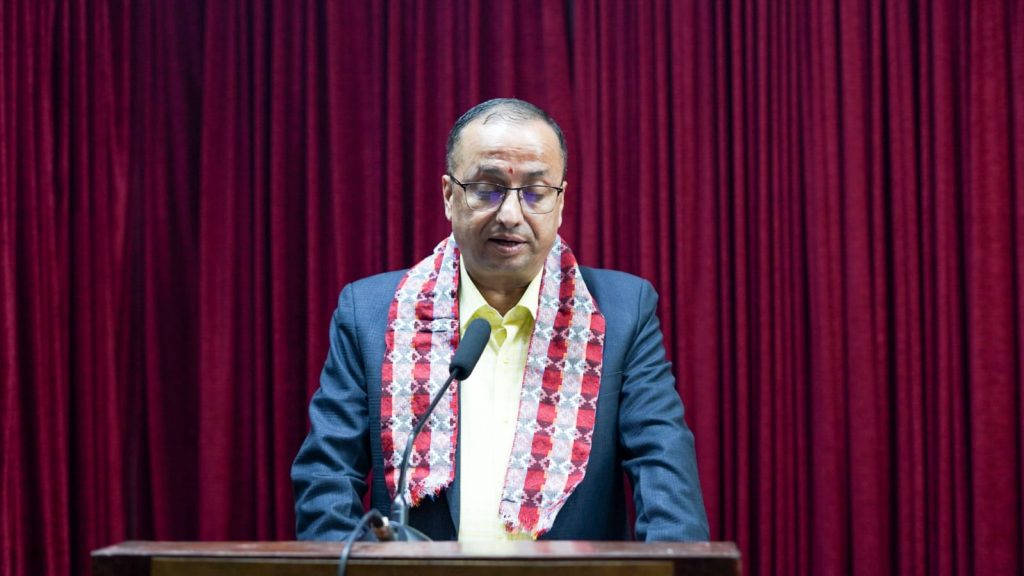
Speaking at the event, Secretary Niraula emphasized that the Chinese language training program will play a vital role in strengthening Nepal–China relations. He highlighted that language is not only a means of communication but also a bridge between cultures and people.
He expressed confidence that Chinese language skills would help connect Nepal more effectively with one of the world’s largest tourism markets. He also extended an invitation to Chinese tourists to visit Nepal and experience its rich cultural and natural heritage.
China Recognizes Nepal as a Key Tourist Destination
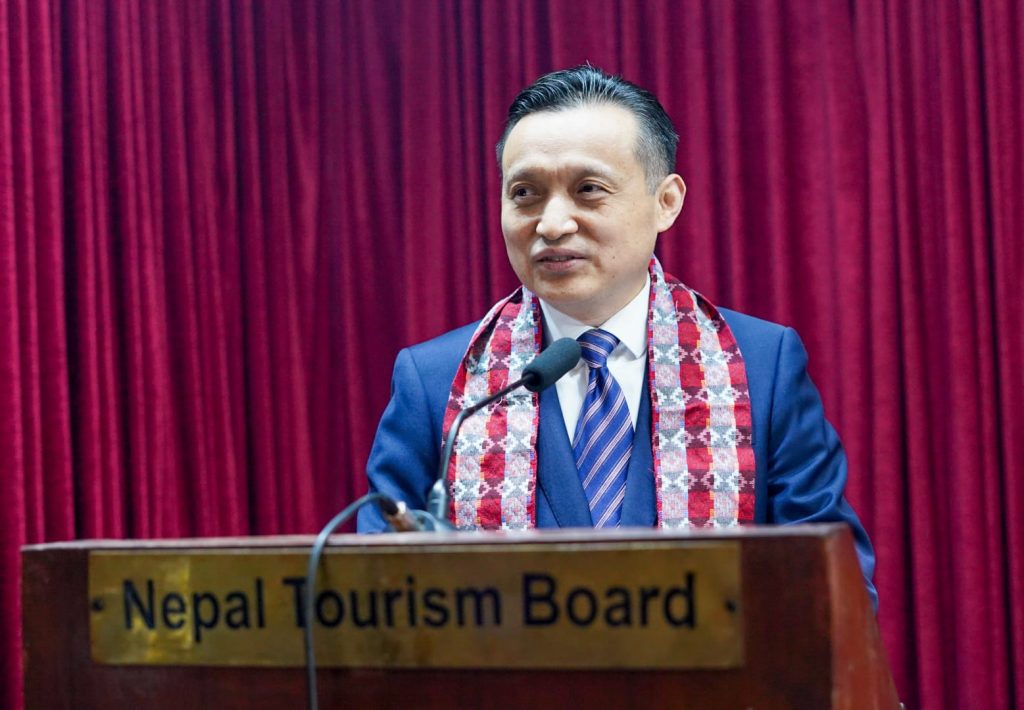
Chinese Ambassador to Nepal Zhang Maoming described Nepal as a country rich in natural beauty and cultural heritage, making it a preferred destination for Chinese tourists.
He shared that more than 11,000 Chinese tourists visited Nepal in April alone, reflecting growing interest in destinations such as the Kathmandu Valley UNESCO World Heritage Sites, Lumbini, and Himalayan trekking routes.
He noted that the Chinese language training program has become an important platform for people-to-people exchanges between the two countries, helping Nepali tourism professionals better communicate Nepal’s cultural and historical narratives to Chinese visitors.
Tourism Board Highlights Skill Development Importance
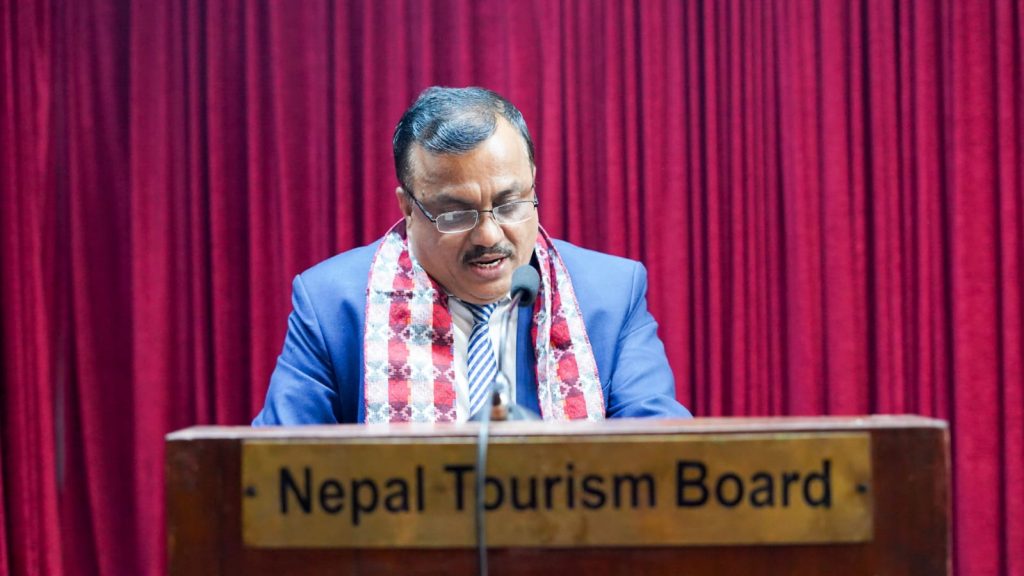
Officiating CEO of the Nepal Tourism Board Hikmat Singh Ayer said the training program will enhance the professional capacity of human resources in the tourism sector.
He emphasized that China remains a key tourism partner for Nepal and that Chinese language skills will open new opportunities in hospitality and tourism services.
“Language removes barriers and opens doors of opportunity,” he said, adding that the program will further strengthen Nepal–China people-to-people relations and contribute significantly to tourism promotion.
Training Program as a Bridge of Friendship
Chairperson of the Nepal–China Cultural and Educational Council, Harichandra Shah, informed that since its inception in 2016, the Chinese language training program has already benefited more than 280 tourism professionals.
He said the initiative has not only improved language skills but also strengthened friendship and cultural exchange between the two countries.
According to him, Chinese language proficiency has increasingly become an essential skill in Nepal’s tourism industry due to the growing number of Chinese visitors.
Focus on Practical Language Skills for Tourism Professionals
The six-month training program will cover basic Chinese language skills along with practical training in tourist guidance, communication, and service-oriented interaction.
Participants will be trained to handle real-life tourism scenarios, enabling them to effectively engage with Chinese-speaking tourists and improve overall service quality.
Strengthening Nepal–China Tourism Cooperation
Organizers believe the program will play a crucial role in boosting Nepal’s tourism sector by improving service standards and enhancing communication with Chinese visitors.
With China being one of Nepal’s most important tourism source markets, the initiative is expected to further deepen bilateral cooperation and promote sustainable growth in the tourism industry.