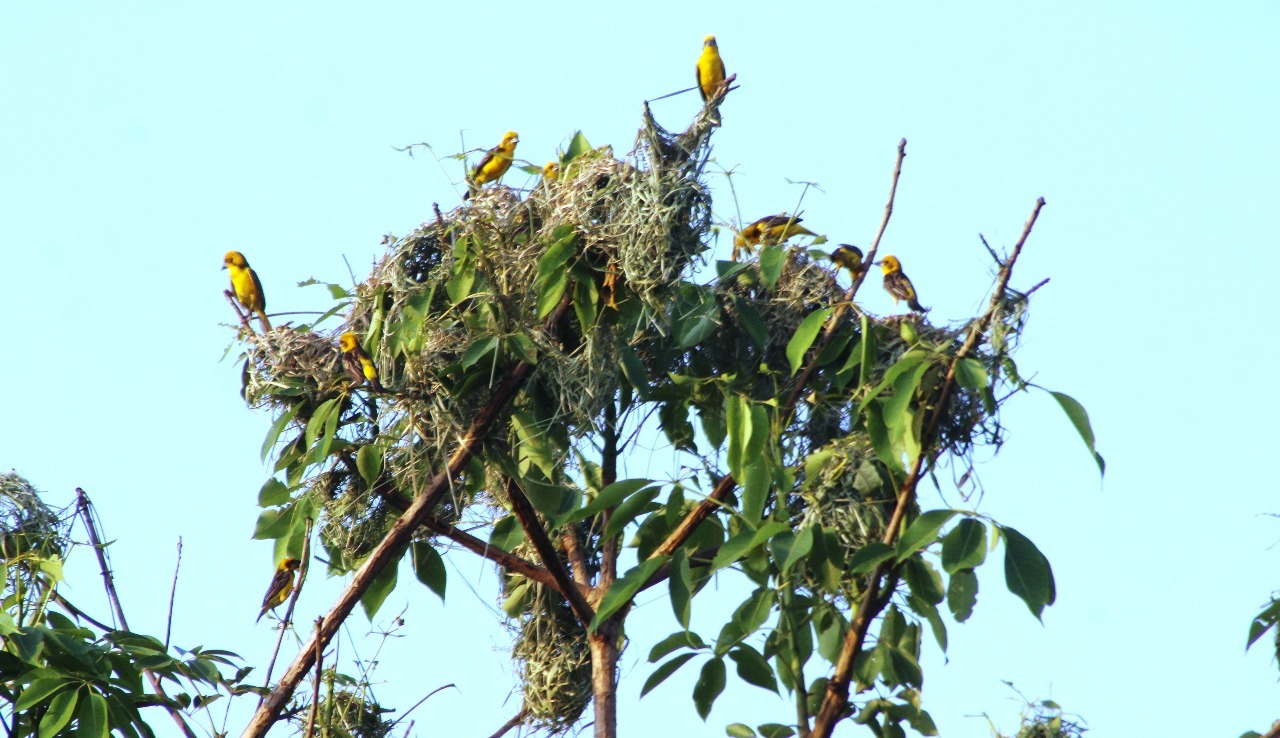
The population of the rare Golden Weaver bird (Sunaulo Topchara) in Nepal’s Shuklaphanta National Park has seen a worrying decline, according to a recent bird count jointly conducted by Bird Conservation Nepal (BCN) and the Shuklaphanta National Park authorities. Over a five-day survey, experts recorded only 184 individuals, a significant drop from 213 birds counted in the previous year.
This alarming trend has raised red flags among conservationists and ornithologists, who cite habitat degradation, pesticide use, and predation as primary reasons behind the falling numbers.
Grassland Destruction: The Core Threat to the Species
According to Hirulal Dagaura, a bird specialist from BCN involved in the survey, the destruction of grasslands, especially in areas surrounding the park, is the most pressing threat to the Golden Weaver. These grasslands are essential for the bird’s nesting and breeding habits, as they typically build nests in shrubs and trees located in open, grassy habitats.
“In the past, large stretches of grassland were found outside the park boundaries,” Dagaura explains. “However, due to encroachment and increasing human settlements, these lands have been overtaken by agriculture and infrastructure. As a result, only the grasslands within the park’s protected core now remain suitable for the birds.”
He also emphasized that the birds, in their search for food, often venture into nearby agricultural fields. Unfortunately, these fields are increasingly treated with chemical pesticides, which can prove fatal to birds consuming contaminated grains and insects.
Predation and Environmental Pressure on Breeding Success
Apart from habitat loss, the Golden Weaver’s reproductive success is also being threatened by predatory birds, which often consume the eggs and chicks from nests during the breeding season.
Park Conservation Officer Purushottam Bagale points out that migration and shifting feeding patterns might be additional factors contributing to the population decline. “Though the core grassland habitat within the park remains relatively stable, the population pressures from surrounding changes are undeniable,” he notes.
Bagale adds that the Golden Weaver is a Terai-specific species, found only in the lowland plains of Nepal. Among the four known types of weavers in Nepal, Chestnut-headed Weaver, Streaked Weaver, Baya Weaver, and Golden Weaver, the Golden Weaver is globally endangered and its presence is now limited to select areas like Shuklaphanta.
Unique Nesting Habits and Social Behavior of the Golden Weaver
The Golden Weaver, known for its bright yellow plumage with streaks, is often mistaken for a type of finch or small parrot. However, its unique nest-building behavior sets it apart. The birds weave intricately designed nests using leaves and twigs, often hanging from thorny trees near wetlands or grassy meadows.
“These birds are highly social,” Dagaura explains. “They nest in colonies, forage together, and communicate actively. This makes them an essential part of the ecological system and even a natural pest controller, as they feed on insects and pests that harm crops.”
The breeding season typically begins in May and lasts through September, with most nests found in the central grassland areas of the national park. These nests are carefully crafted on branches using woven grass and leaves, demonstrating the bird’s artistic and cooperative nature.
Historical Sightings and Conservation Efforts
The Golden Weaver was first spotted in Shuklaphanta in 1996, and since then, the national park has taken steps to monitor and conserve the species. Regular surveys, habitat maintenance, and awareness campaigns have helped raise attention to the species’ plight.
Currently, the bird’s core habitats include areas like Sikari Tal, Shuklaphanta, Maluwabela, Lalpani, Haryaya Phanta, Panchhi Tal, Bir Singh Tapu, Sundariphanta, Singhpurphanta, Radhapurphanta, and Badani Khera. These zones have been the primary focus of the recent survey conducted by a technical team of eight experts from BCN and the park. The bird survey covered the entire 305 square kilometers of park area, which is also home to over 400 bird species, making it one of Nepal’s richest avian habitats.
Urgent Need for Sustainable Solutions
The declining numbers of the Golden Weaver have highlighted the urgent need for integrated conservation strategies, both within and outside protected areas. Experts are calling for:
- Restoration of grasslands surrounding the national park.
- Strict regulation of pesticide use in agricultural lands near conservation zones.
- Enhanced monitoring during the breeding season to reduce egg and chick predation.
- Community engagement programs to create awareness among local farmers and residents.
Given its ecological importance and globally endangered status, the Golden Weaver bird deserves greater protection efforts and policy-level intervention. As Nepal continues its commitment to biodiversity conservation, Shuklaphanta National Park remains a crucial stronghold for ensuring that this vibrant species doesn’t vanish from the wild.
Conservationists hope that with active support from local communities, scientific research, and government initiatives, the Golden Weaver will not only survive but once again thrive in the lush grasslands of Nepal.