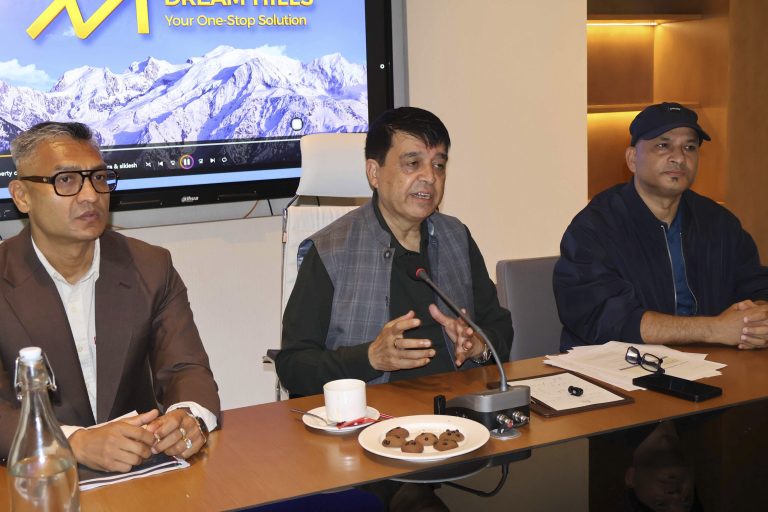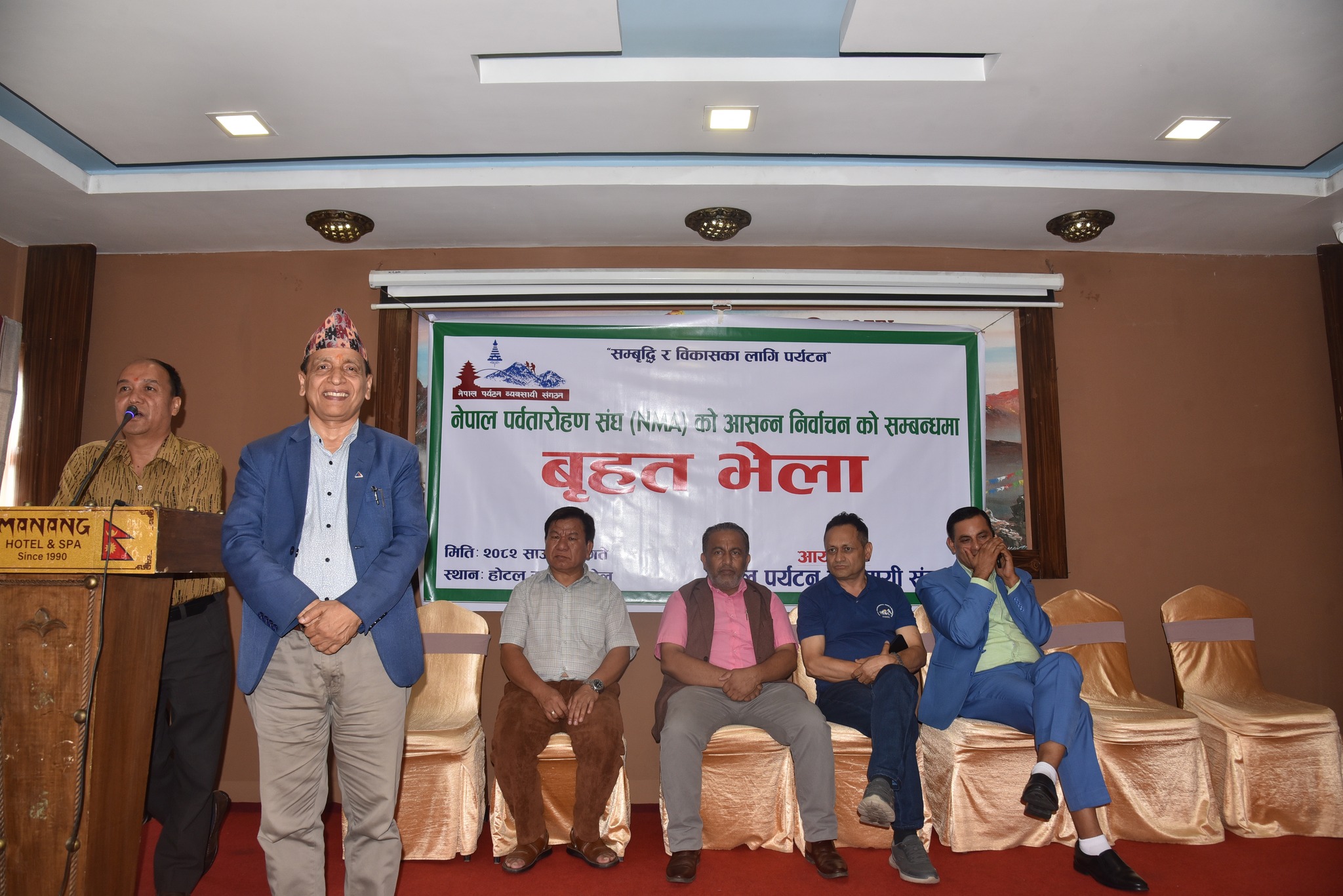
Thakur Raj Pandey, the current Senior Vice President of the Nepal Mountaineering Association (NMA), has officially declared his candidacy for the association’s presidency in the forthcoming election scheduled for August 23, 2025 (Bhadra 7). The announcement was made public by the Nepal Tourism Entrepreneurs’ Organization, a tourism-related group aligned with the CPN (Maoist Centre), during a dedicated event held in Thamel on Monday.
Pandey’s entry into the race brings momentum to the ongoing leadership transition discussions within NMA. A seasoned figure in Nepal’s mountain tourism industry, Pandey’s candidacy is viewed by many as a move to combine institutional experience with inclusive leadership, aiming to elevate the status and structure of the association.
A Veteran’s Leap into Leadership
Hailing from Dhading District, Thakur Raj Pandey has long been active in the adventure tourism sector and the NMA’s internal leadership. He previously served as General Secretary of the Nepal Mountaineering Association, and his tenure was marked by efforts to streamline organizational efficiency and improve coordination among member institutions.
Known for his calm demeanor and consultative leadership style, Pandey has earned respect across the mountaineering and tourism communities. His candidacy reflects the aspiration of many tourism stakeholders who want to see a leader with both experience in the field and a progressive vision at the helm of NMA.
In his declaration remarks, Pandey emphasized his dedication to strengthening mountain tourism infrastructure, supporting climbers’ welfare, and enhancing Nepal’s global reputation as a premier destination for high-altitude adventure. His campaign is expected to focus on institutional reforms, inclusive representation, and closer coordination between public and private tourism bodies.
Inclusive Dialogue Begins for Panel Formation
Along with Pandey’s presidential bid, the Nepal Tourism Entrepreneurs’ Organization has initiated a move to build a consensus-based panel for the upcoming election. The organization has formed a Dialogue Committee tasked with holding discussions with various tourism professionals and mountaineering figures to ensure broader representation and unity in the NMA leadership.
The committee, chaired by Nawaraj Pandey, the president of the organization, includes several influential figures from the tourism sector: Rishi Bhandari, Abir Mall, Rajendra Lama, Dawa Sherpa, Ambir Gurung, and Rajkumar Dhamala. Their collective effort is aimed at bridging divides, aligning interests, and forming a robust leadership panel that reflects the diversity of the mountaineering industry.
This consultative approach signals an effort to avoid fragmented candidacies and promote cohesion within the NMA at a critical time, as the association faces challenges related to environmental preservation, international competition, and post-pandemic recovery.
Rising Expectations Amidst a Changing Landscape
The upcoming NMA election is not just about leadership replacement, it comes at a crucial time for Nepal’s mountain tourism sector, which has seen both tremendous growth and rising challenges. Issues such as overcrowding on popular peaks like Everest, mountain safety, environmental sustainability, and climbers’ welfare have all gained national and international attention.
Pandey’s supporters argue that his experience in navigating institutional processes and his strong networks within both government and private sectors make him a suitable candidate to guide NMA through these evolving dynamics. They believe his tenure could herald much-needed reforms in permit systems, training protocols, climber insurance, and emergency rescue mechanisms.
Furthermore, his roots in Dhading, a district deeply connected to mountain tourism and trekking routes, provide him with firsthand understanding of the issues faced by local communities and tourism entrepreneurs.
Stakeholder Involvement to Shape Election Outcome
With Pandey’s candidacy now officially announced, more candidates are expected to come forward in the days ahead, each bringing their own priorities and support bases. However, the formation of a consensus panel may reduce competition and allow for a more unified leadership approach, something many in the industry have called for.
The Nepal Mountaineering Association, established in 1973, is a key institution in Nepal’s adventure tourism landscape. It issues climbing permits for peaks below 6,500 meters, coordinates with international mountaineering bodies, promotes Himalayan conservation, and provides training for guides and climbers. Therefore, its leadership directly influences the policies and practices that shape the mountaineering ecosystem.
A Pivotal Moment for Nepal’s Mountaineering Future
As the countdown to the August election continues, the candidacy of Thakur Raj Pandey has added weight and direction to the leadership discourse within the NMA. With his rich experience, organizational background, and support from key tourism stakeholders, Pandey stands as a strong contender for the top post.
The coming weeks will likely see intense discussions, alliance-building, and campaign activities. Much will depend on the success of the Dialogue Committee in uniting various interest groups and forming a leadership team that can command trust and deliver progress.
In an industry where the stakes are as high as the mountains themselves, the leadership of the NMA must be equipped to tackle both opportunities and challenges, from improving infrastructure and safety to preserving Nepal’s natural heritage. Thakur Raj Pandey’s candidacy could be a defining step in that direction.