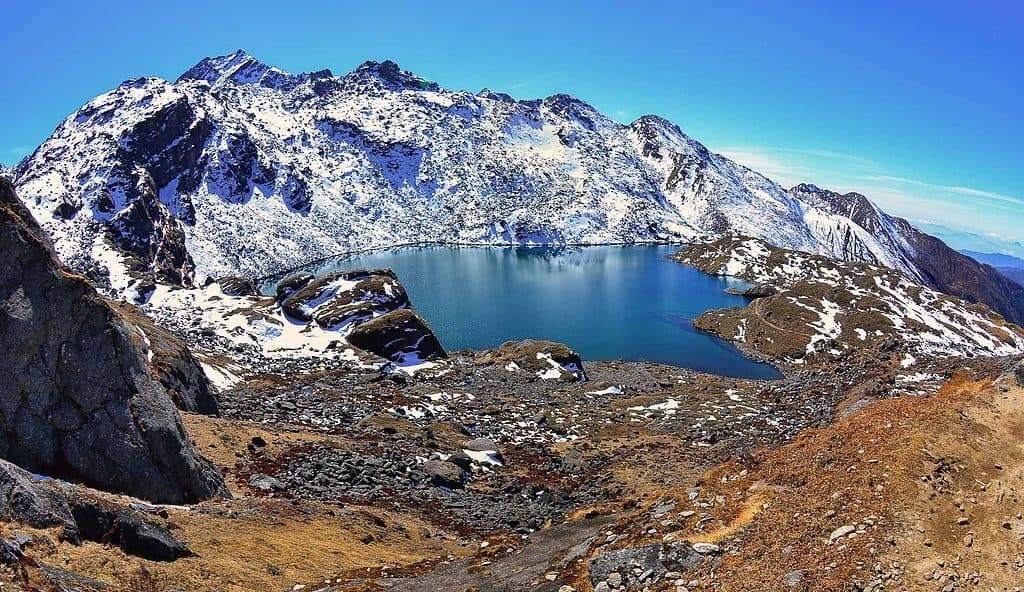
Thousands of devotees who flocked to the sacred pilgrimage site of Gosainkunda for ritual bathing and worship during the Janai Purnima festival have begun their journey back home. The revered Himalayan lake, situated at an altitude of 4,380 meters in Rasuwa district, witnessed a massive influx of pilgrims over the past few days, culminating in the full moon day celebrations.
Safe Conclusion of Pilgrimage
According to Police Inspector Pannalal Yadav, who was stationed at the Gosainkunda base camp for security purposes, approximately 4,000 devotees took a holy dip in the lake on the day of the full moon and have now departed for their respective destinations. “More than half of the pilgrims have already reached Dhunche, while the rest are descending towards Chandanbari,” he said.
Authorities had intensified security arrangements throughout the festival period to ensure the safety of the pilgrims. No disputes or incidents were reported during the event. Measures were also taken to facilitate devotees, including provisions that allowed easy access to the sacred lake without the need for long detours, as well as arrangements for those who lacked accommodation to rest comfortably. To preserve the sanctity of the pilgrimage site, the surroundings of the lake were kept clean with continuous sanitation efforts.
Record Attendance of Pilgrims
The Gosainkunda Area Development Committee estimated that around 10,000 pilgrims visited the site from Nag Panchami to Janai Purnima this year. Committee Chairman Sanjiv DM reported that a total of 715 four-wheeled vehicles and about 400 two-wheelers entered Rasuwa carrying devotees during the festival period.
The influx included both domestic and international visitors, with many undertaking the challenging trek from Dhunche or other entry points to reach the lake. Despite the high altitude and difficult terrain, the devotion of the pilgrims remained unwavering, and the event concluded without major safety concerns.
Strong Security and Rescue Presence
Significant coordination among various security and rescue forces contributed to the smooth management of the festival. The Nepal Army’s Shreenath Battalion, the Armed Police Force’s 20th Battalion, and the Nepal Police worked together to ensure safety and order.
In the health sector, Gosainkunda Rural Municipality, District Hospital Rasuwa, the Public Health Office, Nepal Army medical teams, District Ayurvedic Office, Himalayan Rescue Association, Green City Hospital, Panchdham Committee, and the Young Communist League, affiliated with the CPN (Maoist), played vital roles in providing medical services to pilgrims.
Chief District Officer Arjun Paudel acknowledged the valuable contributions of these institutions, noting that their cooperation and readiness helped prevent potential emergencies and respond promptly to any health-related incidents.
Health Challenges at High Altitude
While the majority of pilgrims completed their journey without incident, the challenging altitude of Gosainkunda did pose health risks for some. According to medical personnel, about 20 individuals experienced acute mountain sickness with complications such as fluid accumulation in the brain (cerebral edema) or lungs (pulmonary edema). These cases required immediate evacuation, and with the assistance of security personnel, patients were transported to well-equipped hospitals for treatment.
The medical teams emphasized the importance of altitude awareness for future pilgrims, advising that proper acclimatization and timely medical attention are crucial when visiting high-altitude pilgrimage sites.
Effective Management and Coordination
Committee Chairman Sanjiv DM credited the festival’s success to effective cooperation among government bodies, security agencies, health institutions, and social organizations. The Gosainkunda festival often draws a large and diverse crowd, making crowd management and safety arrangements challenging, yet this year’s event proceeded without major disruptions.
The committee worked to ensure that pilgrims not only had a safe and spiritual experience but also that the ecological balance of the sacred site was preserved. Continuous cleaning efforts were carried out to prevent littering and maintain the pristine environment of the lake, which holds deep religious significance for both Hindus and Buddhists.
Cultural and Religious Significance
Gosainkunda holds a prominent place in Nepal’s cultural and spiritual heritage. According to Hindu mythology, the lake was created by Lord Shiva when he struck the ground with his trident to quench his thirst after swallowing poison during the churning of the ocean. The water of Gosainkunda is considered sacred, and bathing in it during Janai Purnima is believed to cleanse devotees of sins and grant them blessings.
For Buddhists, the lake is equally revered, with legends linking it to Guru Rinpoche (Padmasambhava) and other important spiritual figures. This shared reverence contributes to Gosainkunda’s unique role as a site of religious harmony in Nepal.
Looking Ahead
Local authorities and the Gosainkunda Area Development Committee are optimistic about future pilgrimages, noting that lessons learned from this year’s management will be applied to further improve safety, accessibility, and environmental protection. With continued collaboration among stakeholders, Gosainkunda is expected to remain a beacon for both spiritual seekers and nature lovers.
The success of this year’s Janai Purnima festival underscores the resilience of Nepal’s religious traditions and the enduring appeal of its sacred landscapes. As the pilgrims return home carrying holy water, blessings, and cherished memories, Gosainkunda once again stands as a testament to faith, devotion, and the unity of people from all walks of life.