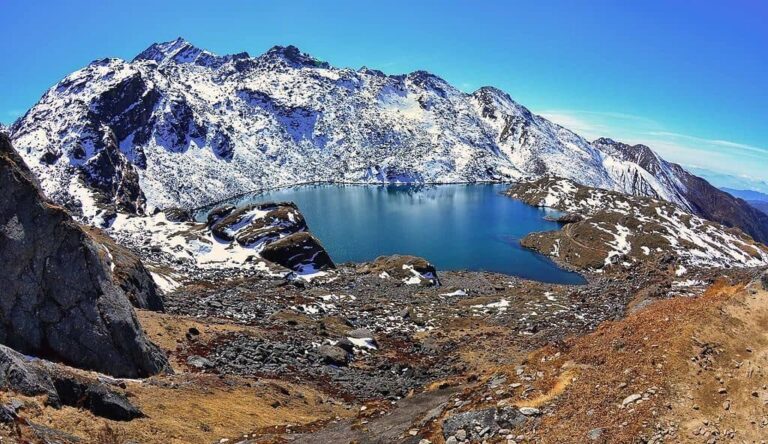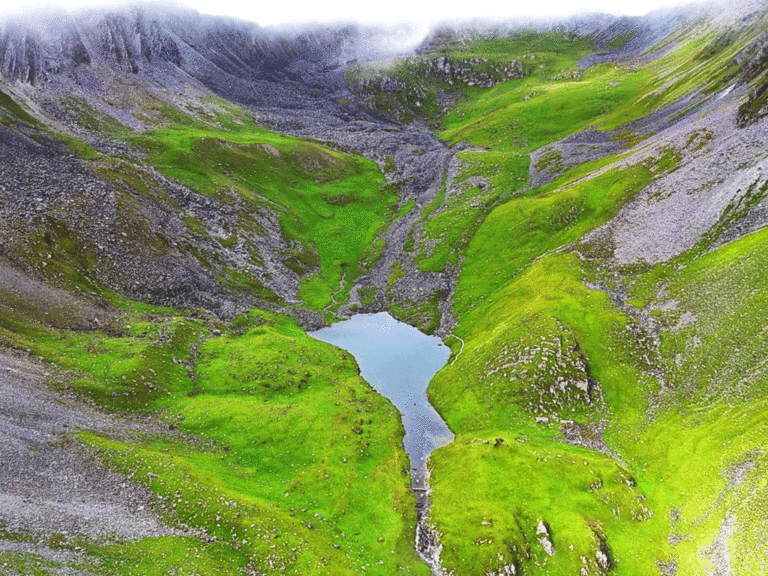
Surrounded by towering hills and embraced by pristine still waters, Jalpatal offers a serene escape for those who venture into the remote highlands of Baglung district. Situated at an altitude of 4,400 meters in Dhorpatan Municipality–9, the lake presents a breathtaking view with its calm blue waters, colorful flowers, and a peaceful environment reminiscent of a heavenly retreat. Despite its unmatched natural beauty, Jalpatal remains largely unknown to domestic and international travelers.
During the monsoon season, herders bring their flocks to graze on the lush alpine pastures around Jalpatal. For four months, the area becomes home to these herders, but trekkers and tourists rarely make it to the lake due to poor access and a lack of infrastructure.
A Shared Landmark Between Two Districts
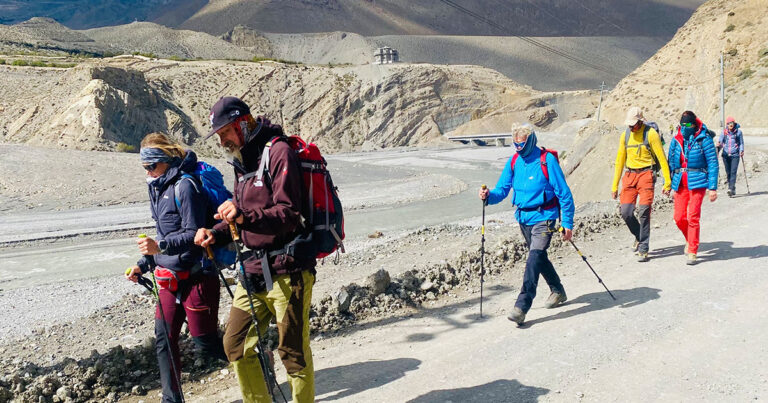
Jalpatal lies on the border of Baglung’s Dhorpatan Municipality and Putha Uttarganga Rural Municipality of Rukum East. Traditionally, herders from both districts have used the lake and surrounding pastures as a seasonal settlement. From the Dhorpatan valley, it takes two days of trekking to reach Jalpatal, yet the absence of a proper trekking trail discourages many potential visitors. Those who do make the journey usually rely on word of mouth and local guidance rather than clear signage or mapped trails.
Untapped Tourism Potential
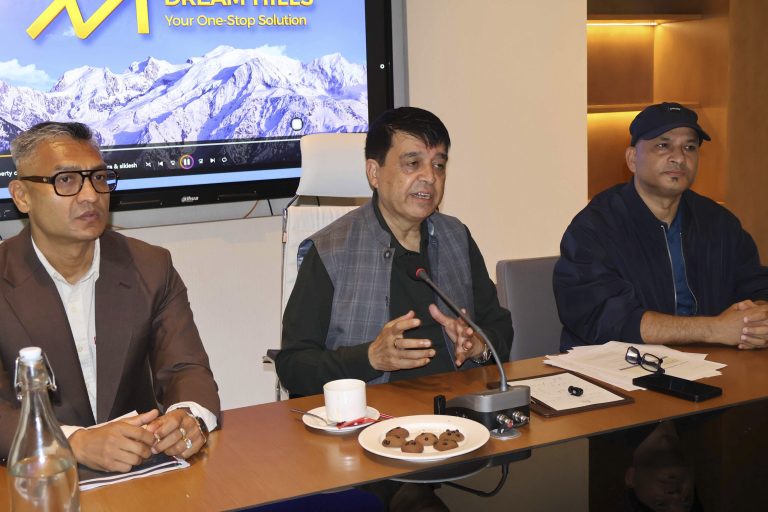
The trekking route to Jalpatal passes through picturesque points such as Pakhathar, Garpacheda, Phurse Deurali, and Phagun, each offering magnificent natural views. However, the lack of promotion has left overshadowed compared to nearby destinations. According to Jivan Pun, President of the Dhorpatan Hotel Entrepreneurs’ Association, the state must actively promote Jalpatal as a tourism destination and develop access trails to unlock its true potential.
He emphasized that Jalpatal could attract a large number of tourists if infrastructure and marketing are improved. “Last year, Bukipatan was little known, but after promotion and trail development, more than one hundred tourists now visit Tikhadhara and Garpacheda daily. Jalpatal deserves the same attention and facilities,” Pun noted.
Voices Calling for Promotion and Infrastructure
Visitors who have reached Jalpatal describe it as a “piece of heaven.” Journalist Binod Dhungana from Tanahun shared his experience, saying, “The view of Jalpatal makes you feel like you have discovered a slice of paradise. For trekkers seeking destinations away from urban chaos, this is an ideal location.” However, he highlighted the urgent need for well-maintained trekking routes and information boards to guide visitors.
Dhungana also raised concerns over environmental risks. The mountains surrounding Jalpatal face soil erosion, and without proper conservation measures, the lake could shrink in the near future. He argued that infrastructure development should go hand in hand with environmental preservation to secure Jalpatal’s future as a sustainable destination.
Local Government’s Plan for Development
Dhan Bahadur Kayat, Deputy Mayor of Dhorpatan Municipality, acknowledged that remains in the shadows due to lack of promotion. “A few tourists from around Dhorpatan occasionally visit, but very few outsiders know about Jalpatal. How can they come if there is no promotion?” he remarked.
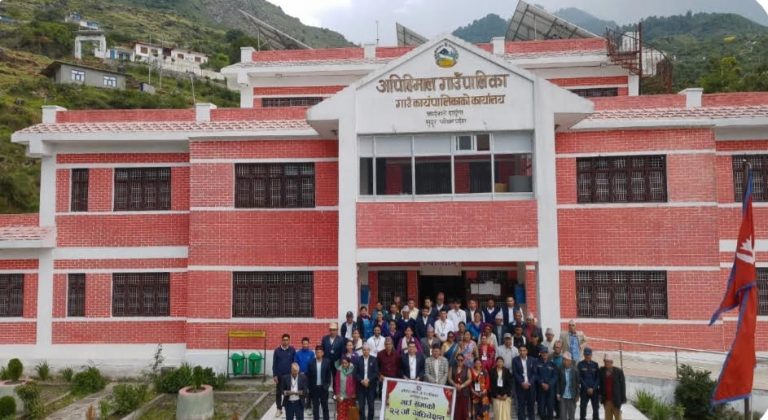
Kayat revealed that the municipality plans to install information boards and construct trekking trails this year. However, he admitted that the local government alone cannot finance large-scale infrastructure due to it’s remote location. Cooperation with provincial and federal governments is essential. To boost tourism in the area, the municipality also intends to organize a tourism festival that highlights not only Jalpatal but also other hidden attractions in the Dhorpatan region, including Bukipatan.
The Road Ahead: From Hidden Gem to Tourist Hotspot
Tourism entrepreneurs, journalists, and local authorities agree that Jalpatal has immense potential to become a new trekking and eco-tourism hub. With the right policies, investment, and promotion, it could attract both domestic and international visitors seeking pristine nature, cultural experiences, and adventure away from crowded destinations.
Key steps suggested for unlocking Jalpatal’s tourism potential include developing a safe and accessible trekking route, installing proper signboards and information centers, and conducting targeted promotional campaigns through tourism boards. At the same time, ensuring conservation to protect the fragile ecosystem is vital. Equally important is engaging local communities in eco-friendly tourism businesses, which would not only support sustainable practices but also generate much-needed employment opportunities in the region.
If these measures are implemented, Jalpatal could soon join the list of popular high-altitude lakes in Nepal, alongside Rara and Tilicho. Its scenic beauty, cultural significance, and remoteness make it a unique destination with the potential to transform the tourism economy of Dhorpatan and Rukum.
Jalpatal remains an undiscovered jewel in Nepal’s tourism landscape. Hidden at 4,400 meters, it offers stunning natural beauty and cultural richness but lacks the infrastructure and promotion needed to attract significant tourist flow. With coordinated efforts from local, provincial, and federal authorities, alongside the involvement of the private sector, Jalpatal could emerge as a premier trekking destination, contributing to local livelihoods and strengthening Nepal’s reputation as a haven for natural wonders.