Bajura’s Badi Malika, often regarded as a heavenly land, has been gaining prominence as a significant religious and tourism destination for both pilgrims and visitors. According to legend, when Lord Shiva was wandering the earth, the left shoulder of Goddess Sati fell in this region, leading to the divine presence of Goddess Badi Malika. Local priest Bhanu Bhakta Padhyaya explained that Lord Shiva is also believed to have resided here for a long time, adding to its religious significance.
Natural Beauty and Spiritual Grandeur
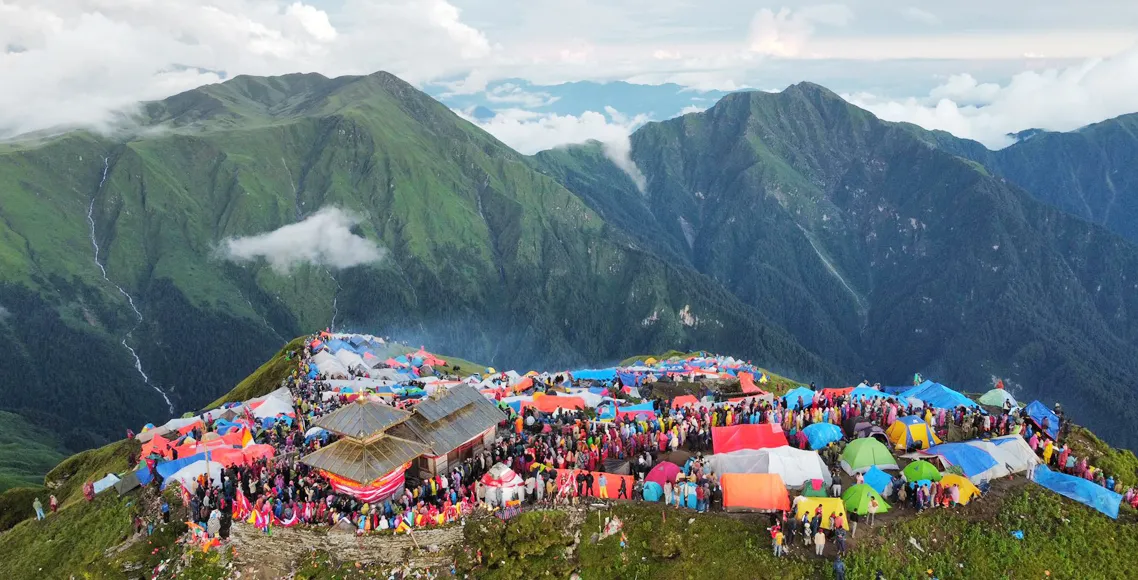
The sacred site is blessed with lush green meadows, rare wildlife, and ancient myths. The combination of natural scenery, spiritual faith, and cultural tradition has made Badi Malika increasingly popular among domestic and international religious tourists in recent years. The panoramic Himalayan views, the rare chance to walk on snow, and the enchanting landscapes are considered priceless gifts of this destination.
The area, standing at 4,219 meters above sea level, boasts attractions like the Triveni, 22 alpine meadows, colorful flowers, Vishnupani, and Dharmadwar. Locals narrate that paddy planted during the mythical battle between Goddess Bhagwati and the demon Mahishasura still remains intact in the region. Wildlife including pheasants, musk deer, and other rare species also enrich the biodiversity of this sacred land. On clear days, magnificent Himalayan ranges such as Api and Saipal are visible from Badi Malika.
Challenges of Accessibility and Infrastructure
Reaching Badi Malika is not without challenges. With the absence of proper road infrastructure, visitors must rely on traditional trails and walk long distances. Despite the difficulties, devotees express that the peace, greenery, and natural grandeur of the site make the hardships worthwhile.
However, pilgrims frequently raise concerns about the lack of infrastructure. The absence of standard roads, drinking water facilities, rest houses, and toilets make the journey uncomfortable. Moreover, the lack of safe walking trails poses risks, as several devotees have suffered accidents, with some even losing their lives while making the arduous climb.
Government Efforts Toward Development
Acknowledging the importance of Badi Malika, the Ministry of Industry, Tourism, Forests, and Environment of Sudurpaschim Province has announced plans to construct rest houses and guest facilities equipped with toilets. Acting Chief of the Province Tourism Development Program, Dabal Bahadur Bohara, stated that while some trekking routes have already been built, geographical remoteness and harsh weather conditions have delayed broader infrastructure development.
Bohara further shared that with support from the Asian Development Bank, additional infrastructure will be expanded in the coming years. He also noted that due to the high altitude, some pilgrims suffer from altitude sickness, highlighting the need for proper medical and safety facilities.
A Sacred Fair with Thousands of Devotees
This year, more than 45,000 devotees participated in the annual fair and worship of Goddess Badi Malika. The fair, which began on July 30 (Shrawan 14) with a special ritual, concluded on August 8 (Shrawan 23) with the main puja on the eve of Janai Purnima.
According to Nepal Scout Sudurpaschim Commissioner Narendra Thapa, the Nepal Army undertook the restoration of the dilapidated temple this year with an investment of nearly NPR 20 million. A new artistic structure was inaugurated, adding grandeur to the temple premises. For nine days, nine Brahmin priests conducted continuous rituals, purifications, and prayers as part of the celebration.
Traditionally, the main worship was conducted only on the fourteenth day of Shrawan, but this year, due to the temple’s renovation, the festivities lasted longer. Pilgrims arrived not only from various districts of Nepal but also from neighboring India, highlighting the temple’s cross-border spiritual appeal.
Cultural Vibrancy and Lasting Belief
The temple premises came alive with traditional music, cultural performances, and enthusiastic participation from pilgrims. Journalist Padam Bahadur Singh, who attended the event, noted that the cultural vibrancy and devotion made the environment truly lively.
While the main puja coincides with Janai Purnima, visitors also travel to Badi Malika throughout the year. According to priest Padhyaya, devotees strongly believe that worshiping Badi Malika fulfills wishes, cures illnesses, and blesses childless couples with children.
Toward a Promising Future
Despite the current challenges of infrastructure and accessibility, Badi Malika holds immense potential as a combined religious and tourism hub. With improved facilities, promotion, and conservation efforts, this sacred land can be transformed into a sustainable destination blending spirituality, culture, and eco-tourism.