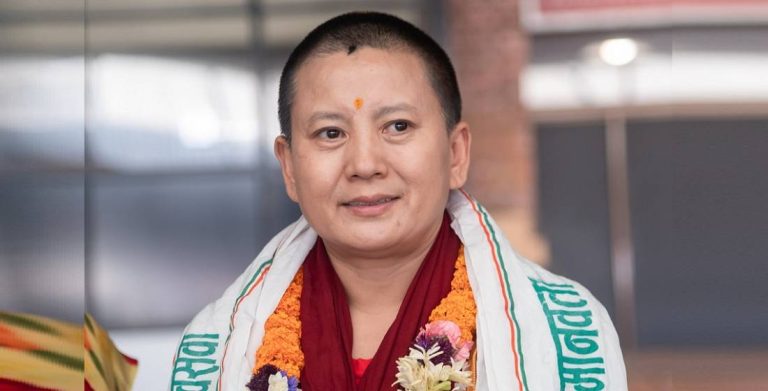
Following recent Gen-Z protests and unprecedented climatic challenges, the District Hotel Entrepreneurs Association (DHEA), Kathmandu, has taken decisive steps to reassure both domestic and international tourists that Nepal remains a safe and welcoming destination. Through coordinated action across the capital’s key tourism hubs, the association is actively working to restore confidence in Nepal’s hospitality sector and ensure visitors have a seamless travel experience.
In recent months, Nepal’s tourism industry faced significant disruption. Protests by young activists highlighted concerns ranging from social issues to urban infrastructure, while heavy rainfall and climatic variability caused localized disturbances, impacting transportation and hotel operations. Recognizing the potential for negative perceptions to spread internationally, DHEA mobilized its member hotels to implement comprehensive safety and hospitality measures across Kathmandu.

Passenger Assistance and Safety Measures at Tribhuvan International Airport
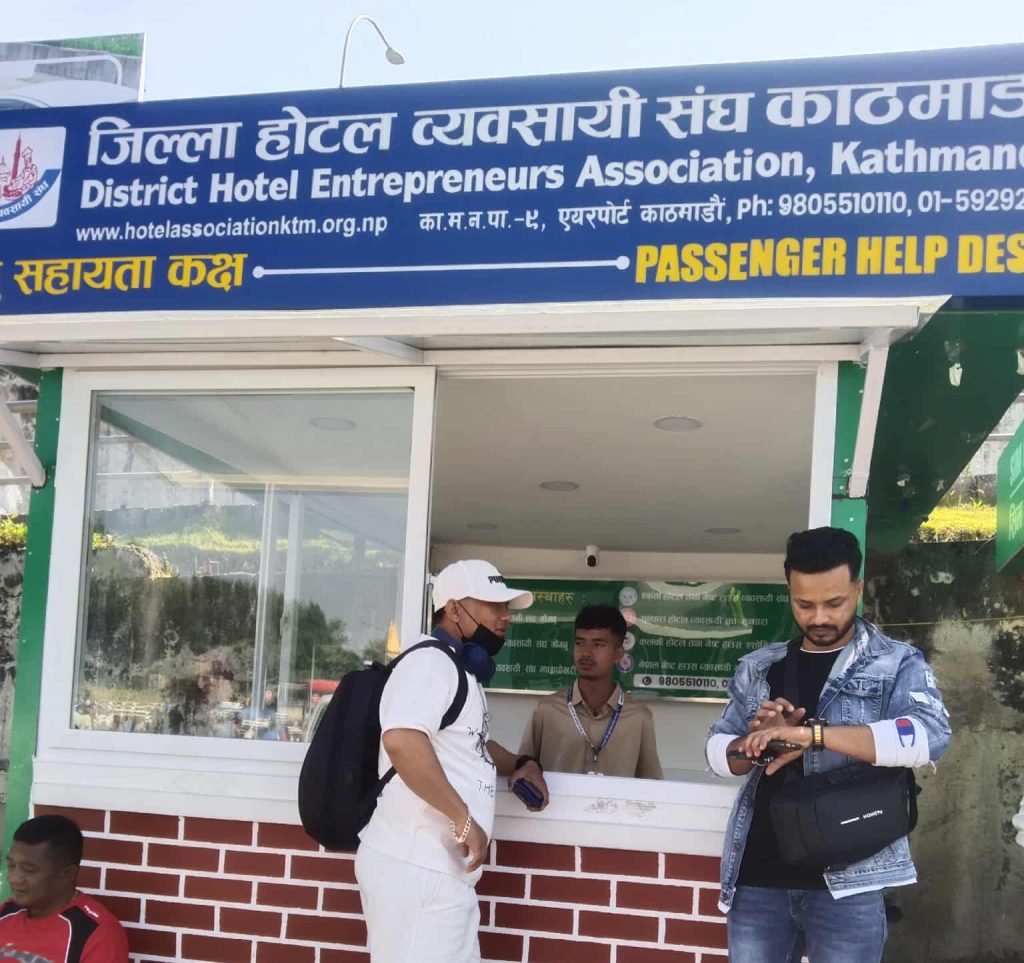
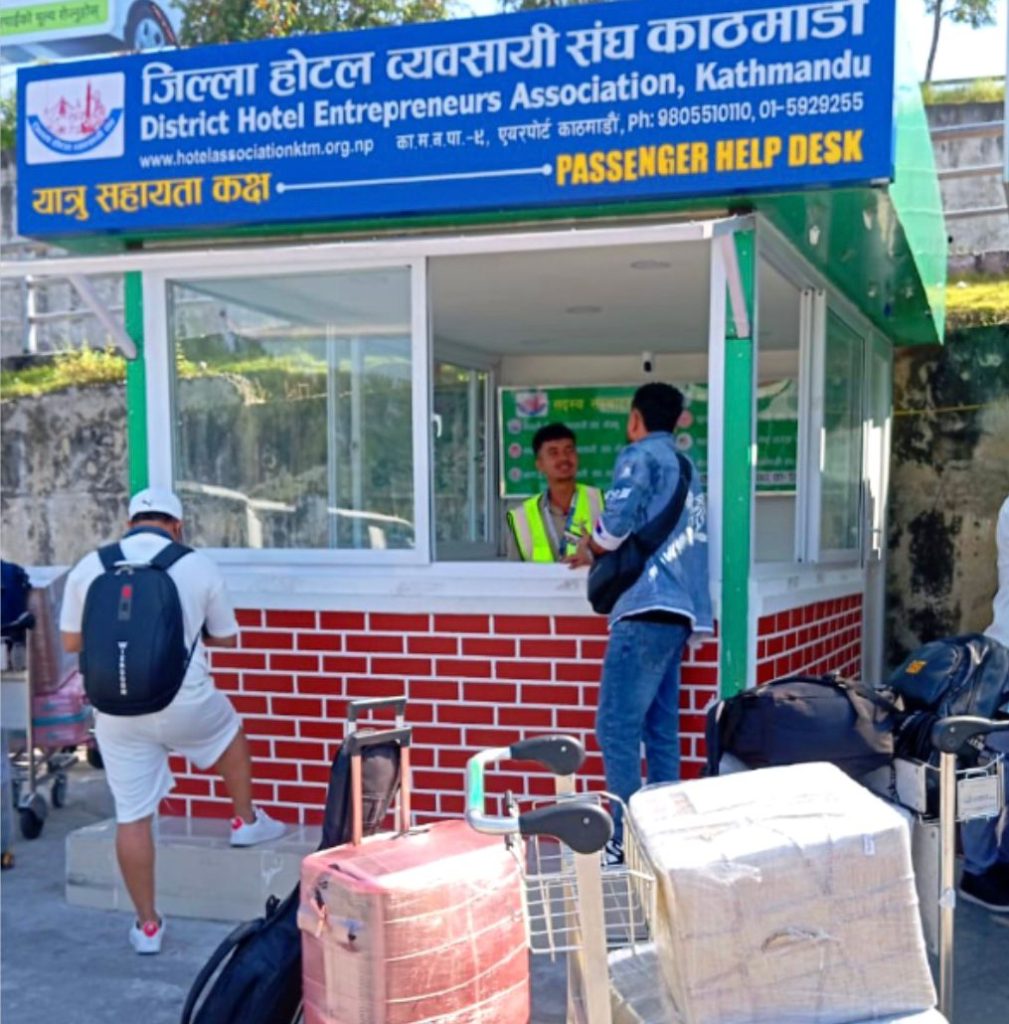
One of the most visible initiatives by DHEA has been the establishment of a Passenger Help Desk at Tribhuvan International Airport (TIA). This service aims to provide immediate assistance to travelers arriving in Nepal, including guidance on hotel bookings, transportation, and safety protocols. The desk is staffed with trained personnel from member hotels who can help passengers navigate any logistical issues, ensuring a smooth transition from airport to accommodation.
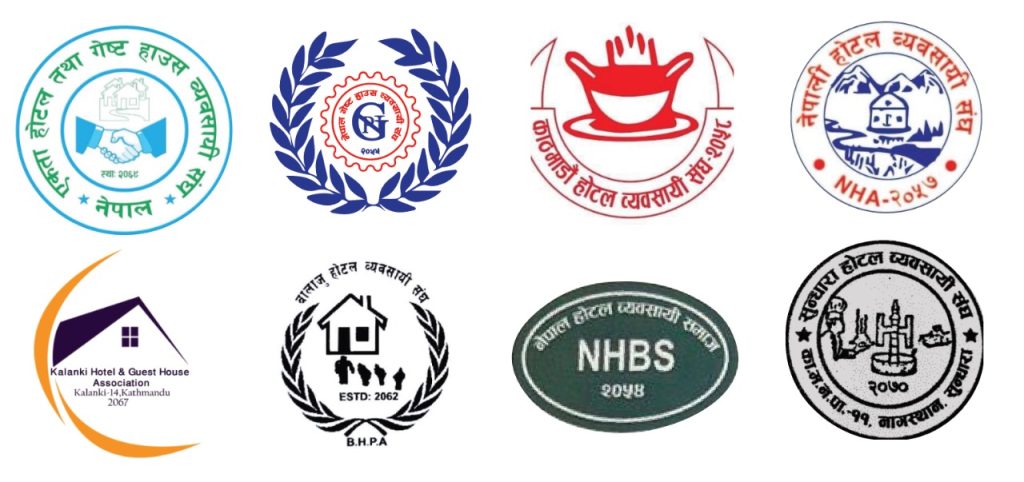
Hotels in strategic areas such as Balaju, Kalanki, Buspark, and nearby hubs have been coordinating closely to maintain high standards of hygiene, cleanliness, and physical safety. Special teams have been deployed to regularly sanitize common areas, cover risk-prone zones, and assist visitors with luggage and transit. Additionally, member hotels have created protocols to support travelers in cases of emergencies, lost belongings, or adverse weather, reinforcing a sense of reliability and safety.
Proactive Response in Times of Crisis
Special attention has been given to religious and cultural tourists, as well as adventure travelers heading to destinations like Lukla and the Himalayan trails, to ensure their plans are supported despite disruptions. Hotels are offering flexible booking policies, emergency contact services, and on-ground assistance to instill confidence among visitors.
Community and Staff Engagement
Behind the scenes, hotel staff and management have been actively engaged in community-centered initiatives. Teams are ensuring that public spaces, transit areas, and hotel surroundings remain clean and safe, while also coordinating with local authorities for crowd management and security. DHEA has emphasized the importance of hospitality, ensuring that visitors feel cared for even in challenging circumstances.
In addition to practical measures, hotels are fostering cultural engagement, providing tourists with authentic experiences that highlight Nepal’s traditions, natural beauty, and resilient communities. By doing so, DHEA aims not only to recover tourism numbers but also to strengthen Nepal’s image as a responsible, sustainable, and safe travel destination.
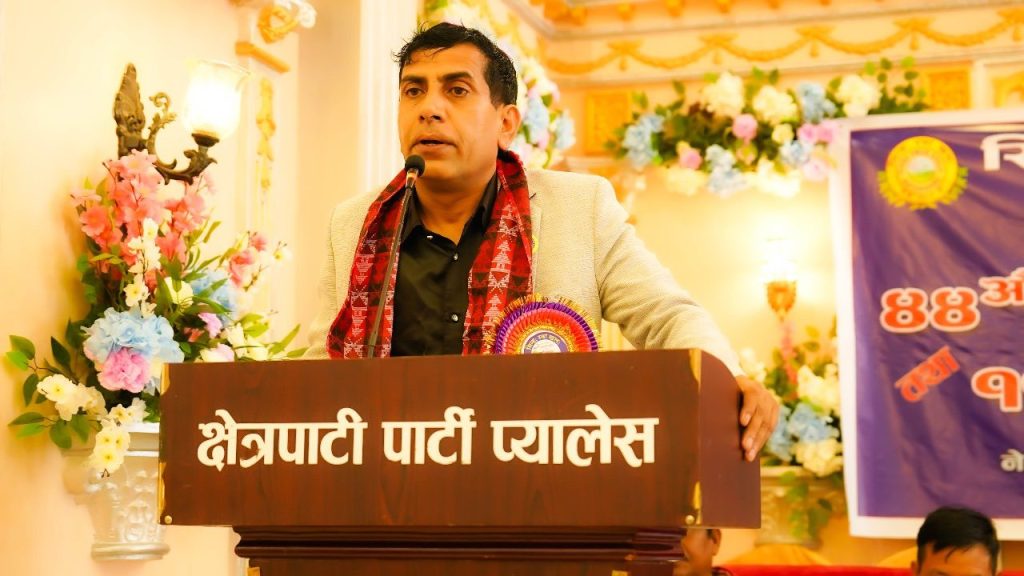
Speaking on the ongoing efforts, Mr. Suresh Baral, President of DHEA, Kathmandu, said: “Our priority has always been the safety and comfort of our guests. In these challenging times, we have worked tirelessly with our member hotels to ensure that every tourist feels secure, supported, and welcomed. The Passenger Help Desk at TIA is one example of our commitment, providing travelers with real-time assistance and accurate information from the moment they step into Nepal. We want every visitor to experience the warmth and hospitality that Kathmandu and Nepal are known for, despite any disruptions.”
Coordinated Efforts for a Safer Nepal
DHEA’s initiatives extend beyond Kathmandu hotels. Coordination with local law enforcement, airport authorities, and transport operators ensures that visitors face minimal inconvenience. Measures include temporary camera surveillance, lighting in critical areas, organized transportation services, and liaison officers to assist tourists directly at major transit points.
Hotels have also set up emergency response protocols to address medical needs, lost items, or travel disruptions. By prioritizing both safety and comfort, DHEA seeks to reassure travelers that Nepal’s tourism sector is resilient and prepared for any eventuality.

Promoting Nepal on National and International Platforms
Alongside ground-level interventions, DHEA has been actively promoting Nepal’s tourism offerings on national and international platforms. Through digital campaigns, media engagement, and partnerships with travel agencies, the association is highlighting Nepal’s natural beauty, cultural richness, and adventure experiences. Social media and traditional media channels are being leveraged to showcase success stories of hospitality, clean and safe accommodations, and the welcoming nature of Nepalese communities.
The association emphasizes that Nepal remains a safe, vibrant, and culturally rich destination, encouraging both domestic and foreign travelers to explore its mountains, valleys, and heritage sites without fear.
The response by DHEA, Kathmandu, underscores the importance of collaboration in times of crisis. By combining practical assistance, community engagement, and strategic promotion, the association is not only restoring confidence in Nepal’s tourism industry but also strengthening the country’s long-term reputation as a safe and enjoyable destination.
Visitors can now expect clean, secure, and well-organized hospitality services, with dedicated support at every stage of their journey, from airport arrival to hotel stay, and beyond. Kathmandu’s hotels, through DHEA’s coordinated efforts, are proving that even in the face of social unrest and climatic challenges, Nepal is prepared to welcome the world with open arms.