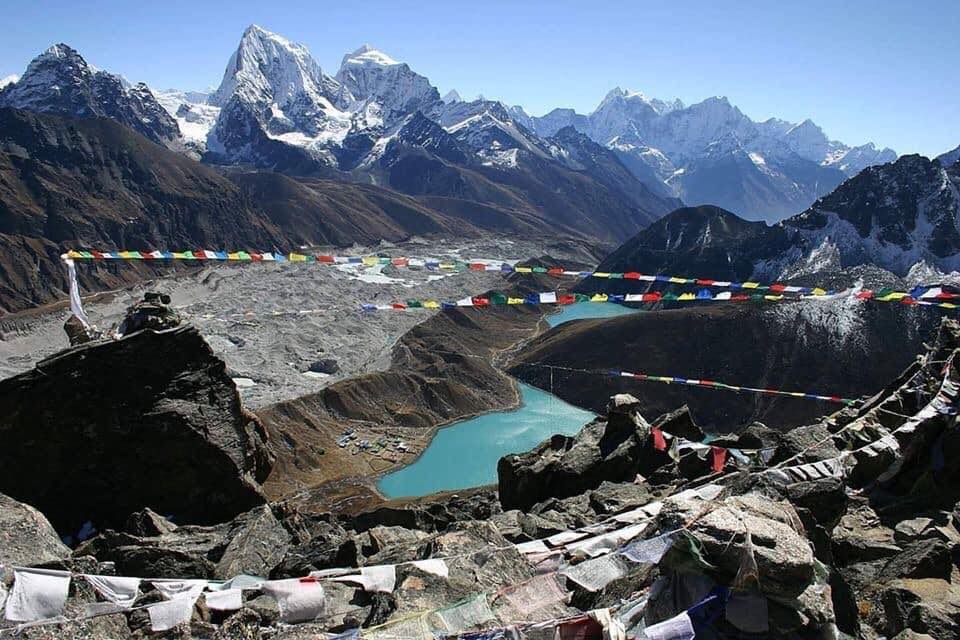
A recent study by the International Centre for Integrated Mountain Development (ICIMOD) has highlighted the Dudh Koshi river basin and Everest region as critical flashpoints for glacial lake outburst floods (GLOFs). The region has experienced five significant GLOFs in less than 50 years, underscoring the urgency for proactive risk management.
2024 Thame Flood: A Devastating Event
The study focused on the August 16, 2024 GLOF that devastated Thame Village in Solokhumbu. According to ICIMOD, the flood was driven by a chain reaction of geological and geomorphological factors. A rock avalanche hit a glacial lake at 4,900 meters, releasing 156,000 cubic meters of water. The outflow fell 120 meters, hitting a second lake whose moraine dam breached, releasing an additional 303,000 cubic meters. The resulting hyper-concentrated slurry carried debris, including large boulders, over 80 km downstream, causing extensive riverbank erosion.

The flood damaged homes, a school, a health post, a bridge, and a hydropower plant. Fortunately, no lives were lost, partly due to the daylight timing and phased nature of the flood.
Rising Threats from Climate Change
Experts warn that climate change is intensifying these risks. The Hindu Kush Himalayas are warming at 0.28°C per decade, accelerating glacier mass loss by 65% compared to previous decades. This has fueled the formation of over 25,000 glacial lakes across major river basins, including the Amu Darya, Indus, Ganges, Brahmaputra, and Irrawaddy. ICIMOD analysts highlight that even smaller glacial lakes can pose severe risks if combined with specific geological and morphological conditions, as seen in Thame.
Urgent Need for Risk Management and Mitigation
The ICIMOD report stresses the necessity of proactive measures, including protecting tension cracks, preventing rapid infiltration, supporting riverbanks, and developing long-term flood risk management plans. Enhanced monitoring of high-altitude glaciated regions is also recommended to anticipate and mitigate future events.
Scientific Insights from ICIMOD Experts
Remote sensing analyst Sudan Bikash Maharjan emphasized that the Thame flood demonstrates the need to understand and mitigate risks even from smaller lakes. Cryosphere analyst Tenzing Chogyal Sherpa highlighted that the disaster underscores how mountain communities are already facing climate-driven hazards. “Investing in preparedness, strengthening scientific understanding, and supporting at-risk communities is urgent,” he said.
Senior advisor Arun Bhakta Shrestha pointed out the necessity for hydrological and meteorological monitoring stations, real-time information systems, and engineering measures like bank protection to reduce future GLOF impacts.

Lessons for the Everest Region and Beyond
Nepal has witnessed over 90 GLOFs since the 1920s. The Everest region alone has endured five major events in less than 50 years, including the 1985 Dig Tsho GLOF. Experts describe GLOFs as some of the most destructive hazards in high-mountain areas, capable of reshaping landscapes, obliterating infrastructure, and causing catastrophic damage within hours.
The study underscores that urgent investment in flood risk reduction, scientific research, and community preparedness is vital. With the Hindu Kush Himalaya warming nearly three times faster than the global average, the risk of GLOFs is expected to increase, making the need for mitigation more critical than ever.