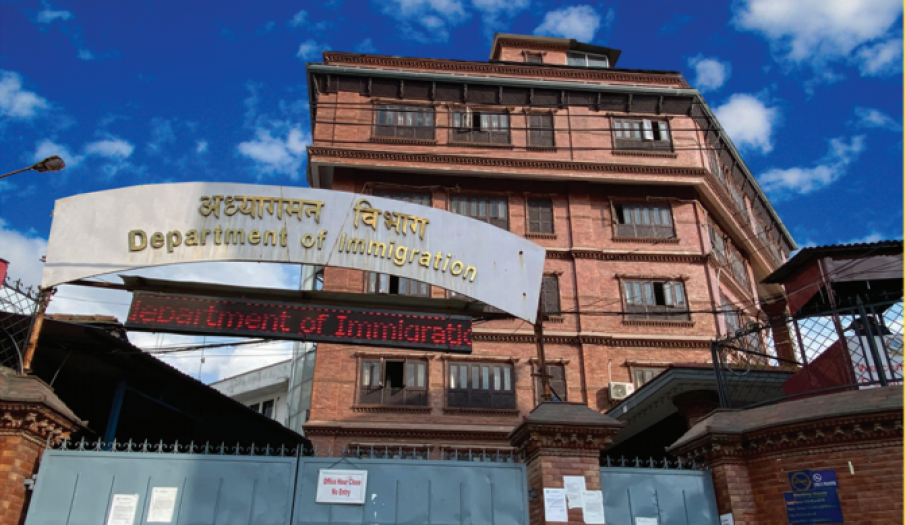
The Department of Immigration has announced the implementation of the Foreign Nationals Management Information System (FNMIS) starting January 1, 2026 (Poush 17, 2082 B.S.). The new system is designed to enhance the monitoring of foreign nationals entering Nepal, ensure their safety, prevent potential criminal activities, and support the growth of the tourism sector. The initiative is part of Nepal’s broader effort to streamline immigration administration while maintaining national security and promoting good governance.
Strengthening Immigration Administration and National Security
Under the Immigration Act, 1992 (2049 B.S.) and its associated regulations, the Department of Immigration regulates the entry, presence, and departure of foreign nationals in Nepal, while also managing the movement of Nepali citizens. The Department has consistently sought to balance the free and safe movement of travelers with the need to promote tourism and safeguard national security. By ensuring that all movements and activities within the country are registered with the state, the system also helps elevate Nepal’s international reputation, safeguard national dignity, and facilitate foreign investment.

Nepal, as a member of various international conventions, is obliged to maintain accurate records of foreign nationals. In line with these commitments, the Department has developed FNMIS to assist in providing information on foreign visitors, support the prevention of potential criminal activities, and promote tourism in a secure and organized manner. Although a plan for implementation was originally drawn up in Ashwin 1, 2082 (September 2025), recent developments had delayed the rollout. The Department is now prepared to enforce the system from Poush 17, 2082 (January 1, 2026).
System to Facilitate Emergency Response and Interagency Coordination
The Foreign Nationals Management Information System will maintain comprehensive records of the stay and movements of foreign nationals in Nepal, which will enable authorities to coordinate search, rescue, and security measures during emergencies. It is also expected to streamline information sharing among security agencies, tourism operators, and other stakeholders, contributing to the safe and structured development of the tourism sector. By making relevant data readily available, the system will help tourism businesses and government agencies respond efficiently in both routine and emergency situations, fostering confidence among visitors and local operators alike.
Phased Implementation Across the Country
The system will be implemented in two phases. In the first phase, starting January 1, 2026, FNMIS will be mandatory for five-star hotels in the Kathmandu Valley, ensuring that these establishments maintain accurate records of all foreign guests. The second phase, beginning March 1, 2026 (Falgun 17, 2082 B.S.), will expand the system to include all hotels, guesthouses, airlines, tour and travel companies, and money exchange facilities across the country. Eventually, all public and private institutions providing services to foreign nationals will be required to register and use FNMIS.

All organizations and businesses serving foreign visitors are requested to participate in the system. Detailed procedures and manuals for registration are available on the Department of Immigration’s official website at https://www.immigration.gov.np. To ensure proper monitoring and compliance, the Department has already issued circulars to district monitoring committees in all 77 districts, which will oversee the system’s implementation in coordination with local administrative offices.
Towards Safer and Smarter Tourism in Nepal
The introduction of FNMIS is expected to not only improve the collection and management of immigration data but also enhance Nepal’s ability to provide safe, organized, and enjoyable experiences for foreign visitors. By leveraging modern technology and interagency cooperation, the Department of Immigration aims to strengthen national security, uphold international obligations, and support sustainable tourism growth. Officials believe that the system will serve as a key tool in promoting Nepal as a secure, welcoming, and efficiently managed tourist destination for travelers from around the world.