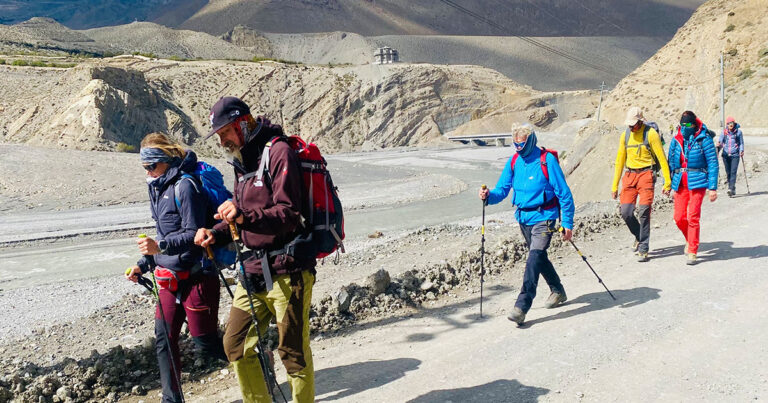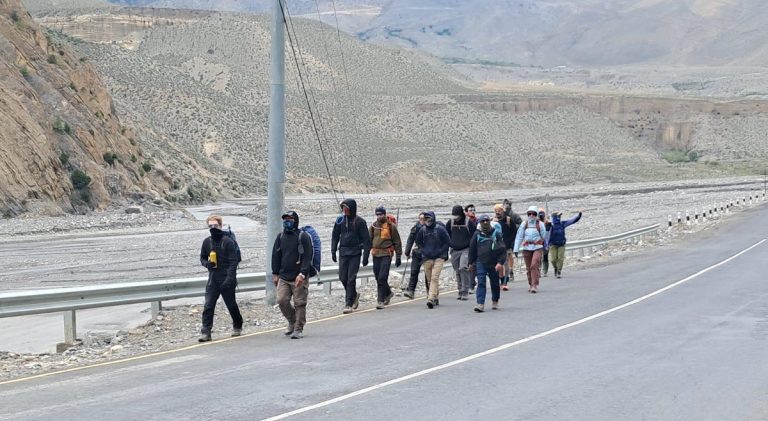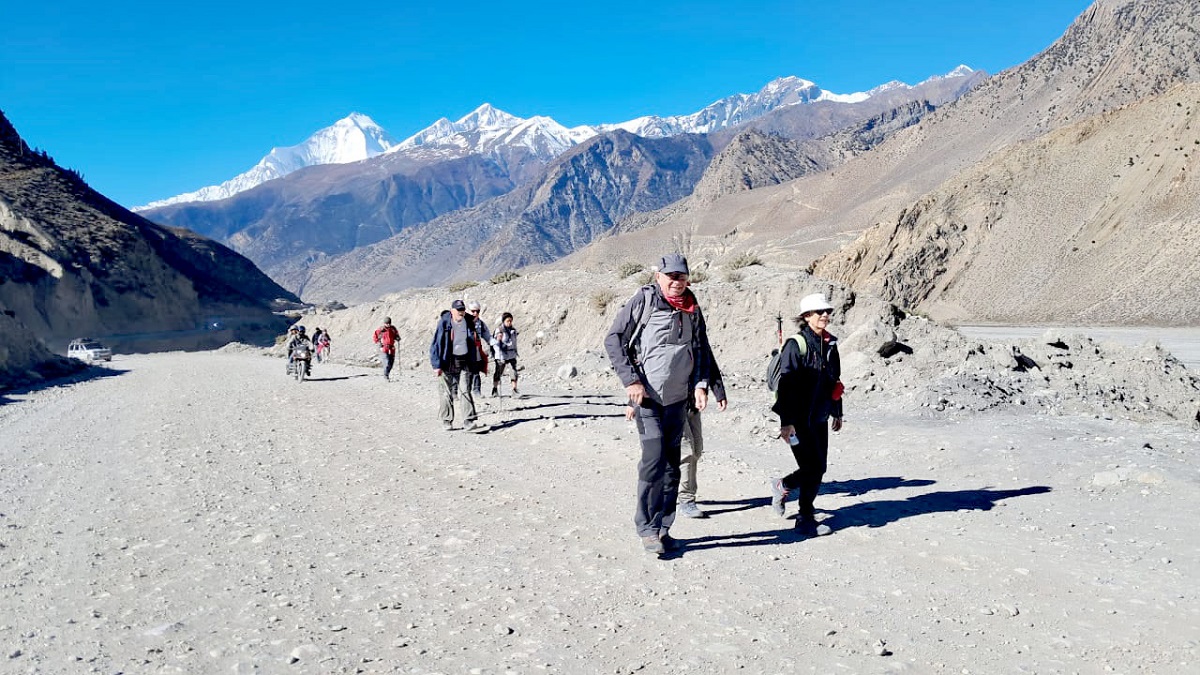
Mustang has witnessed a remarkable surge in tourist arrivals despite the traditionally harsh winter season, signaling a strong revival and growing confidence in the region’s year-round tourism potential. Contrary to previous years when winter was considered an off-season due to extreme cold and limited accessibility, January 2026 recorded a significant tourism boom, according to official data.
The Annapurna Conservation Area Project (ACAP) Jomsom, operating under the National Trust for Nature Conservation (NTNC), reported that a total of 10,822 foreign tourists visited Mustang in January 2026 alone. This marks a sharp increase compared to the same period last year and highlights Mustang’s growing appeal even during unfavorable weather conditions.

Sharp Increase Compared to the Previous Year
According to ACAP Jomsom Chief Rajesh Gupta, of the total foreign visitors in January 2026, 10,045 tourists were from SAARC countries, while 777 visitors were from other international destinations. This represents a substantial jump from January 2025, when only 4,346 foreign tourists entered Mustang.
“The number of foreign tourists increased by 6,476 in January 2026 compared to January 2025,” Gupta said. The data further shows that visitors from SAARC countries increased by 6,215, while tourists from other countries rose by 261 during the same period.
In January 2025, Mustang had received 3,830 tourists from SAARC nations and 516 tourists from other countries, indicating that the growth this year has been driven largely by regional travel, particularly from neighboring India.
Religious Tourism and Improved Connectivity Drive Growth
Tourism officials attribute the surge largely to the increasing flow of Indian pilgrims visiting Muktinath, one of the most revered religious sites for Hindus and Buddhists. The ease of access has played a crucial role, with the Beni–Jomsom road, a national pride project, becoming progressively more reliable throughout the year.
“As road connectivity improves annually, the number of tourists entering Mustang is increasing beyond expectations,” Gupta stated. He added that ACAP estimates around 200,000 foreign tourists could visit Mustang in 2026 if current trends continue.
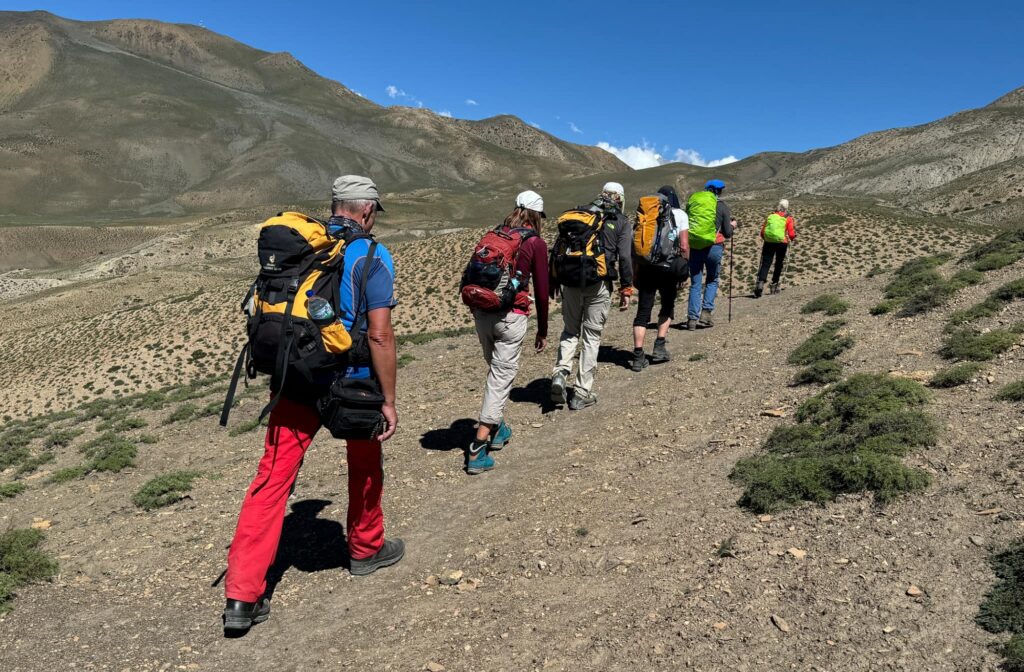
The improved road network has reduced dependency on air travel, allowing pilgrims and leisure travelers to reach the region even during winter months, which was previously considered impractical.
Winter Tourism Boosts Local Confidence
The unexpected rise in tourist arrivals during the winter season has brought renewed optimism among local tourism entrepreneurs. Suraj Gurung, President of the Muktinath Hotel Association, said that increased tourist movement during the off-season has boosted confidence among hoteliers and business owners.
In past years, many hotels were forced to close during the winter due to low tourist flow. This year, hotels are operating even in the off-season, which is a very encouraging sign, Gurung said. He added that with improved road infrastructure and consistent tourist arrivals throughout the year, seasonal challenges no longer pose a major threat to tourism businesses in Mustang.
Extreme Cold Fails to Deter Visitors
Despite the increase in tourists, Mustang continues to experience extreme winter temperatures. With the onset of the Nepali month of Poush, temperatures in Upper Mustang can drop to minus 20 degrees Celsius, while Lower Mustang records temperatures as low as minus 12 degrees Celsius.
Although the cold has partially affected daily life for residents, tourism activities have remained largely uninterrupted. Visitors appear undeterred by the freezing conditions, suggesting a shift in traveler preferences toward adventure, pilgrimage, and experience-based tourism.

A Year-Round Destination in the Making
Tourism stakeholders believe Mustang is steadily transforming into a year-round destination, supported by infrastructure development, religious tourism, and growing interest in Himalayan landscapes and culture. The winter surge is seen as a strong indicator that Mustang’s tourism economy is becoming more resilient and diversified.
With continued investment in roads, services, and sustainable tourism management, Mustang is poised to strengthen its position as one of Nepal’s most important mountain tourism destinations, even beyond the traditional peak seasons.