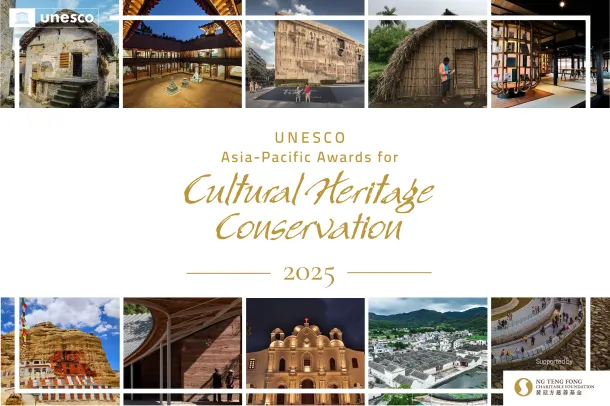
The 2025 edition of the UNESCO Asia-Pacific Awards for Cultural Heritage Conservation has recognized ten outstanding conservation initiatives across the region, highlighting innovative approaches to preserving historic sites while strengthening community identity and sustainability. This year’s highest honour, the Award of Distinction, was presented to the Iwami Ginzan Library Conservation Project in Oda, Japan, and the Sihang Warehouse Conservation Project in Shanghai, China.
The awards jury selected winners from a record 90 entries submitted by 16 countries, the largest number of applications in the programme’s 25-year history. The milestone reflects growing awareness across Asia and the Pacific that heritage conservation is not merely about preserving monuments, but about sustaining culture, livelihoods, and identity in rapidly changing environments.
Celebrating 25 Years of Cultural Preservation
The year 2025 marks the 25th anniversary of the UNESCO Asia-Pacific Awards, established in 2000 to encourage high-quality conservation practices across the region. Over the past quarter-century, the awards have recognised hundreds of projects demonstrating how heritage can serve as a driver of social cohesion, education, and sustainable economic growth.
According to the jury, this year’s submissions revealed an expanding diversity of heritage typologies, from monasteries and libraries to industrial buildings and living cultural landscapes, alongside a stronger emphasis on climate resilience, local participation, and context-sensitive restoration methods. Many of the winning projects illustrated how conservation must adapt to challenges such as urbanisation, environmental pressures, and post-disaster recovery.
Nepal Secures Two Prestigious Recognitions
In a proud moment for Nepal, two conservation initiatives were honoured for their exceptional contributions to safeguarding cultural heritage. The Jestha Varna Mahavihara Conservation Project in Lalitpur received the Award of Merit, while the Lowo Nyiphug Namrol Norbuling Monastery in Mustang earned both the Award of Merit and a Special Recognition for Sustainable Development.
The recognition places Nepal firmly on the regional map of exemplary heritage conservation, demonstrating how traditional knowledge and modern techniques can work together to protect historically significant sites.
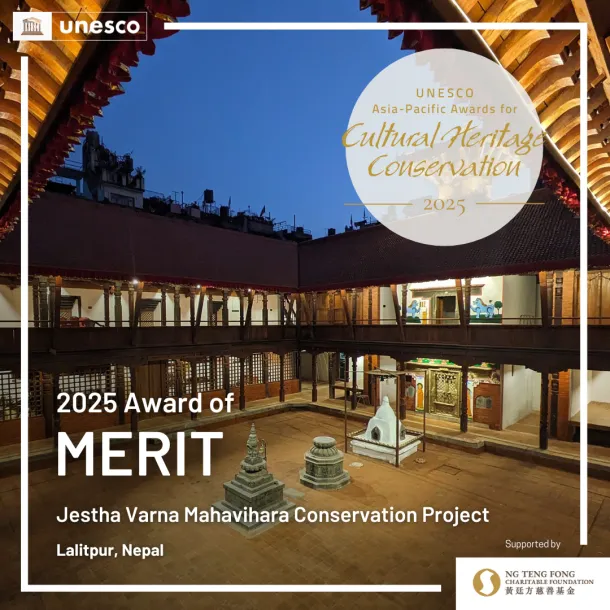
Reviving a Living Heritage: Jestha Varna Mahavihara
Dating back to the mid-17th century, Jestha Varna Mahavihara holds profound religious and cultural importance for Nepal’s Newar Buddhist community. Before restoration, the structure had suffered severe deterioration, further compounded by earthquake damage.
The conservation project adopted a holistic methodology grounded in archival research, archaeological assessment, structural stabilisation, and a comprehensive conservation management plan. Rather than treating the vihara as a static monument, conservators prioritised its function as a living heritage site.
Daily rituals and community worship continued uninterrupted during restoration, ensuring that spiritual traditions remained intact. Sacred architectural elements were carefully preserved, while long-term maintenance strategies were introduced to sustain the site’s religious and social role for future generations.
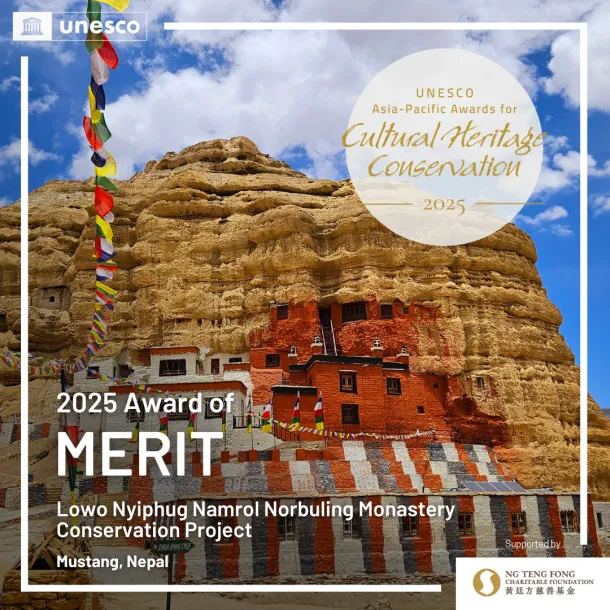
Mustang Monastery Showcases Sustainable Conservation Innovation
Equally significant is the conservation of Lowo Nyiphug Namrol Norbuling Monastery, a 500-year-old complex representing a rare earthen architectural tradition of the Tibetan Plateau. The site reflects a unique fusion of Tibetan Buddhist monastic design and Mustang’s ancient cave-dwelling heritage.
This architectural typology is increasingly threatened by climate change, particularly rising precipitation that weakens traditional earthen structures. The conservation effort responded by integrating modern seismic-resistance techniques with time-tested local construction methods.
A defining feature of the project was the leadership of practitioner-builders from the resident monastic community. Their involvement ensured that indigenous craftsmanship and spiritual values remained central to the restoration process. The initiative not only strengthened the monastery’s physical resilience but also empowered local custodians to continue its stewardship in a sustainable manner.
Jury Highlights Community Engagement and Sustainability
The seven-member international jury evaluated projects based on three core criteria: understanding of place, technical achievement, and sustainability and impact. Across the award-winning entries, judges noted a shift toward conservation models that actively involve communities rather than relying solely on external expertise.
Projects like those in Nepal demonstrated that heritage preservation can simultaneously reinforce cultural identity, generate local employment, and build resilience against natural disasters. By blending scientific conservation techniques with traditional knowledge systems, these initiatives offer replicable models for heritage sites facing similar threats worldwide.
A Regional Movement Toward Adaptive Heritage Practices
This year’s awards underscore a broader transformation in how heritage is understood across Asia-Pacific nations. Conservation is increasingly viewed as a dynamic process, one that must respond to climate change, demographic shifts, and evolving community needs while preserving authenticity.
From historic urban warehouses to sacred Himalayan monasteries, the recognised projects show that cultural heritage can remain relevant and functional when restoration is guided by inclusive planning and sustainable design.
Nepal’s Growing Role in Global Heritage Conservation
The dual recognition of Nepalese projects signals the country’s strengthening capacity in heritage conservation following years of post-earthquake recovery and renewed cultural investment. These achievements highlight Nepal’s ability to protect its historic assets while maintaining its living traditions, an approach now gaining international attention.
As the UNESCO Asia-Pacific Awards enter their next quarter century, Nepal’s honoured sites stand as powerful examples of how conservation, when rooted in community and continuity, can preserve not only structures but also the cultural spirit they embody.