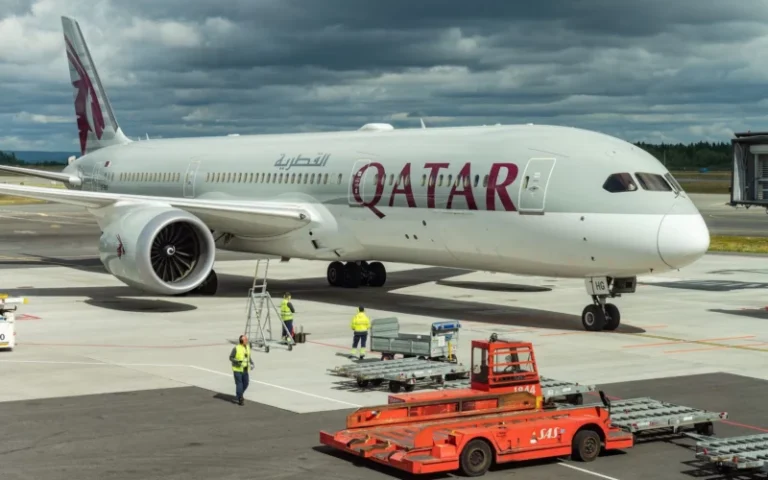
The government of Germany announced on Monday that it would deploy civilian aircraft to Saudi Arabia and Oman to evacuate thousands of German tourists stranded in the Middle East amid escalating regional conflict. The decision comes as Iran launched a series of retaliatory strikes following the United States and Israel’s military action against the country last Saturday. According to the German Travel Association, approximately 30,000 German citizens remain stuck across the region due to disrupted air travel and heightened security concerns.
Priority Evacuation for Vulnerable Groups
Foreign Minister Johann Wadephul confirmed that Germany would soon send planes to Riyadh and Muscat, where airspace remains open, to start evacuating the most vulnerable tourists. “We will send aircraft to Riyadh and Muscat as quickly as possible for particularly vulnerable groups,” Wadephul said, adding that he is coordinating with the national carrier Lufthansa to organize the flights. He emphasized that the safety of German citizens is the government’s top priority, reflecting the urgent need to protect travelers in a rapidly deteriorating security situation.

Crisis Teams Deployed Across the Region
German authorities have dispatched crisis teams to Muscat, Doha, and Dubai to assess evacuation options, including potential overland routes. These teams are working closely with local authorities and airline operators to facilitate safe and efficient evacuations. A separate team from the German embassy in Cairo is assisting with border crossings from Israel, providing logistical support to citizens attempting to leave conflict zones.
Stranded Passengers on Cruise Ships
Reports indicate that around 5,000 passengers from Germany are currently trapped on two TUI cruise ships docked in the United Arab Emirates and Qatar. Passengers have described a tense atmosphere, with crying children and general anxiety among travelers. “We were not allowed to leave the ship,” a female tourist, who is a police officer, said. “We are well looked after, but I don’t feel safe.”
In response, TUI Cruises issued a statement confirming close coordination with airlines: “Due to the continuing dynamic situation in the region and limited flight connections, we are in close contact with the airlines to enable reliable planning of return journeys.” The cruise operator emphasized its commitment to ensuring passenger safety while managing logistical challenges in an unstable region.
Regional Security Challenges
The Middle East conflict, triggered by US and Israeli military action against Iran, has sparked a wave of Iranian strikes affecting multiple countries, including the United Arab Emirates, Saudi Arabia, Oman, and Qatar. Air travel in the region has been heavily disrupted, with some airports temporarily closing and limited flight routes operational.
Germany’s evacuation efforts highlight the complexity of coordinating safe passage for citizens in areas affected by rapidly evolving military operations. The deployment of civilian aircraft to neighboring safe zones represents a critical step in protecting tourists and maintaining humanitarian oversight.
Government Assurance and Coordination
Foreign Minister Wadephul reiterated that Germany is prioritizing high-risk travelers, including families, elderly citizens, and those with medical needs. He assured that the government is maintaining constant communication with airlines, embassies, and local authorities to maximize evacuation efficiency.
Crisis management teams continue to monitor developments in Riyadh, Muscat, Doha, Dubai, and Cairo, ensuring German citizens receive accurate information and support throughout the evacuation process.

Tourism Disruption and Safety Concerns
The crisis has underscored the vulnerability of international travelers in conflict zones. Many stranded tourists of Germany reported fear and uncertainty, with limited mobility and disrupted schedules adding to the stress. The ongoing evacuation is not only a logistical challenge but also a humanitarian imperative, ensuring citizens can leave high-risk areas safely.
Germany’s swift action demonstrates the importance of proactive crisis management, leveraging both aviation resources and diplomatic channels to safeguard its citizens abroad.