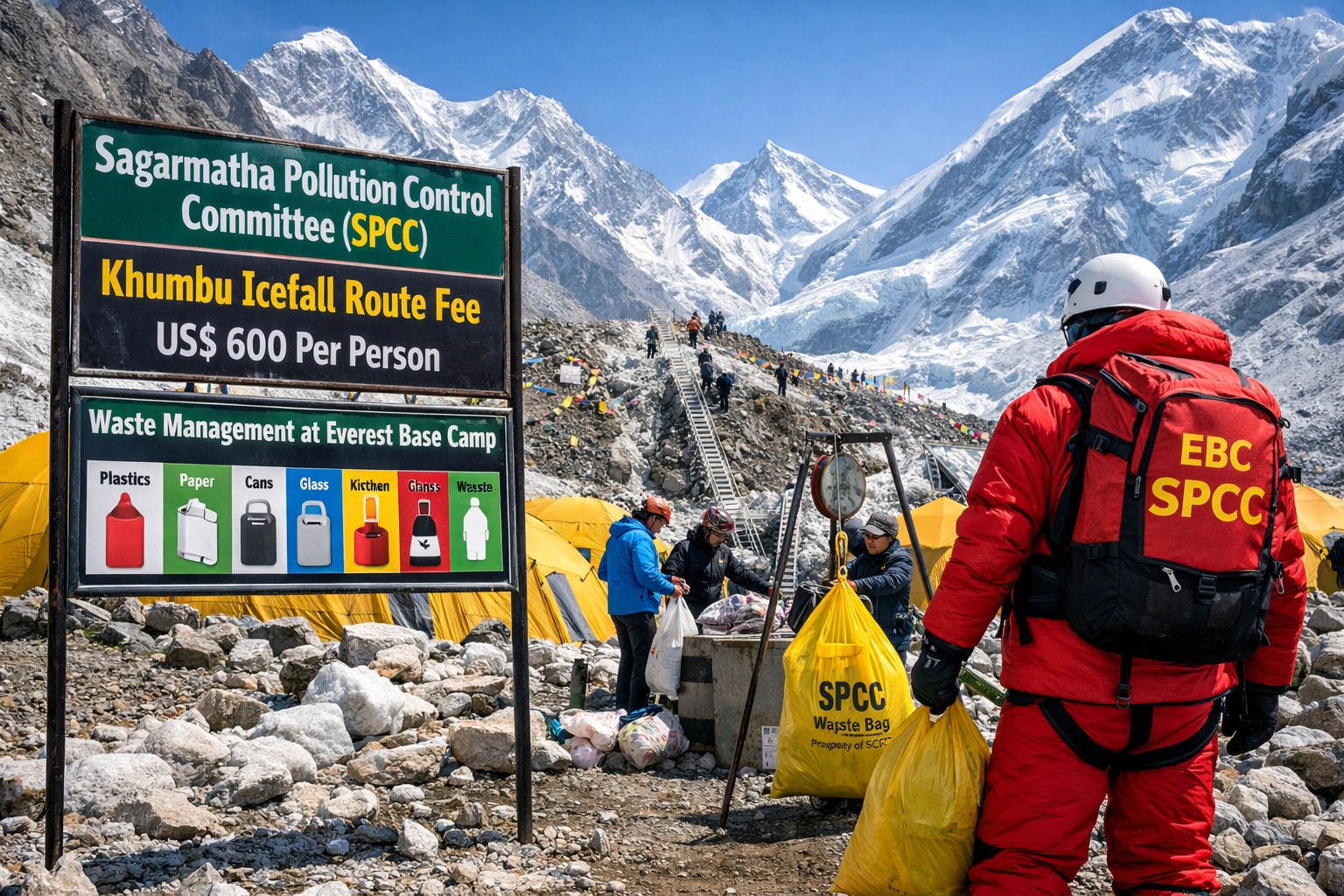
The Sagarmatha Pollution Control Committee (SPCC) has announced a set of mandatory regulations for the 2026 spring climbing season, including a compulsory Khumbu Icefall route fee and reinforced waste management measures at Everest Base Camp (EBC) and higher camps. The new directives aim to ensure environmental protection and sustainable mountaineering practices in the Everest region.
Mandatory Khumbu Icefall Route Fee
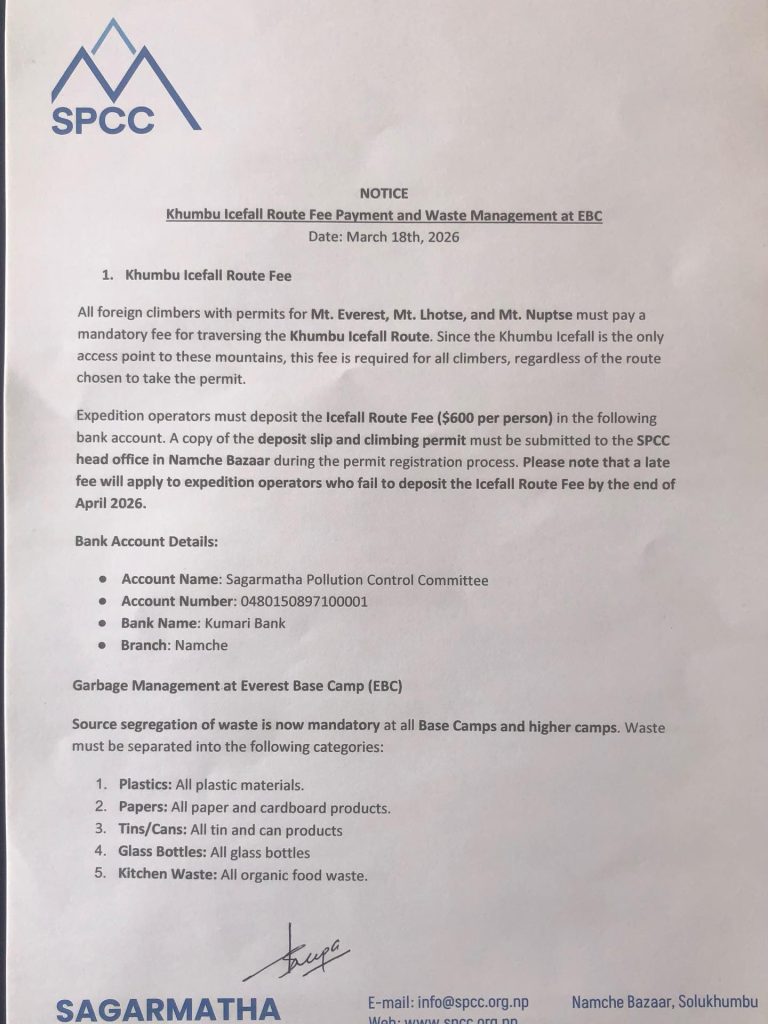
SPCC has made it compulsory for all foreign climbers holding permits for Mount Everest, Mount Lhotse, and Mount Nuptse to pay a Khumbu Icefall route fee. The Khumbu Icefall serves as the primary access route to these peaks, making the fee applicable to all climbers regardless of their chosen climbing route.

Expedition operators are required to deposit a fee of $600 per climber into SPCC’s designated bank account at Kumari Bank, Namche branch. During the permit registration process at Namche Bazaar, operators must submit both the deposit slip and a copy of the climbing permit to the SPCC head office. SPCC has also warned that a late fee will be imposed on expedition operators who fail to deposit the required amount by the end of April 2026, emphasizing strict adherence to deadlines.
Strict Waste Segregation at Everest Base Camp
In a move to tackle increasing environmental concerns, SPCC has enforced mandatory waste segregation at all base camps and higher camps. Climbers and expedition teams must separate waste into seven categories: plastics, paper products, tins and cans, glass bottles, kitchen waste, hazardous materials, and human waste.
The regulation is designed to streamline waste collection and recycling processes while minimizing environmental damage in one of the world’s most sensitive high-altitude ecosystems. Officials stated that improper waste disposal has been a long-standing issue in the Everest region, prompting stricter monitoring this year.
Human Waste Management Measures
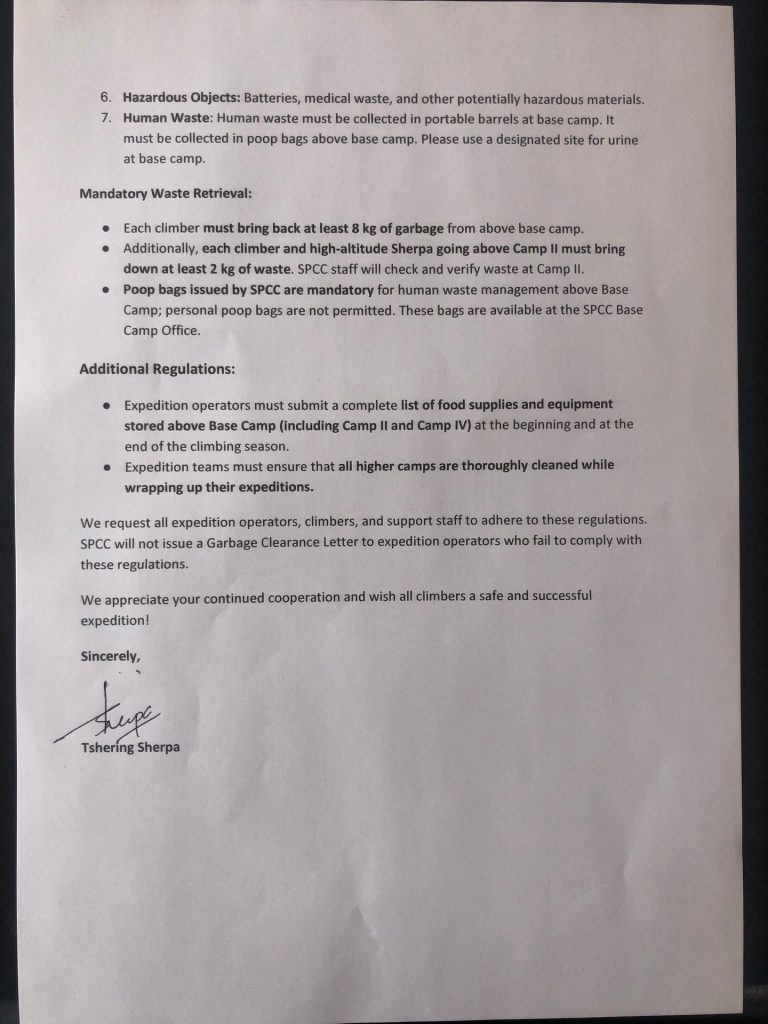
Special emphasis has been placed on human waste management. At Everest Base Camp, human waste must be collected in portable barrels, while above base camp, climbers are required to use designated poop bags. SPCC has made it clear that only officially issued poop bags will be accepted, and personal alternatives will not be permitted.
Additionally, designated sites must be used for urination at base camp to maintain hygiene and prevent contamination of the surrounding environment. Poop bags will be made available at the SPCC Base Camp Office for all climbers and expedition teams.
Mandatory Waste Retrieval Policy
To further reinforce environmental responsibility, SPCC has introduced strict waste retrieval requirements. Each climber must bring back a minimum of 8 kilograms of garbage from above base camp. Moreover, climbers and high-altitude Sherpas traveling above Camp II are required to carry down at least 2 kilograms of waste. SPCC staff stationed at Camp II will monitor and verify compliance with these rules. Officials noted that these measures are crucial to reducing the accumulation of waste along climbing routes and at high-altitude camps, where clean-up operations are particularly challenging.
Additional Compliance Requirements
Expedition operators are also required to submit a comprehensive list of food supplies and equipment stored at higher camps, including Camp II and Camp IV, both at the beginning and end of the climbing season. This measure aims to track materials and ensure that no waste is left behind after expeditions conclude.
Furthermore, all expedition teams must thoroughly clean higher camps before wrapping up their climbs. SPCC has stated that failure to comply with these regulations will result in the denial of a Garbage Clearance Letter, a mandatory document for expedition closure.

Ensuring Sustainable Mountaineering
SPCC has urged all climbers, expedition operators, and support staff to strictly follow the new regulations. The committee emphasized that these measures are essential for preserving the fragile ecosystem of the Everest region and maintaining its global reputation as a premier mountaineering destination.
With increasing numbers of climbers attempting Everest each year, authorities believe that stronger regulations and enforcement mechanisms are necessary to balance adventure tourism with environmental sustainability. The latest directives signal a continued commitment by SPCC to protect the Himalayas while promoting responsible and eco-friendly mountaineering practices.