The global travel and tourism industry has entered a new phase of international collaboration with the launch of the first-ever Recovery & Leadership Cruise organized under the framework of the World Travel & Tourism Council (WTTC).
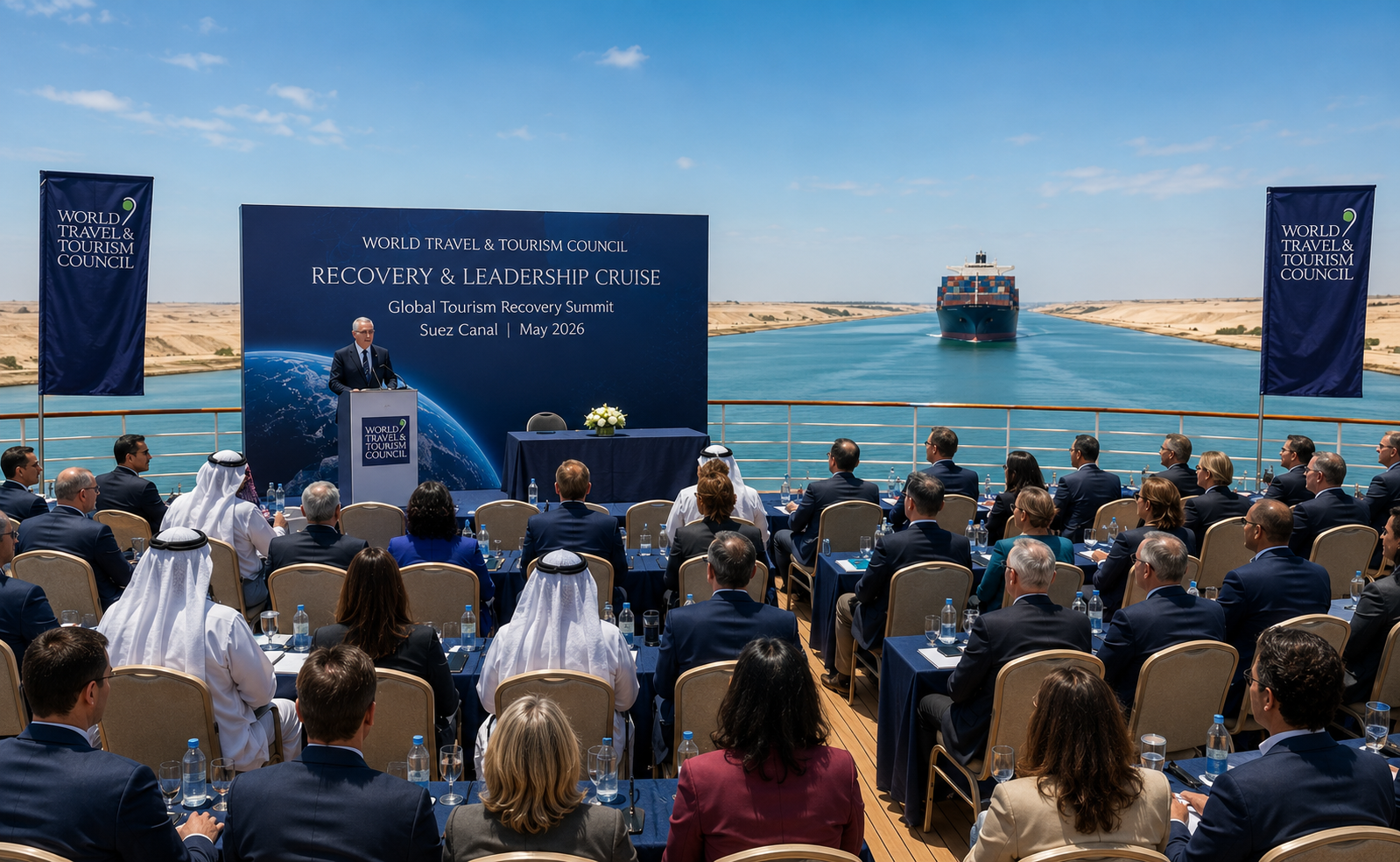
The landmark tourism recovery summit is being held aboard the luxury cruise ship Crystal Serenity as it sails through the strategically important Suez Canal corridor. The unique event has brought together tourism ministers, destination leaders, cruise executives, aviation officials, hospitality representatives, and global tourism stakeholders in an innovative floating conference setting. Industry leaders say the summit represents a major effort to strengthen cooperation and shape the future direction of the international travel and tourism sector amid evolving global challenges.
Historic Summit Introduces New Model for Global Collaboration
The Recovery & Leadership Cruise marks the first time a major international tourism conference has been conducted entirely aboard a moving cruise vessel. Organizers described the initiative as a symbolic demonstration of tourism recovery, resilience, and global connectivity.

As participants travel together through one of the world’s most important maritime corridors, the cruise has created an environment for continuous dialogue, networking, and strategic planning among decision-makers from across the tourism ecosystem.
The Crystal Serenity has effectively transformed into a mobile global conference platform, reflecting the interconnected nature of international tourism and transportation networks linking Europe, Asia, Africa, and the Middle East. Industry experts believe the cruise-based format could redefine how future tourism leadership forums and international industry collaborations are conducted.
Tourism Recovery and Connectivity Dominate Discussions
High-level discussions during the summit have largely focused on rebuilding global tourism systems following years of disruptions affecting international travel. Key agenda topics include strengthening air and sea connectivity, rebuilding international travel demand, improving tourism infrastructure, enhancing destination competitiveness, and developing more resilient tourism ecosystems.
Tourism leaders stressed that improved global connectivity remains essential for ensuring balanced tourism growth and expanding access to international travel markets. Participants also emphasized the growing importance of digital transformation, policy coordination, sustainable infrastructure investment, and integrated transport networks in shaping the future of tourism development worldwide.
Workforce Challenges Highlighted as Global Concern
A significant portion of the summit has been dedicated to addressing workforce shortages affecting the global tourism and hospitality sectors. Industry representatives acknowledged that labor shortages continue to impact airlines, hotels, cruise operations, restaurants, and tourism services in many regions around the world.
Delegates discussed strategies related to workforce training, upskilling, talent retention, and long-term human resource development aimed at strengthening industry resilience. Tourism leaders stated that rebuilding the sector depends not only on infrastructure and investment but also on the availability of skilled professionals capable of supporting sustainable tourism growth.
Suez Canal Recognized as Strategic Tourism Corridor
The Suez Canal has emerged as a central symbol of the summit due to its strategic role in global trade, maritime transport, and cruise tourism. As the Crystal Serenity navigates through the historic waterway, tourism officials have highlighted the importance of maritime corridors in supporting global mobility and international tourism connectivity.
Egypt’s role as both a major cultural tourism destination and a strategic transit hub connecting Europe, Asia, and Africa has also received significant attention during the discussions. Industry leaders noted that the Middle East region is becoming increasingly influential in global tourism growth through major investments in aviation, cruise tourism, hospitality, and destination development.
Middle East Positioned as Key Tourism Growth Hub
The summit has also reinforced the Middle East’s growing importance in shaping future global tourism trends. Rapid tourism infrastructure expansion, large-scale destination projects, enhanced airline connectivity, and investment in cruise tourism have positioned the region as a major driver of international travel growth.
Participants highlighted that countries across the Middle East are increasingly serving as bridges between continents, helping strengthen tourism flows between Asia, Europe, and Africa. Egypt, in particular, has been recognized for leveraging its strategic geographic location and cultural heritage assets to expand its role in international tourism and maritime travel.

Industry Leaders Call for Innovation and Cooperation
Throughout the summit, delegates repeatedly emphasized that the future success of global tourism will depend heavily on international cooperation, innovation, and long-term strategic planning. The Recovery & Leadership Cruise has been praised as a powerful example of adaptive thinking within the tourism sector, combining physical travel with policy discussions and industry networking in a single immersive platform.
As the summit continues through the Suez Canal and beyond, tourism leaders are expected to further explore collaborative strategies aimed at strengthening resilience, sustainability, and inclusive growth across the global travel industry.
Global Tourism Enters a New Era
Industry observers say the WTTC-led initiative signals a broader shift toward more integrated and experience-driven forms of international collaboration within the tourism sector. By bringing policymakers, tourism authorities, and private-sector leaders together aboard a moving cruise vessel, the summit has highlighted the increasingly interconnected nature of modern tourism systems and the shared responsibility required to guide the industry’s future growth.