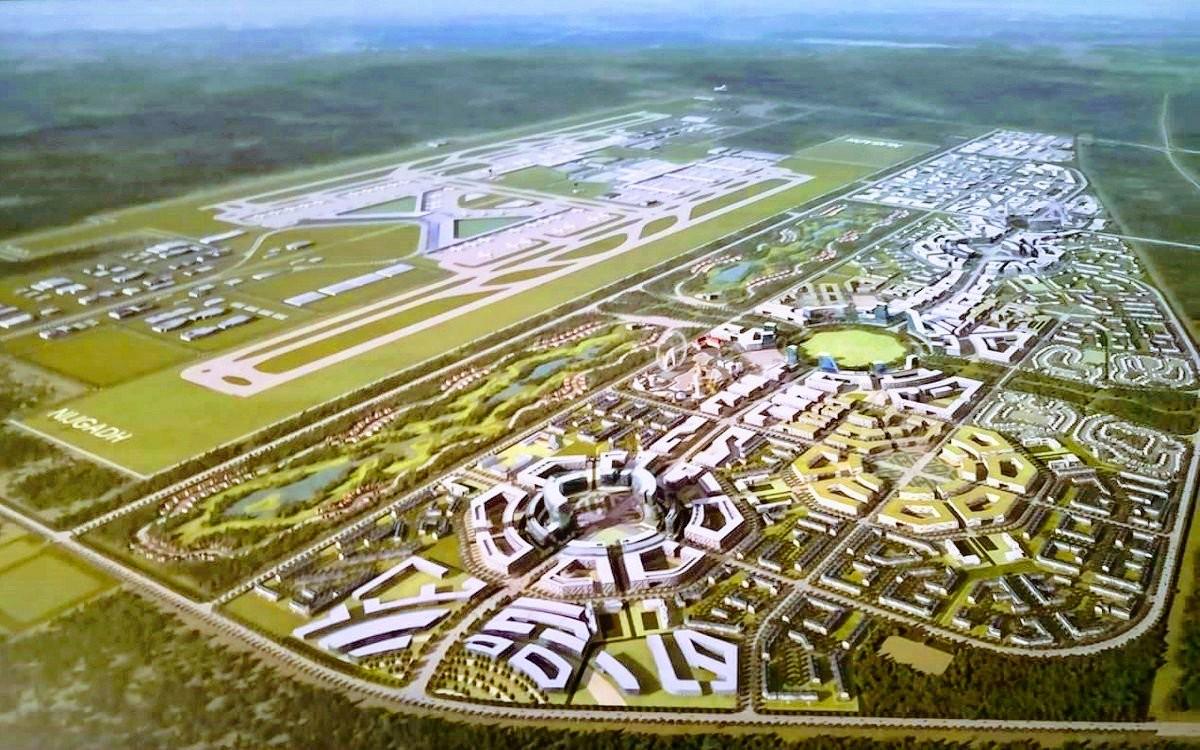
Nepal’s long-delayed Nijgadh International Airport project is moving towards a new phase as the government prepares to finalize its construction and operational modality within Mangsir, raising fresh prospects for one of the country’s most ambitious aviation infrastructure developments. After nearly three decades of planning, environmental disputes and legal complications, the government is preparing to present the USD 1.07 billion (approximately NPR 163 billion) project to potential investors under a Public-Private Partnership (PPP) model.
The government plans to promote the proposed international airport at the Nepal Infrastructure Summit 2026, scheduled to take place in Kathmandu on Mangsir 23–24. The initiative follows the government’s commitment in the Fiscal Year 2083/84 budget to advance the project through an appropriate investment and implementation framework. Designed to accommodate approximately 15 million passengers annually, Nijgadh International Airport is envisioned as a major addition to Nepal’s aviation infrastructure, with the potential to strengthen international air connectivity, expand passenger-handling capacity and support the country’s growing tourism industry.
The proposed development is expected to attract domestic and international investors interested in participating in large-scale infrastructure projects. However, before the project can proceed to procurement and construction, the government must resolve several outstanding matters, including its financial structure, land boundaries, environmental requirements and the relocation or management of affected settlements.
Three Decades of Planning and Environmental Challenges
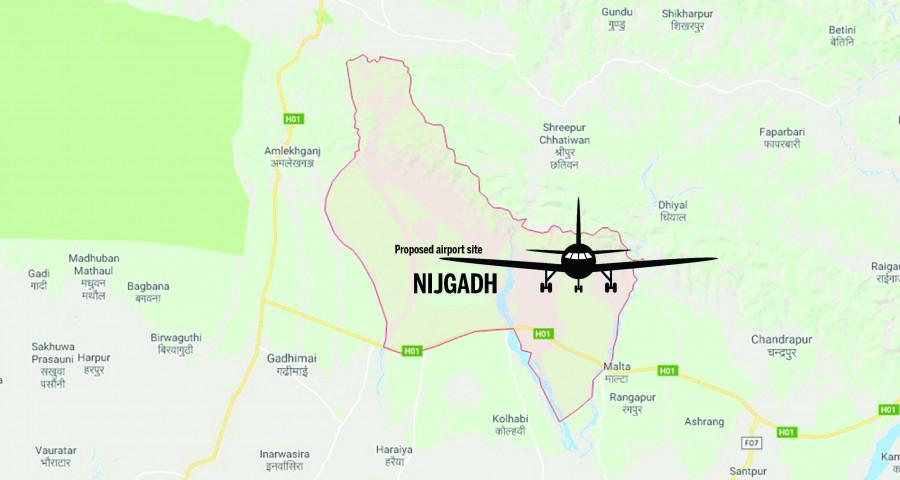
The Nijgadh International Airport project was originally conceived in 2052 B.S. as a strategic aviation infrastructure initiative to address Nepal’s long-term air transportation requirements. Its proposed location in Nijgadh, Bara district, was considered important because of its potential to serve as a major international aviation gateway while providing an alternative to the increasingly constrained Tribhuvan International Airport in Kathmandu.
Despite its strategic importance, the Nijgadh International Airport project has faced prolonged delays due to environmental concerns, particularly the potential impact of airport construction on the surrounding forest ecosystem in Nijgadh. The scale of proposed land acquisition and tree clearance became a major point of contention, raising questions about balancing national infrastructure requirements with environmental conservation.
A major setback came in Jestha 2079 B.S., when the Supreme Court annulled earlier government decisions concerning the Nijgadh airport project over concerns about extensive deforestation. The court directed the authorities to pursue an environmentally responsible development approach, requiring the proposed Nijgadh airport to be reconsidered with greater attention to minimizing ecological damage. The judicial intervention significantly affected the project’s implementation timeline and forced the government to revisit its earlier development plans. Subsequent discussions and expert assessments focused on identifying an approach that could accommodate the operational requirements of Nijgadh International Airport while reducing its environmental footprint.
Revised Development Plan Proposes 4,000 Hectares and BOOT Model
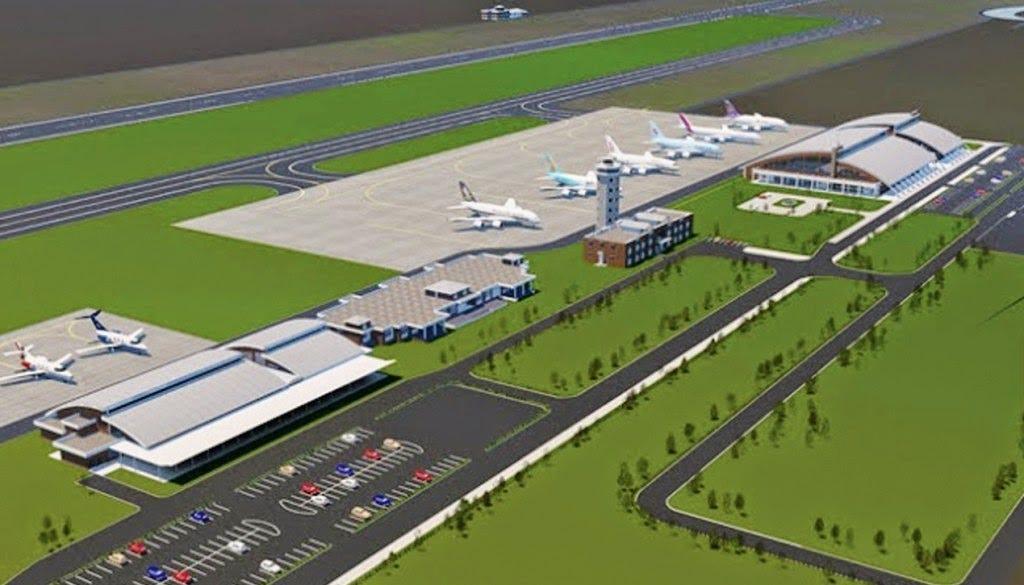
Following the Supreme Court’s intervention, expert panels recommended a revised development approach for the Nijgadh International Airport project, proposing phased construction across approximately 4,000 hectares with limited tree felling. The recommendations also called for abandoning the earlier plan to develop a large airport city alongside the airport infrastructure. The revised approach aims to prioritize essential aviation facilities while minimizing unnecessary land-use expansion and environmental impact. Instead of pursuing a broader urban development concept, the project would focus on establishing the infrastructure necessary for airport operations and future capacity expansion.
Another significant recommendation involved adopting a Build-Own-Operate-Transfer (BOOT) model for the development of Nijgadh International Airport. Under this proposed arrangement, a private-sector partner would be responsible for financing, developing and operating the airport under an agreed framework before transferring the facility to the government after the specified concession period. The BOOT model could provide an opportunity to attract private investment, technical expertise and operational capabilities for this large-scale aviation infrastructure project. Depending on the final investment structure and risk-sharing arrangements, it could also help reduce the government’s immediate financial burden.
However, these recommendations have yet to translate into a finalized implementation framework for Nijgadh International Airport. Before the project can move towards procurement, the government must make concrete decisions regarding its ownership structure, investment responsibilities, financing arrangements and long-term operational mechanism. Finalizing these key components will be essential to advancing the project towards implementation.

Funding, Land Boundaries and Settlement Issues Remain Pending
Although the government is preparing to promote the project at the Nepal Infrastructure Summit 2026, several important administrative and technical requirements must be completed before construction can begin. One of the primary tasks is finalizing the project’s funding structure and investment modality. The estimated investment of USD 1.07 billion, equivalent to approximately NPR 163 billion, represents a substantial financial commitment. The government will need to establish clear arrangements regarding private-sector participation, capital investment, risk distribution and the responsibilities of the public and private partners.
The proposed airport’s boundaries must also be redrawn in accordance with the Supreme Court’s directives. This process is particularly important for ensuring that the revised development plan complies with environmental requirements and avoids unnecessary forest clearance. In addition, authorities must address the situation of settlements located within or affected by the proposed airport development area, including Kantagaun.
The management of affected settlements will require appropriate administrative decisions and coordination before the project can advance to its construction phase. These outstanding matters are essential to establishing a legally compliant and environmentally responsible project structure. Their timely resolution will determine how quickly the government can move from investment promotion to the actual procurement and implementation process.
Airport Expected to Strengthen Nepal’s Aviation and Tourism Capacity
Once completed, Nijgadh International Airport is expected to play an important role in transforming Nepal’s aviation infrastructure and supporting the country’s long-term tourism ambitions. With a planned annual passenger-handling capacity of 15 million, the airport would significantly expand the country’s ability to accommodate international air traffic. One of its major anticipated benefits is reducing pressure on Tribhuvan International Airport, which currently serves as Nepal’s principal international aviation gateway. Additional international airport capacity could help distribute passenger traffic, provide greater operational flexibility and support the expansion of international airline services.
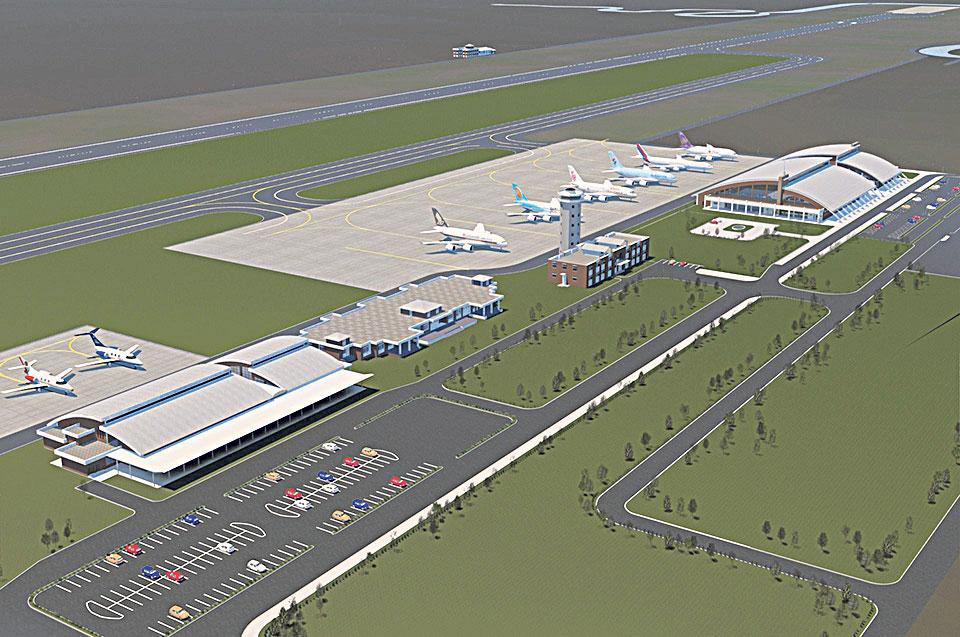
The proposed airport is also expected to accommodate wide-body aircraft, strengthening Nepal’s capacity to handle larger international aircraft and potentially improving connectivity with long-haul markets. Such infrastructure could create opportunities for expanded airline operations, improved passenger services and more efficient international air transportation. Connectivity with the Kathmandu-Terai Fast Track is another important component of the project’s broader strategic significance. The planned road link is expected to improve accessibility between the airport and Kathmandu, connecting the proposed aviation hub with the country’s capital and major economic centres.
For Nepal’s tourism industry, improved international aviation capacity could create opportunities to attract more visitors, strengthen connections with major tourism markets and support the development of tourism-related businesses. Better air connectivity is particularly important for a country whose tourism economy depends significantly on international visitors travelling to destinations across the Himalayas, cultural heritage sites and natural attractions. The airport could also strengthen Nepal’s potential as a regional transit and aviation hub, although achieving this ambition will depend on the project’s final design, airline partnerships, operational efficiency and broader connectivity arrangements.
After decades of delays, the coming decisions could prove significant in determining the future of Nepal’s aviation infrastructure. If the government successfully moves the project towards implementation while maintaining environmental safeguards, Nijgadh International Airport could become a major catalyst for strengthening international connectivity, expanding aviation capacity and supporting Nepal’s tourism development.