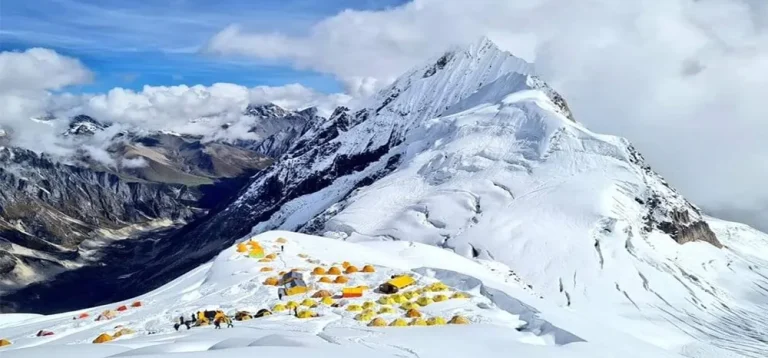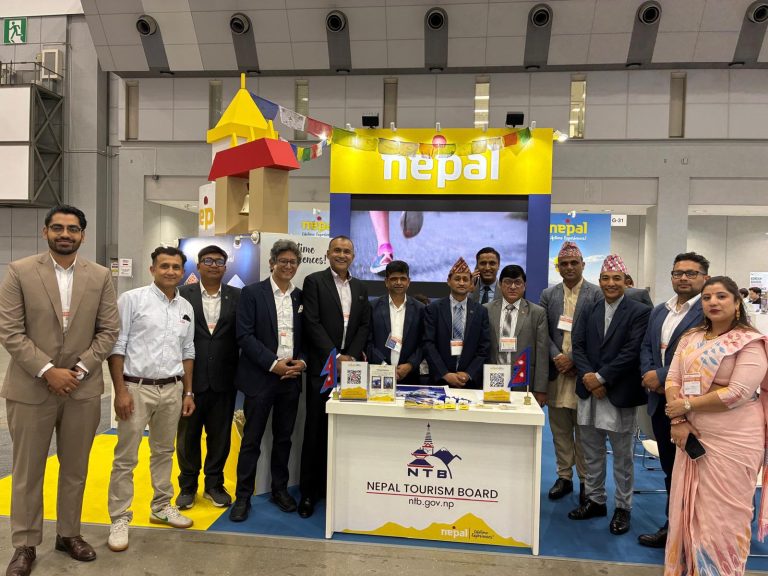
The second edition of the prestigious Everest Summiteers Summit 2026 was successfully held on May 27, 2026 (Jestha 13) in Kathmandu, bringing together legendary mountaineers, policymakers, tourism leaders, and conservation experts under one roof to celebrate the spirit of the Himalayas. Organized by Everest Alliance Nepal in collaboration with the Ministry of Culture, Tourism and Civil Aviation, the summit was held under the powerful theme “Uniting Voices for the Future of the Himalaya.”
The event aimed not only to honor the courage and achievements of Everest climbers from across the world but also to strengthen Nepal’s global identity as the premier destination for adventure and mountaineering tourism. This year’s summit was marked by higher international participation, expanded policy discussions, and a strong emphasis on climate change and sustainable mountain development.

176 Everest Summiteers from 26 Countries Honored
A major highlight of the event was the formal felicitation of 176 Everest summiteers representing 26 countries, who were honored with special medals and certificates in recognition of their successful ascent of the world’s highest peak.
The felicitation ceremony was jointly led by the Chief Guest, Hon’ble Minister of Culture, Tourism and Civil Aviation Mr. Khadak Raj Paudel, senior ministry officials including Secretary Mukunda Prasad Niraula, and representatives of key tourism bodies such as the Nepal Association of Tour and Travel Agents (NATTA) and Trekking Agencies’ Association of Nepal (TAAN).
Speakers at the ceremony emphasized that Everest is not just a mountain but a symbol of human determination, resilience, and global unity. Minister Paudel praised the climbers for their extraordinary courage and reaffirmed Nepal’s commitment to ensuring safer and more sustainable climbing experiences in the Himalayas.

Minister Highlights Safety, Sustainability, and Climate Action
In his keynote address, Minister Khadak Raj Paudel emphasized the importance of strengthening safety mechanisms for climbers, improving emergency rescue systems, and enhancing the livelihoods of Himalayan communities.
He expressed serious concern over the growing impact of climate change in the Himalayan region, pointing to rapid glacier melting, biodiversity loss, and increasing waste management challenges on Everest and surrounding peaks. He stated that protecting the Himalayas is not only Nepal’s responsibility but a shared global duty.
The minister further highlighted that sustainable tourism must remain at the core of Nepal’s mountain economy. “The Himalayas are facing unprecedented environmental pressure, and we must act collectively to preserve them for future generations,” he noted.

Kami Rita Sherpa Honored with Lifetime Achievement Award
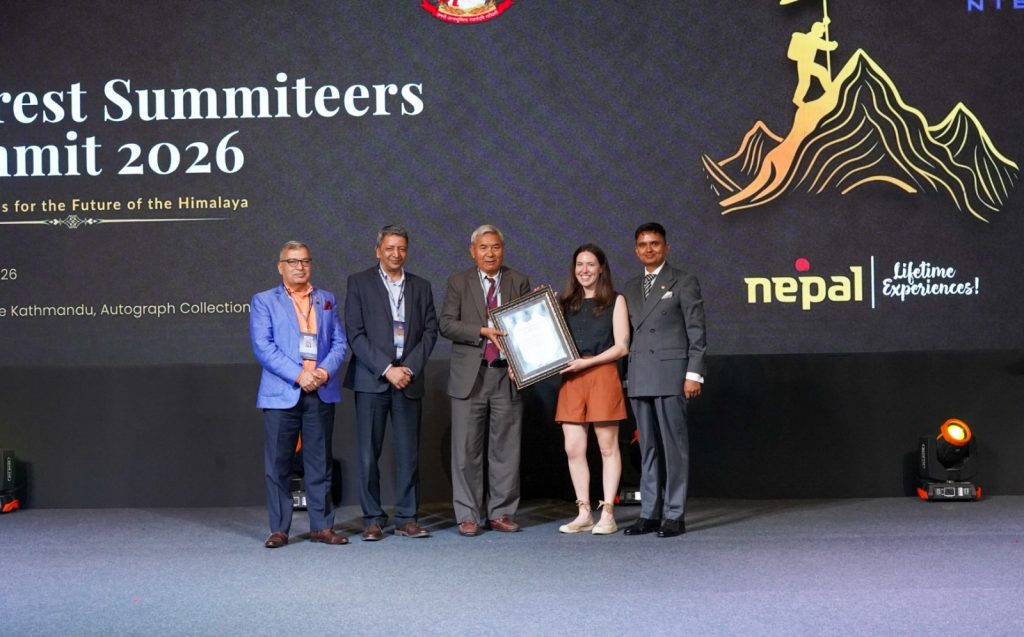
One of the most emotional and historic moments of the summit was the presentation of the Lifetime Achievement Award to legendary mountaineer Kami Rita Sherpa, widely known as the “Everest Man.”
Recently completing his record-breaking 32nd successful ascent of Mount Everest, Kami Rita Sherpa was honored for his unparalleled contribution to Himalayan mountaineering, expedition leadership, and the global recognition of Nepal’s Sherpa community.
The award was presented by the Chief Guest Minister Khadak Raj Paudel amid a standing ovation from international climbers and dignitaries. Organizers described him as a living symbol of resilience, humility, and dedication whose legacy continues to inspire generations of climbers worldwide.
International Legends and Special Honorees
The summit also recognized several distinguished personalities from the global mountaineering and adventure industry. Among them was Ms. He Jing, celebrated as the first woman in the world to climb all 14 peaks above 8,000 meters without supplementary oxygen. She was honored for her extraordinary endurance and contribution to redefining women’s achievement in high-altitude mountaineering.

Similarly, Mr. Pasang Phurba Sherpa was recognized for his outstanding contribution to expedition leadership and adventure tourism. His successful ascents of Everest, Ama Dablam, Mount Elbrus, Mount Kilimanjaro, Lobuche East, and Carstensz Pyramid reflect his global experience and leadership in extreme environments.
The summit also acknowledged Pelliot, a leading high-performance gear developer, for its contribution to safety-focused innovation in 8,000-meter expeditions. The company was recognized for advancing research in durable fabrics and extreme-condition equipment designed to enhance climber safety in the world’s harshest environments.

MoU Signed Between Everest Alliance Nepal and Pelliot
A key institutional development during the summit was the signing of a Memorandum of Understanding (MoU) between Everest Alliance Nepal and Pelliot.
The agreement focuses on cooperation in developing safer, more sustainable, and technologically advanced mountaineering gear, along with joint initiatives in research, training, and expedition safety. The partnership is expected to strengthen Nepal’s role as a global hub for mountain innovation and sustainable adventure tourism.

Three Major Panel Discussions Shape Policy Dialogue
The summit featured three high-level panel discussions addressing critical issues shaping the future of Himalayan mountaineering and tourism.
The first panel, “Women in Mountaineering: Safety, Dignity and Equal Opportunity,” focused on gender inclusion in high-altitude expeditions. Speakers emphasized the need for stronger safety protocols for women climbers and greater representation in leadership roles within the mountaineering industry.

The second panel, “Summit Perspectives: Risk, Resilience and Achievement,” explored the psychological and physical challenges faced by climbers. Experts and veteran mountaineers shared insights into risk management, preparation strategies, and the evolving nature of Everest expeditions.
The third panel, “Conservation Organizations: Scaling Climate Finance for Mountain Ecosystems,” brought together representatives from WWF, ICIMOD, ZSL, IUCN, and NTNC. Discussions centered on climate financing mechanisms, glacier protection, biodiversity conservation, and the long-term sustainability of Himalayan ecosystems.

Voices from Tourism and Conservation Leaders
Former CEO of the Nepal Tourism Board, Mr. Deepak Raj Joshi, highlighted the urgent need to address climate change impacts in the Himalayas. He warned that accelerated glacier retreat and changing weather patterns pose serious risks to mountain tourism and local livelihoods. He stressed the importance of integrating climate science with tourism policy to ensure long-term sustainability.
Officiating Director of the Nepal Tourism Board, Mr. Sunil Sharma, spoke about the inspirational power of mountaineering. He emphasized how climbers’ bravery motivates new generations to pursue adventure tourism while also strengthening Nepal’s global tourism identity. He noted that Everest summiteers represent not only athletic achievement but also a powerful source of national pride and global inspiration.
Perspectives from Industry Leaders and Organizers
Senior mountaineering entrepreneur Mingma Sherpa, managing director of Seven Summit Treks, highlighted the increasing professionalism of Sherpa guides and their vital role in ensuring climber safety. He noted that modern Sherpa teams are better trained, physically prepared, and technologically equipped than ever before, allowing safer and more successful expeditions.
Everest Alliance Nepal Chairman Mr. Sudarshan Nepal stated that the summit was initiated two years ago with the goal of recognizing Everest climbers on a global platform. He expressed satisfaction that the event has now evolved into an international gathering representing climbers from across continents. He emphasized that the summit is not only a national initiative but a growing global movement to honor Himalayan achievements.
Presidential Engagement and Summit Breakfast
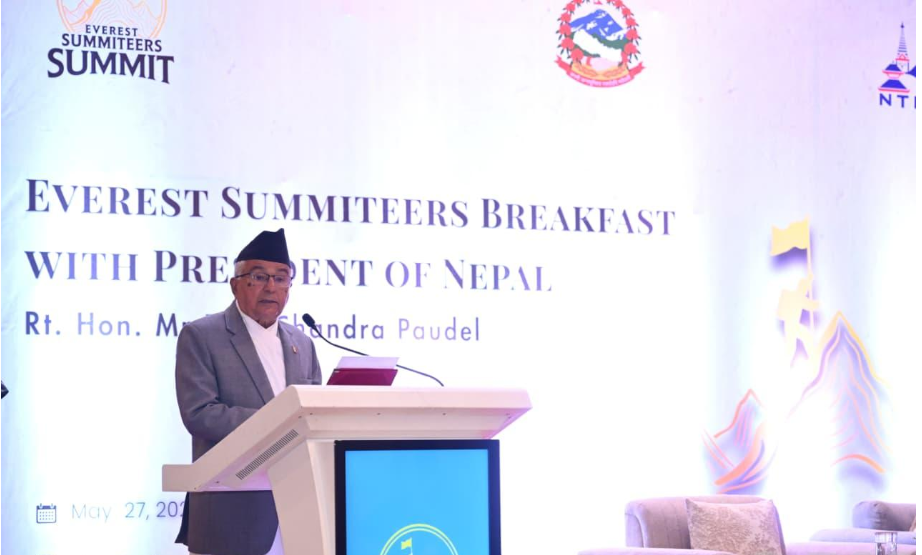
In a significant gesture of recognition, the President of Nepal, Ram Chandra Poudel, attended the “Summiters Breakfast” held on the eve of the summit. The President interacted with climbers, shared words of encouragement, and acknowledged their contribution to Nepal’s global identity as the land of Everest.
A Platform for the Future of the Himalayas
The Everest Summiteers Summit 2026 concluded with a strong collective message: the future of the Himalayas depends on global cooperation, climate responsibility, and sustainable tourism practices. Organizers reaffirmed their commitment to making the summit an annual global platform that not only celebrates mountaineering achievements but also drives policy dialogue and environmental action.
With participation from climbers, policymakers, conservationists, and industry leaders, the summit has firmly established itself as one of the most important international gatherings dedicated to mountain heritage, safety, and sustainability. As Kathmandu hosted this landmark event, the message resonated clearly across all discussions, Everest is not just a peak to be climbed, but a legacy to be protected for generations to come.