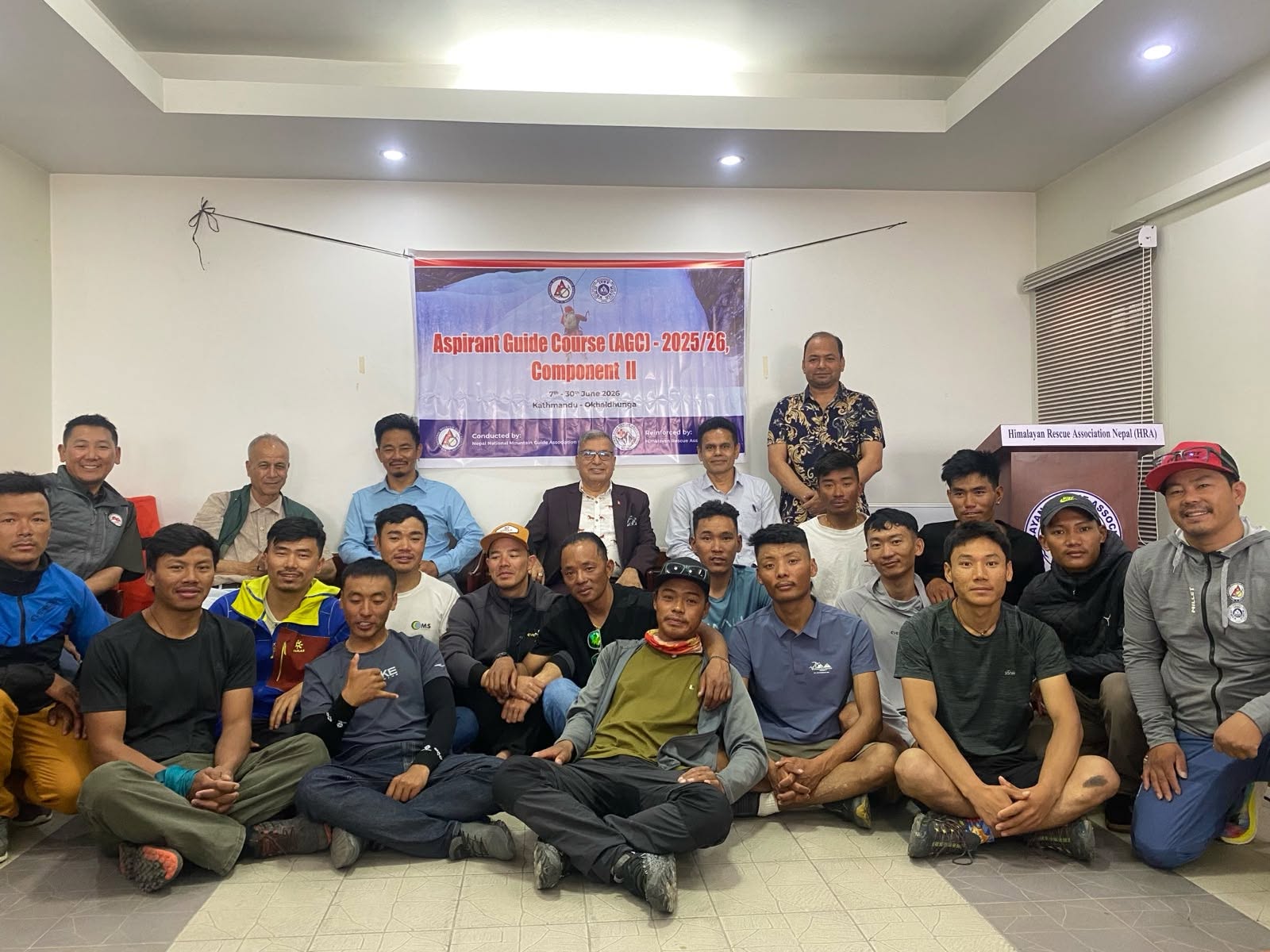
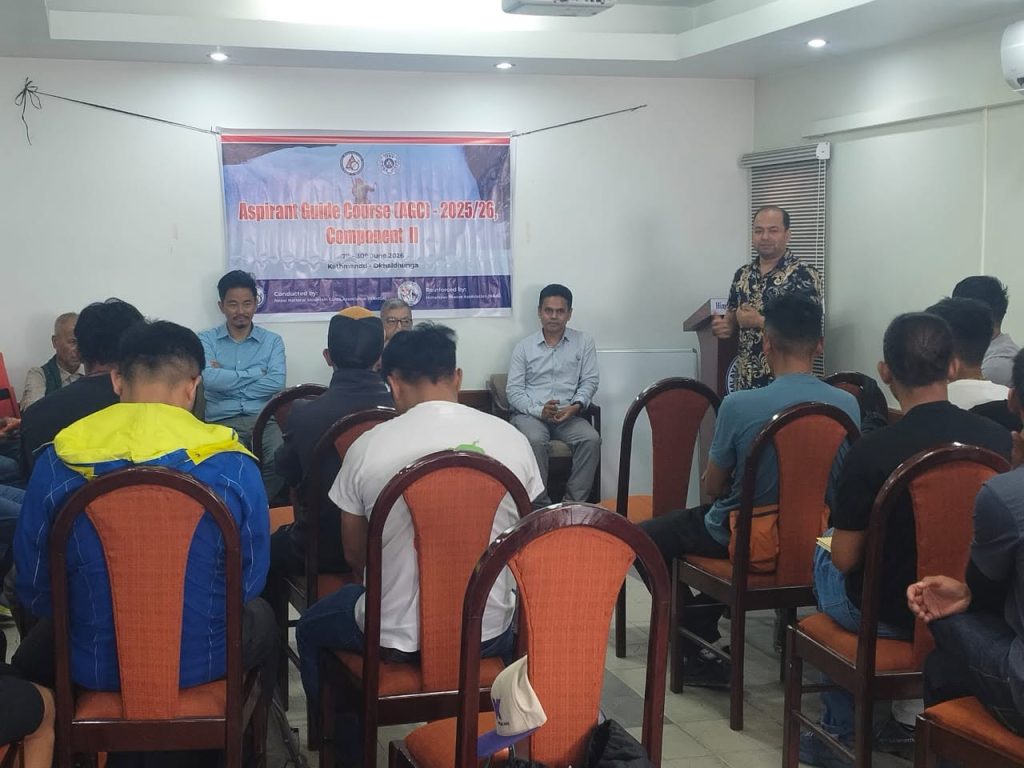
The International Federation of Mountain Guides Associations (IFMGA) accredited Aspirant Guide Course (AGC) 2025/26 – Component II officially commenced today with an orientation and theory session held at the training hall of the Himalayan Rescue Association Nepal (HRA).
The 19-day training program is being organized by the Nepal National Mountain Guide Association (NNMGA) and will take place in and around Kathmandu Valley as well as Khijidemba in Okhaldhunga district.
The course combines both theoretical and practical instruction designed to strengthen the technical capacity, safety knowledge, and professional competencies of aspiring mountain guides in Nepal.

Fifteen Trainees Participating in Advanced Training
According to organizers, a total of 15 trainees are participating in this phase of the program after successfully completing the previous components of the IFMGA-accredited training course.
The participants are expected to undergo intensive instruction and field-based practical exercises focused on various aspects of mountain guiding and mountaineering operations.
The training aims to prepare guides according to internationally recognized standards established by the IFMGA, one of the world’s leading organizations for professional mountain guiding certification.
Orientation Session Highlights Course Structure
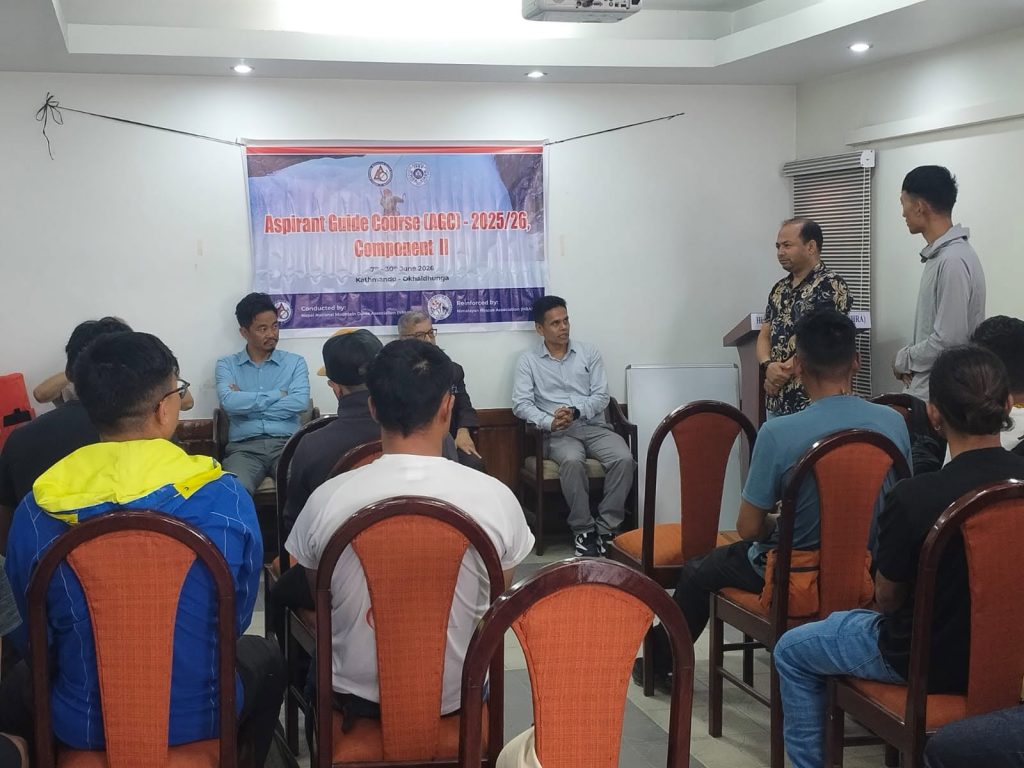
During the opening orientation session, Pasang Kaji Sherpa, Technical Committee Convener of NNMGA and Education Chief of the course, briefed participants on the course curriculum, training schedule, examination system, and evaluation procedures.
He emphasized the importance of discipline, technical proficiency, and safety standards in professional mountain guiding, particularly in Nepal’s challenging Himalayan environment.
The orientation also provided trainees with an overview of upcoming practical exercises and field training sessions.
Industry Leaders Extend Best Wishes
The opening program was attended by several prominent figures from Nepal’s mountaineering and rescue community.
NNMGA President Tul Singh Gurung, HRA President Dambar Parajuli, and former HRA President Bikram Neupane extended their best wishes to the trainees and encouraged them to successfully complete the demanding course.
Speakers highlighted the growing importance of internationally trained mountain guides in ensuring safe and sustainable mountain tourism in Nepal.
They also emphasized the role of professional guide training in enhancing Nepal’s reputation as a leading global mountaineering destination.
Training Covers Technical and Safety Skills
Throughout the 19-day course, trainees will receive specialized instruction in several core areas essential for professional mountain guiding.
Key training subjects include mountain meteorology, map reading and navigation, trip planning and management, tourism rules and regulations of Nepal, rock rescue techniques, and multi-pitch rock climbing.
Organizers said the program has been designed to equip trainees with both technical mountaineering expertise and practical field management skills required in high-altitude environments.
Experienced instructors and subject experts will lead both classroom sessions and outdoor practical exercises during the course.
Focus on International Standards in Mountain Guiding
The IFMGA-accredited program is considered one of the highest standards of professional mountain guide training internationally.
Nepal’s mountaineering sector has increasingly prioritized internationally certified training programs to strengthen safety practices, improve guiding standards, and support sustainable adventure tourism development.
Industry experts say the demand for highly skilled and professionally certified mountain guides continues to grow as Nepal attracts increasing numbers of trekkers, climbers, and expedition groups from around the world.
Collaboration Among Key Mountaineering Organizations
The course is being conducted by the Nepal National Mountain Guide Association with support from the Himalayan Rescue Association Nepal and the Nepal Mountaineering Instructors Association (NMIA).
Organizers stated that collaboration among professional mountaineering institutions is essential for strengthening Nepal’s guiding industry and promoting safe mountaineering practices in the Himalayas.
The initiative also reflects broader efforts to enhance professional standards and capacity-building within Nepal’s adventure tourism and mountaineering sector.

Strengthening Nepal’s Adventure Tourism Sector
Tourism and mountaineering stakeholders believe programs such as the IFMGA Aspirant Guide Course play a crucial role in supporting Nepal’s adventure tourism industry.
By producing internationally trained mountain guides, the country can further strengthen visitor safety, improve expedition management standards, and maintain its global reputation as one of the world’s premier mountaineering destinations.
Organizers expressed confidence that the current training program will help produce a new generation of skilled and responsible mountain guides capable of meeting international professional standards.