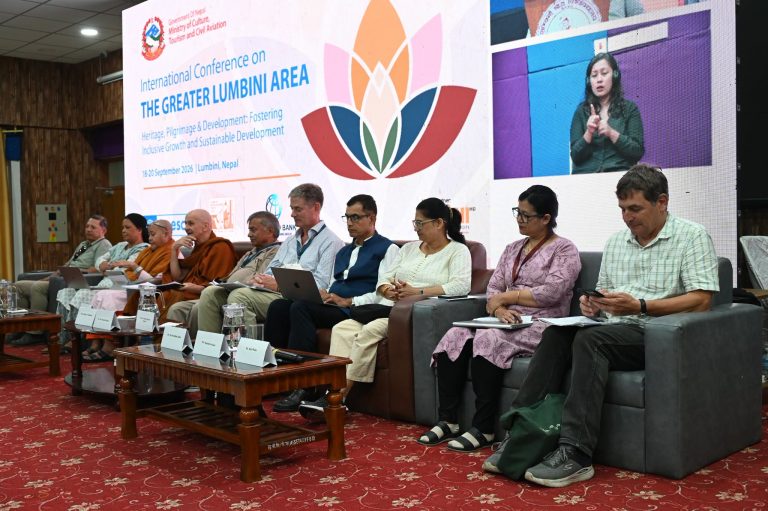
In the flat southern plains of Nepal, far from the towering Himalayas and alpine silence, lies Lumbini, a place that forever changed the spiritual history of humanity. This is the birthplace of Siddhartha Gautama, who would later become the Buddha, the Enlightened One.
Unlike the dramatic mountain shrines of Nepal, Lumbini speaks in a language of stillness. The land is open, peaceful, and unhurried. Sacred gardens, ancient ruins, monastic zones, and quiet water ponds define its landscape. Yet beneath this simplicity lies one of the most powerful spiritual energies in the world.
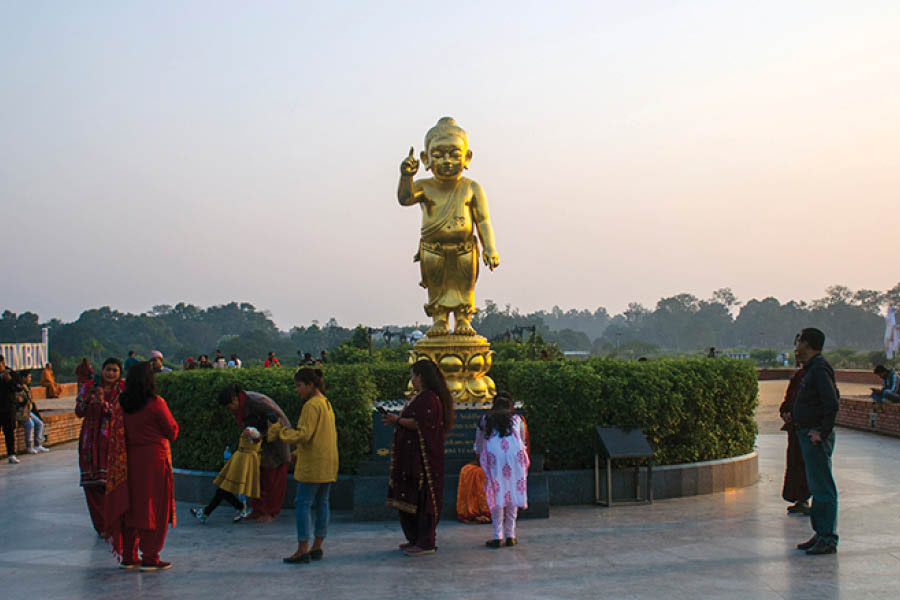
According to Buddhist tradition, Queen Mayadevi gave birth to Siddhartha Gautama in Lumbini over 2,600 years ago while traveling to her parental home. It is said she held onto a sal tree branch at the moment of childbirth, and the child was born miraculously standing, taking seven steps forward, symbolizing his destiny to become a spiritual guide for humanity. This sacred moment transformed Lumbini into a global pilgrimage center that continues to attract millions of visitors from every corner of the world.
The Sacred Garden of Stillness
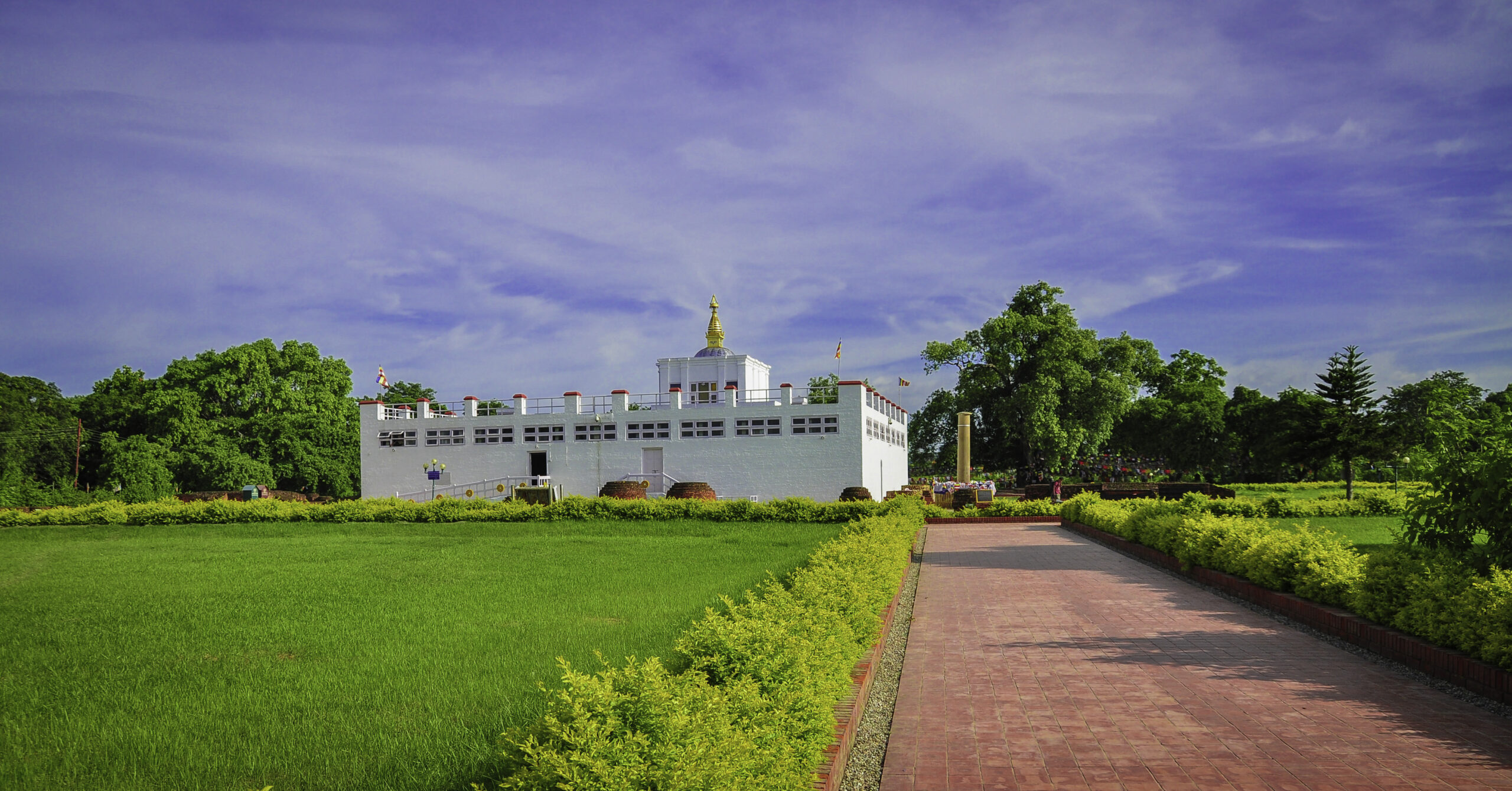
At the heart of Lumbini lies the Sacred Garden, a vast tranquil space that preserves the ancient essence of the Buddha’s birthplace. The Mayadevi Temple stands here as the central point of devotion, marking the exact location where Buddha is believed to have been born. Inside the temple complex, archaeological remains and markers trace centuries of history. Pilgrims walk slowly through the area, often in silence, as if speaking too loudly would disturb the deep serenity that fills the space.

A sacred pond nearby is believed to be the same water source where Queen Mayadevi bathed before giving birth. Surrounding it are trees, prayer flags, and meditation spaces where monks and visitors sit in quiet reflection. Lumbini is not a place of rituals filled with noise or grandeur. Instead, it is a place where silence itself becomes the most profound form of prayer.
The sacred site features over 25 monasteries built by different countries, along with spaces for meditation and Buddhist studies. The most revered place is the Mayadevi Temple, where Lord Buddha was born, supported by archaeological evidence and the Ashoka Pillar inscription. It is believed that Prince Siddhartha took his first seven steps here and delivered a message of peace to humanity.
A Global Center of Buddhist Unity
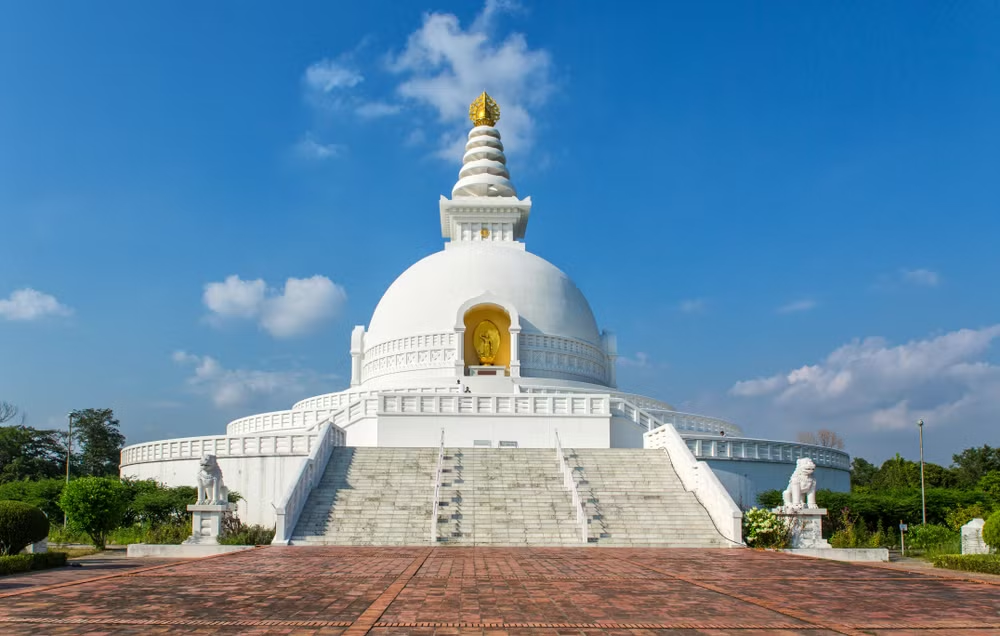
One of the most remarkable aspects of Lumbini is its international monastic zone. Countries from across the Buddhist world, including Thailand, Myanmar, China, Japan, Sri Lanka, Germany, and France, have built monasteries here in their own architectural styles.
Walking through Lumbini feels like traveling across continents of Buddhist culture. Each monastery reflects the artistic and spiritual identity of its home country, yet all share a common purpose: honoring the Buddha’s message of peace, compassion, and enlightenment. This global representation transforms Lumbini into more than a historical site. It becomes a living symbol of unity, where cultural diversity merges into spiritual harmony.
The Path of Inner Awakening
For pilgrims, visiting Lumbini is not about external sightseeing but internal reflection. Many arrive seeking peace, clarity, or healing. Some come as Buddhists, others as spiritual seekers, and many simply as travelers drawn by curiosity. As they walk through the sacred grounds, the experience becomes deeply introspective. The absence of noise, the slow movement of visitors, and the meditative environment create a sense of timelessness. Lumbini encourages visitors to slow down, not just physically but mentally. In a world defined by speed, it offers the rare gift of stillness.
The Beginning of a Spiritual Journey
Lumbini is not just the birthplace of a historical figure, it is the birthplace of a philosophy that reshaped human thought. The Buddha’s teachings on compassion, mindfulness, and liberation continue to influence millions across the globe. Standing in Lumbini, one does not feel the weight of history but the presence of possibility. It is a reminder that enlightenment is not distant; it begins within.