Mustang, one of Nepal’s most revered Himalayan districts renowned for its religious and tourism significance, is facing a growing and increasingly urgent waste management crisis. The problem has escalated in recent times as the volume of pilgrims and tourists visiting the sacred shrine of Muktinath continues to swell, with neither adequate infrastructure nor visitor discipline keeping pace with the surge in footfall.
Tourists Ignoring Designated Waste Zones in Mustang
At the heart of the problem is the failure of both domestic and international tourists to dispose of their waste responsibly in the designated areas around the Muktinath temple complex. Despite clear guidelines, visitors are routinely discarding garbage indiscriminately along pathways, near bathing ghats, and around surrounding hotel areas, leaving local authorities struggling to maintain basic environmental standards in a region that holds deep spiritual significance for Hindus and Buddhists alike.

Indian Tourist Numbers Surge, So Does the Garbage in Mustang Region
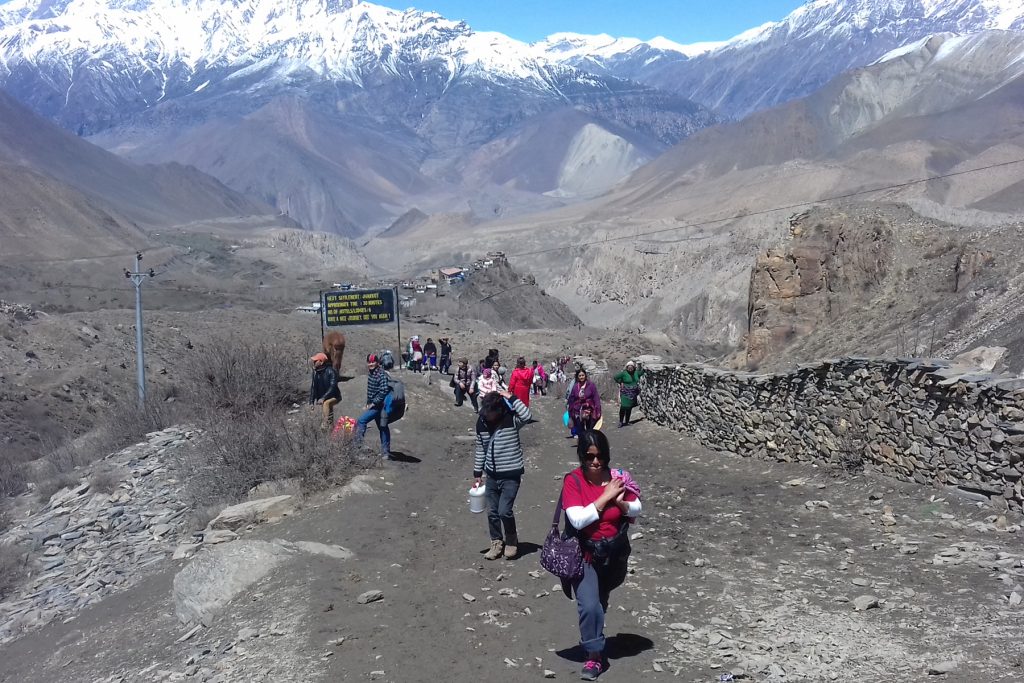
Compared to previous years, the current year has witnessed a sharp rise in the number of Indian tourists making the pilgrimage to Muktinath. According to the Annapurna Conservation Area Project (ACAP) Jomsom Office, nearly 10,000 Indian tourists visit Muktinath in Mustang on a daily basis. While the surge has brought welcome economic activity, with highways and nearby hotels reporting enthusiastic footfall and improved business, the environmental cost has been severe.
Gharapjhong Rural Municipality Chair Mohan Singh Lalchan has directly attributed the worsening waste situation to the dramatic increase in Indian tourist arrivals. He noted that haphazard and uncontrolled littering by visitors has made proper waste management increasingly difficult for local authorities, who lack both the resources and enforcement capacity to handle the scale of the problem.
Bathing Rituals: Leaving a Dirty Trail
A particular concern raised by local authorities is the behaviour of pilgrims during ritual bathing. Devotees visiting Muktinath traditionally take a holy bath at the 108 water spouts and the sacred ponds as part of their religious observance. However, the practice has been accompanied by the reckless disposal of waste, including plastic packaging, clothing, and personal items, in and around the bathing sites. This uncontrolled littering is not only damaging the physical environment but is also beginning to raise serious questions about the long-term preservation of the area’s natural and aesthetic beauty.
A Destination at a Crossroads
Muktinath, situated at an altitude of approximately 3,710 metres in the Mustang district, draws pilgrims and trekkers from across South Asia and the world. Its unique status as a sacred site for both Hindus and Buddhists, combined with its dramatic Himalayan backdrop, makes it one of Nepal’s most treasured destinations. However, local leaders and conservation officials warn that without immediate, coordinated intervention, the very appeal of the destination is at risk.

The ACAP, which oversees environmental management across the Annapurna Conservation Area, is working alongside local government bodies to address the situation. However, stakeholders agree that the scale of daily arrivals demands a far more robust and systematic waste management framework, one that includes designated collection points, mandatory compliance from tourism operators, and greater awareness campaigns targeting visiting pilgrims.
Urgent Action Needed in Mustang
With tourism numbers showing no signs of declining, local authorities are calling on the federal and provincial governments to step in with meaningful support. The need of the hour, officials say, is a combination of stronger regulation, increased sanitation infrastructure, and sustained public awareness drives that can change visitor behaviour before irreversible damage is done to one of Nepal’s most sacred and scenic high-altitude destinations.