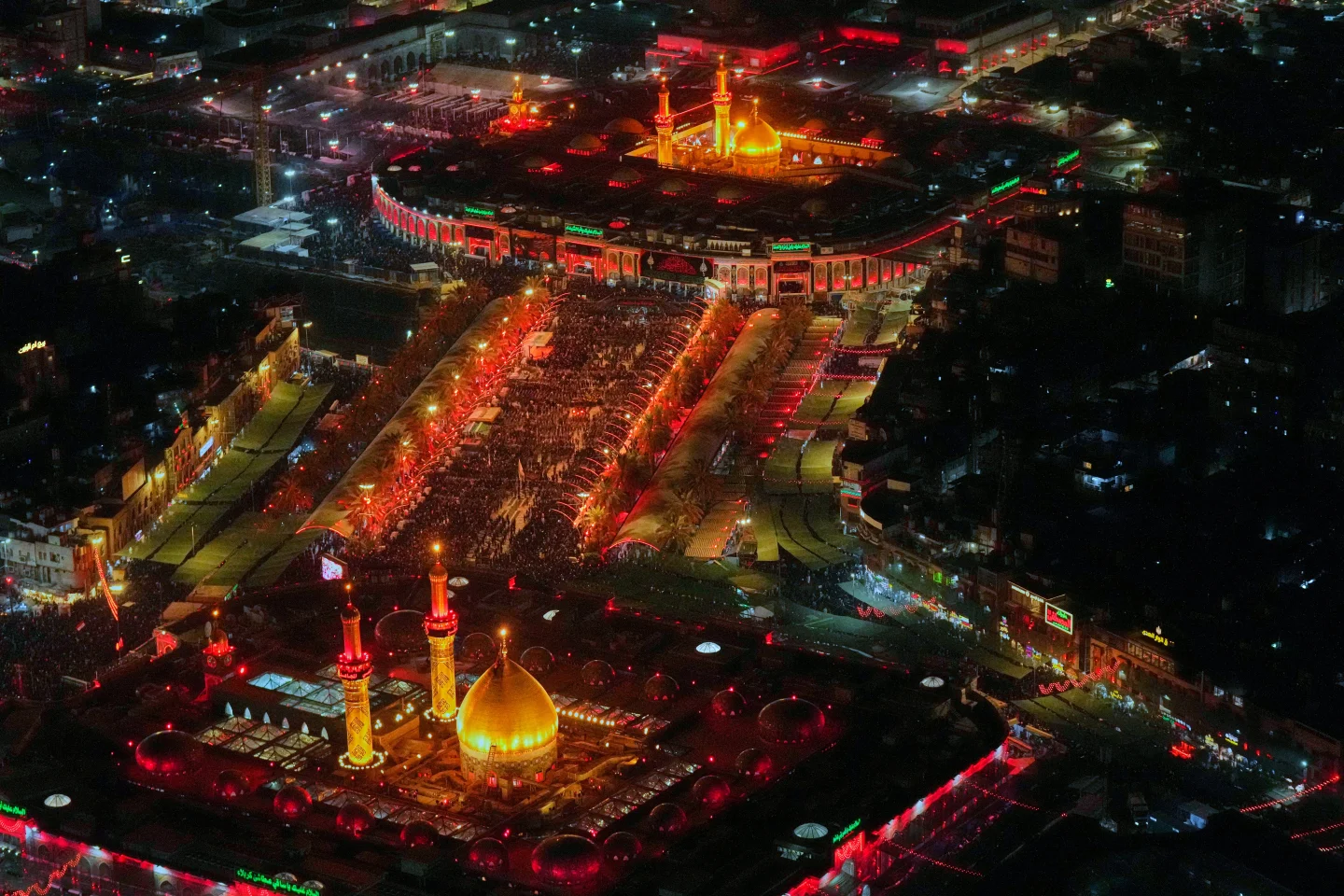
Millions of Shiite Muslims converged on the holy city of Karbala on Tuesday to observe Arbaeen, one of the world’s largest annual religious pilgrimages, amid heightened regional tensions and concerns over a possible escalation of conflict involving the United States and Iran.
Arbaeen, observed 40 days after Ashoura, commemorates the martyrdom of Imam Hussein, the grandson of the Prophet Muhammad, who was killed along with members of his family during the Battle of Karbala in 680 A.D. The pilgrimage draws millions of devotees from Iraq and around the world each year, making it one of the largest annual religious gatherings globally.

Millions Arrive in Iraq for the Sacred Pilgrimage
According to Iraq’s Operations Command for the Arbaeen Pilgrimage, operating under the Office of the Commander-in-Chief of the Armed Forces, more than 4.88 million foreign pilgrims had entered Iraq since the beginning of the Islamic month of Muharram. The figure includes visitors arriving for both Ashoura and the Arbaeen observances, with pilgrims continuing to enter the country from numerous nations.
In addition to international visitors, millions of Iraqi pilgrims traveled from across the country to Karbala, many undertaking long journeys on foot as part of a centuries-old religious tradition. Roads leading to the holy city were lined with thousands of volunteer service camps providing food, drinking water, accommodation, medical assistance, and other essential services to pilgrims throughout their journey.
Iranian Foreign Minister Joins Pilgrimage
Among the prominent international visitors was Iranian Foreign Minister Abbas Araghchi, who arrived in the Iraqi holy city of Najaf before continuing to Karbala to participate in the pilgrimage. His visit highlighted the close religious and diplomatic ties between Iraq and Iran while also underscoring Iraq’s delicate position amid ongoing geopolitical tensions. Iraq continues to maintain relations with both Washington and Tehran and has sought to avoid being drawn deeper into regional conflicts.
Regional Tensions Affect International Participation
Although Iranian pilgrims continued to arrive in large numbers, several participants noted that the number of visitors from Arab countries, Europe, and other parts of the world appeared lower than in previous years. Many observers attributed the decline to ongoing regional instability, security concerns, and the broader geopolitical uncertainty affecting international travel.
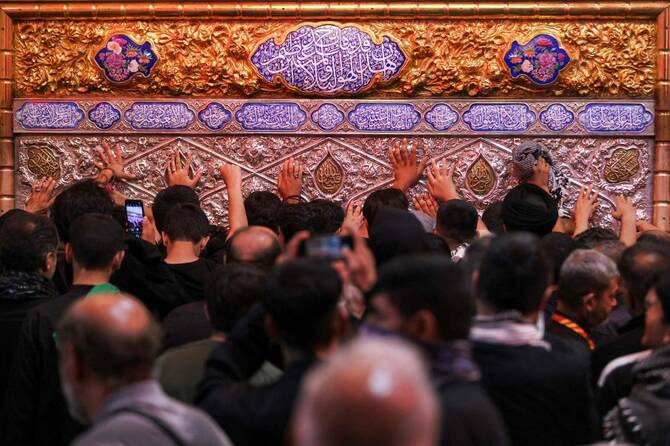
Pilgrims traveling from Baghdad reported that Iranian flags were particularly visible along the traditional pilgrimage route between Najaf and Karbala, while the presence of delegations from other countries appeared comparatively limited. Several participants said the ongoing conflict and political tensions across the Middle East had discouraged many foreign pilgrims from making the journey this year.
Pilgrimage Takes Place Amid Economic and Political Challenges
This year’s Arbaeen pilgrimage comes at a challenging time for Iraq, which is facing mounting economic pressures following disruptions to regional trade and energy exports. The closure of the Strait of Hormuz, a vital global shipping route, has affected Iraqi oil exports, placing additional strain on an economy that relies on crude oil for more than 90 percent of government revenue.
At the same time, the Iraqi government continues to grapple with efforts to bring armed groups under greater state control. The issue remains politically sensitive, particularly regarding several Iran-backed militias operating within the country. One of the country’s most influential armed groups, Kataib Hezbollah, reiterated during the Arbaeen commemorations that it opposed calls for disarmament and would continue to retain what it described as the “weapons of the resistance.”
Parallel Observances Held Across Iran
While millions traveled to Iraq, many Shiite Muslims unable to make the pilgrimage observed Arbaeen ceremonies across Iran. In the capital, Tehran, thousands of black-clad mourners participated in a large religious procession stretching nearly 20 kilometers toward one of the city’s major Shiite shrines.

Some of the commemorations also reflected the region’s tense political climate, with demonstrators chanting political slogans and expressing opposition to the United States and Israel. Similar Arbaeen gatherings and religious processions were also reported in several other Iranian cities.
One of the World’s Largest Religious Gatherings
Despite regional instability and ongoing political uncertainty, Arbaeen once again attracted millions of devotees, reaffirming its status as one of the largest annual religious gatherings in the world. The pilgrimage remains a powerful symbol of faith, sacrifice, and unity for Shiite Muslims, with millions continuing to undertake the spiritual journey to Karbala each year in remembrance of Imam Hussein’s legacy.