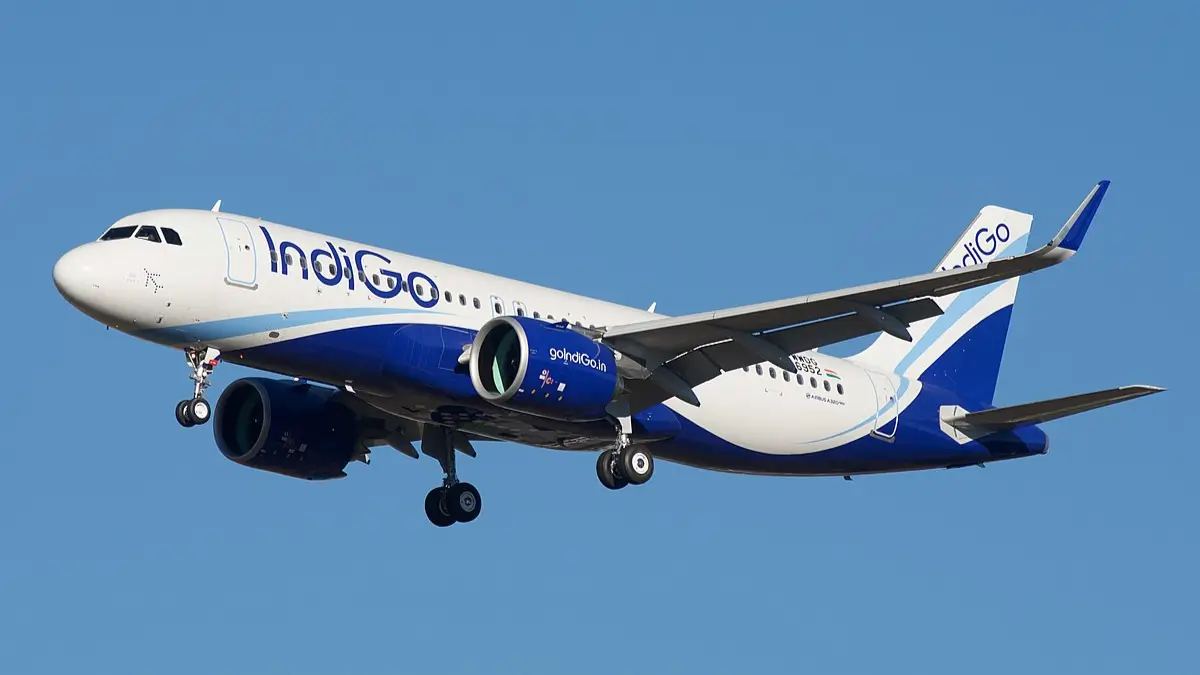
India’s largest airline, IndiGo, has unveiled a long-term strategic roadmap aimed at transforming the carrier into a truly global airline by 2030, signalling a decisive shift away from its current identity as a predominantly domestic and regional operator. The announcement marks one of the most significant strategic pivots in the airline’s history, positioning IndiGo to compete on a fundamentally different scale within the global aviation landscape.
The Building Blocks of the 2030 Vision
At the core of IndiGo’s expansion roadmap lies a clear and deliberate set of priorities. The airline plans to widen its international footprint substantially, moving well beyond its existing network of regional and short-haul international routes. Central to this effort is a focused push to increase long-haul connectivity, enabling the carrier to operate routes spanning multiple continents rather than confining itself to neighbouring countries and short regional hops across South and Southeast Asia.

Equally critical to the plan is a scaling up of IndiGo’s fleet to support intercontinental operations. Long-haul international flying requires fundamentally different aircraft capabilities than the short and medium-haul narrow-body operations that have defined IndiGo’s business model to date, and the airline’s roadmap reflects an understanding that fleet transformation must go hand in hand with network expansion if the 2030 ambition is to be realised.
A Proven Domestic Foundation
IndiGo’s pivot toward global ambitions is built upon a position of considerable strength at home. The airline has established itself as the dominant force in Indian aviation through a business model centred on low-cost fares and high-frequency services, a formula that has allowed it to capture the largest share of India’s fast-growing domestic air travel market. This dominant domestic position provides IndiGo with both the financial scale and the brand recognition within India to credibly pursue a more ambitious international expansion strategy.
Rather than abandoning the low-cost model that built its success, IndiGo’s 2030 plan appears designed to layer a new tier of long-haul, globally competitive operations on top of its existing domestic and regional strengths, a strategy that, if executed successfully, would allow the airline to capture both ends of the travel market simultaneously.
Riding the Wave of Rising International Demand
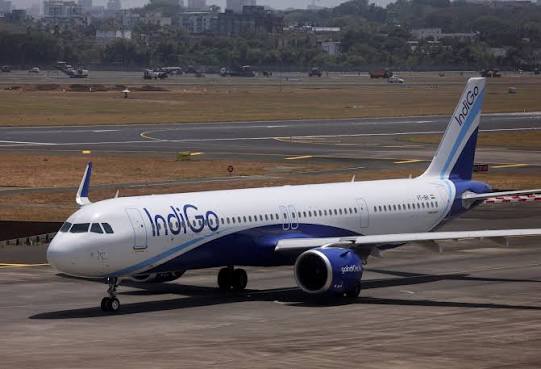
IndiGo’s strategic timing is closely tied to broader shifts within India’s aviation and travel landscape. International demand originating from India has been rising steadily, driven by a growing middle class with increasing disposable income, a rapidly expanding diaspora maintaining strong travel ties to India, and rising business travel linked to India’s expanding role in global trade and services. As this demand continues to grow, the airline is positioning itself to capture a larger share of outbound and inbound international traffic rather than ceding that growth entirely to established international carriers and Middle Eastern hub operators.
What Industry Observers Are Saying
Aviation industry observers view IndiGo’s announcement as a meaningful reflection of growing confidence in India’s broader aviation market. Several converging factors are cited as supporting this confidence: rising outbound travel from Indian travellers seeking international leisure and business destinations, expanding airport infrastructure across India’s major cities that can accommodate larger aircraft and higher passenger volumes, and strengthening global connectivity from Indian hubs as more international carriers add or expand routes to and from the country.

These factors collectively suggest that India’s aviation market has reached a stage of maturity where a major domestic carrier launching an ambitious international expansion strategy is viewed not as an overreach, but as a logical and well-timed response to genuine underlying market demand.
A Structural Transformation, Not Just a Network Expansion
Perhaps the most significant aspect of IndiGo’s 2030 plan is what it represents structurally for the airline’s business model. The roadmap signals a strategic transition from a regional low-cost carrier model toward a more globally integrated airline network, a transformation that goes well beyond simply adding new routes. It implies changes to fleet composition, crew training and certification, long-haul service standards, international partnership and alliance considerations, and the broader operational complexity that comes with running intercontinental services alongside a high-frequency domestic network.
This kind of transition has historically proven challenging for low-cost carriers worldwide, many of which have struggled to maintain cost discipline while adding the complexity of long-haul international operations. IndiGo’s ability to navigate this transition while preserving the efficiency that has made it India’s dominant domestic carrier will likely be one of the most closely watched aspects of its execution over the coming years.

Positioning for Global Competition
By setting its sights on 2030, IndiGo is signalling its intent to be considered alongside the world’s major international carriers rather than being viewed primarily as a regional Indian operator. This positions the airline for broader global competition at a time when international demand from India continues to rise, and when several major international carriers, including Gulf-based giants and other Asian competitors, have already built substantial businesses serving the India-to-world travel corridor.
As IndiGo works to translate its strategic vision into operational reality over the coming years, the success of its 2030 ambition will likely depend on a combination of fleet acquisition timelines, route selection discipline, and the airline’s ability to build the long-haul service capabilities expected by international travellers. For India’s aviation sector as a whole, IndiGo’s transformation, should it succeed, would represent a significant milestone, marking the emergence of a homegrown Indian carrier with genuine global reach and ambition.