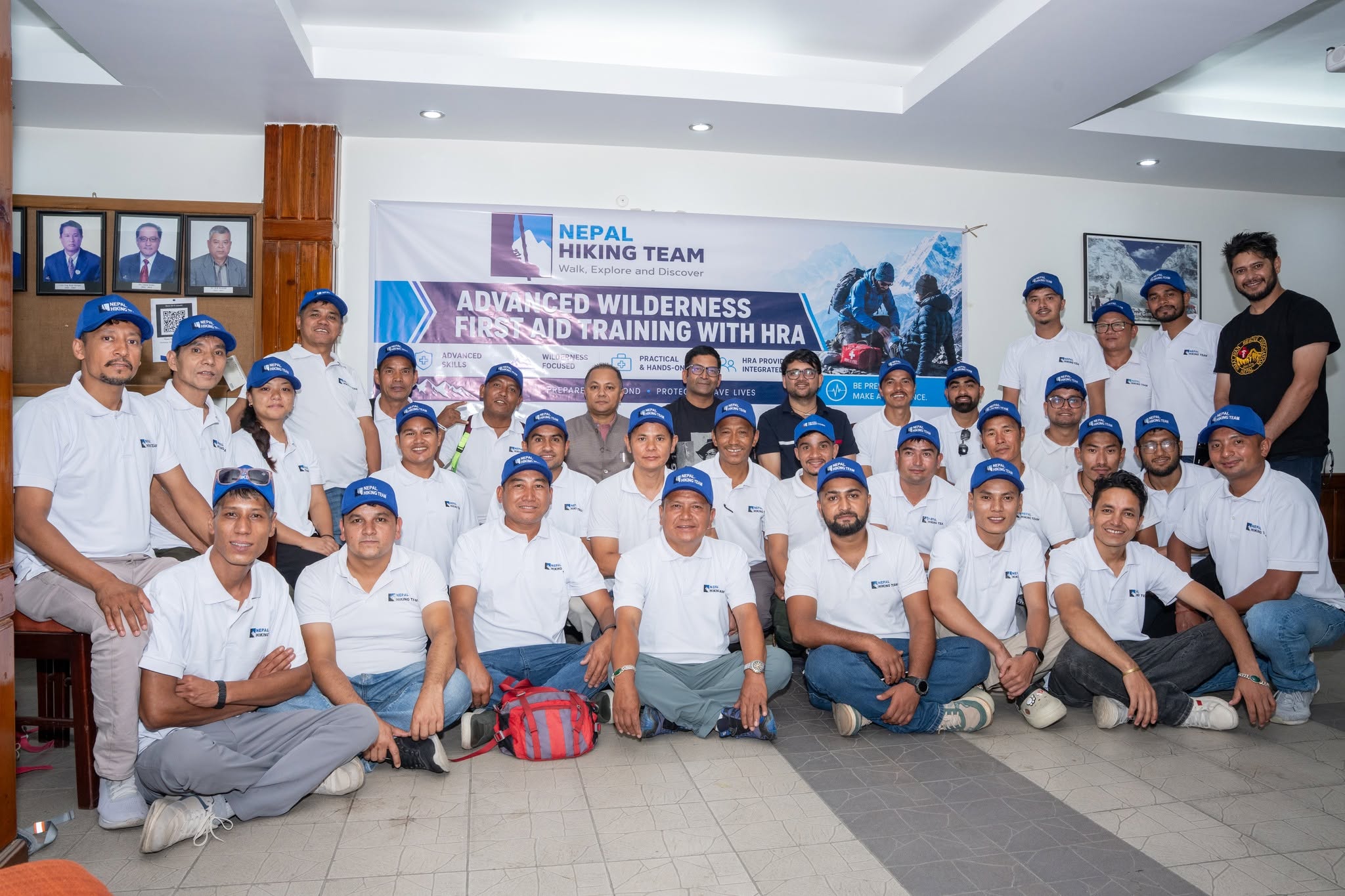
The Himalayan Rescue Association Nepal (HRA) successfully conducted a two-day Advanced Wilderness First Aid Training for trekking guides from Nepal Hiking Team, reinforcing emergency preparedness and promoting safer trekking and mountaineering practices in Nepal’s Himalayan region.
The training, held on August 1 and 2 at the HRA Office in Lazimpat, aimed to strengthen participants’ ability to respond effectively to medical emergencies in remote mountain environments, where access to immediate healthcare is often limited.

Focus on Mountain Emergency Response
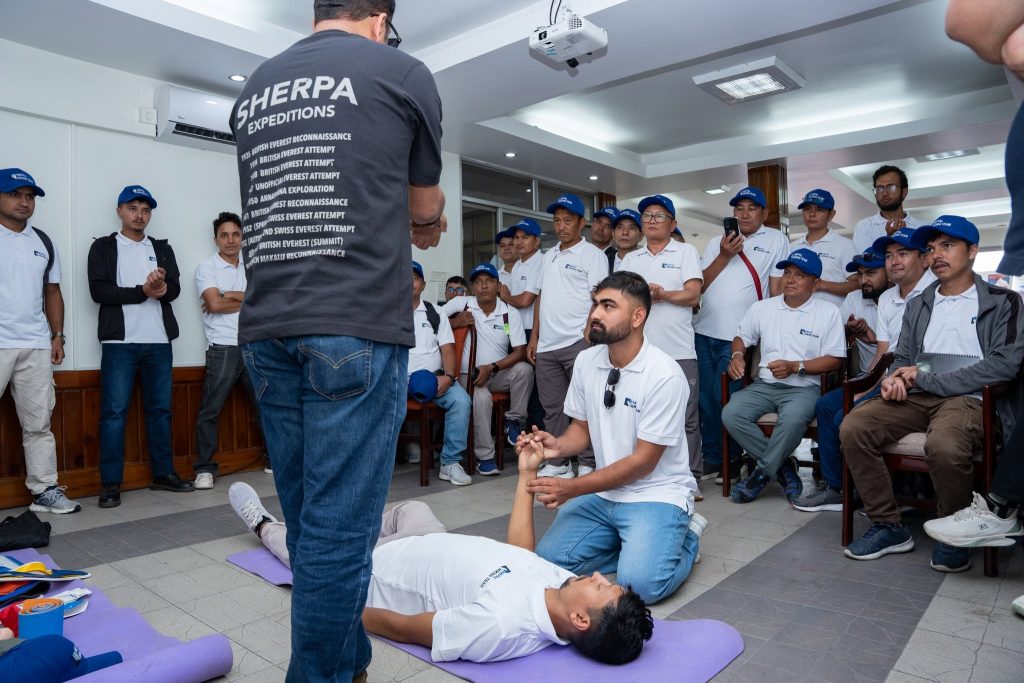
The intensive program combined interactive classroom sessions with practical hands-on training, allowing participants to develop the knowledge and confidence required to manage emergencies during trekking expeditions. The course covered a wide range of wilderness medical topics, including the recognition and treatment of acute mountain sickness and other altitude-related illnesses, Basic Life Support (BLS), trauma management, seizures, cold-related injuries, and environmental emergencies commonly encountered in high-altitude regions.
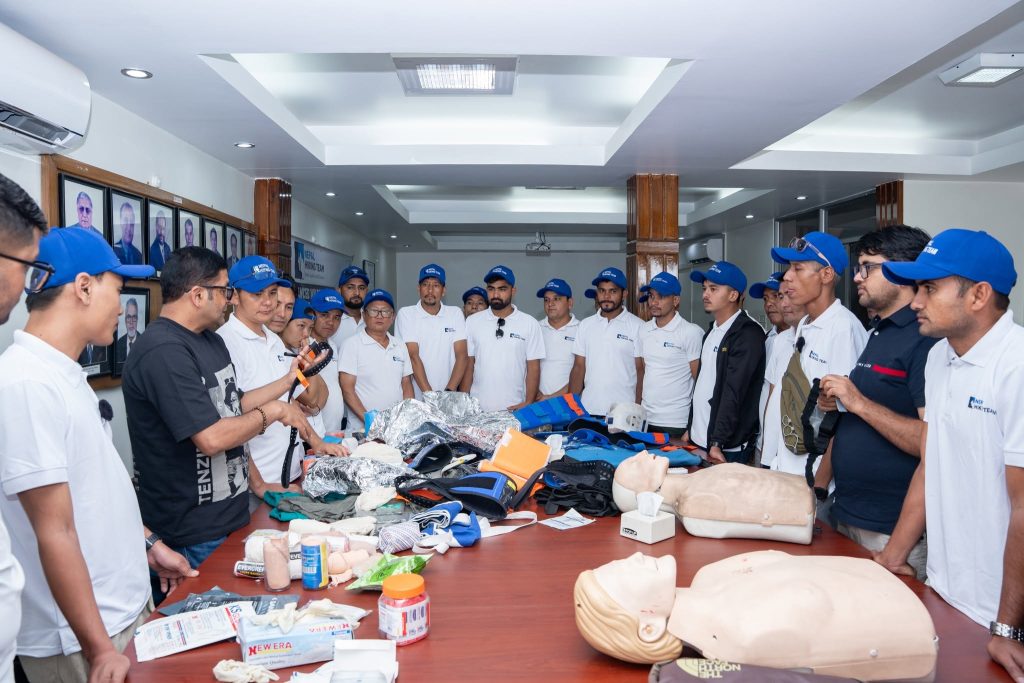
Participants also received training in managing common medical emergencies, using Gamow bags and supplemental oxygen, patient assessment and transfer techniques, first aid kit management, spinal injury stabilization, treatment of dislocations, and the management of bites and stings.
Enhancing Safety Standards in Nepal’s Trekking Industry
The Himalayan Rescue Association said the training is part of its continued efforts to improve safety standards in Nepal’s trekking and mountaineering sector by equipping frontline tourism professionals with life-saving skills. As trekking guides are often the first responders during emergencies in remote mountain areas, advanced first aid knowledge can play a crucial role in stabilizing injured or ill trekkers before professional medical assistance becomes available. The organization emphasized that well-trained guides contribute significantly to reducing risks and improving emergency response in Nepal’s popular trekking destinations.

Commitment to Safer Mountain Tourism
HRA expressed gratitude to its instructors for delivering the specialized training and thanked all participating trekking guides for their enthusiasm and commitment to enhancing mountain safety. The association reaffirmed its commitment to building a safer adventure tourism industry by providing regular training and promoting preparedness among trekking and mountaineering professionals.
With Nepal continuing to attract thousands of trekkers and climbers each year, such capacity-building programs are expected to strengthen emergency response capabilities and further enhance the country’s reputation as a safe and responsible adventure tourism destination.