With construction targeted for completion by 2028, Hyatt Regency Lumbini is poised to become a defining symbol of how global hospitality excellence can coexist with, and actively support, one of the world’s most sacred and historically significant places. Hyatt Hotels Corporation, one of the world’s most renowned hospitality groups, has announced a major expansion of its presence in Nepal through a new partnership with Veda Hospitality Pvt. Ltd., a company under the Golchha Group.
The two organisations have jointly announced plans to develop and operate Hyatt Regency Lumbini, a world-class hotel set to welcome guests by 2028. The announcement represents a significant step forward for Nepal’s tourism and hospitality sector, bringing a globally recognised luxury brand to one of the world’s most important spiritual and cultural destinations.
Hyatt’s Footprint in Nepal Set to Expand to Four Properties
Once operational, Hyatt Regency Lumbini will bring the total number of Hyatt-branded hotels in Nepal to four, reinforcing the group’s deepening commitment to the Nepali market. Industry observers note that the development is also expected to strengthen Hyatt’s broader expansion strategy across the South-West Asia region, positioning Nepal as an increasingly important market within the group’s regional growth plans.

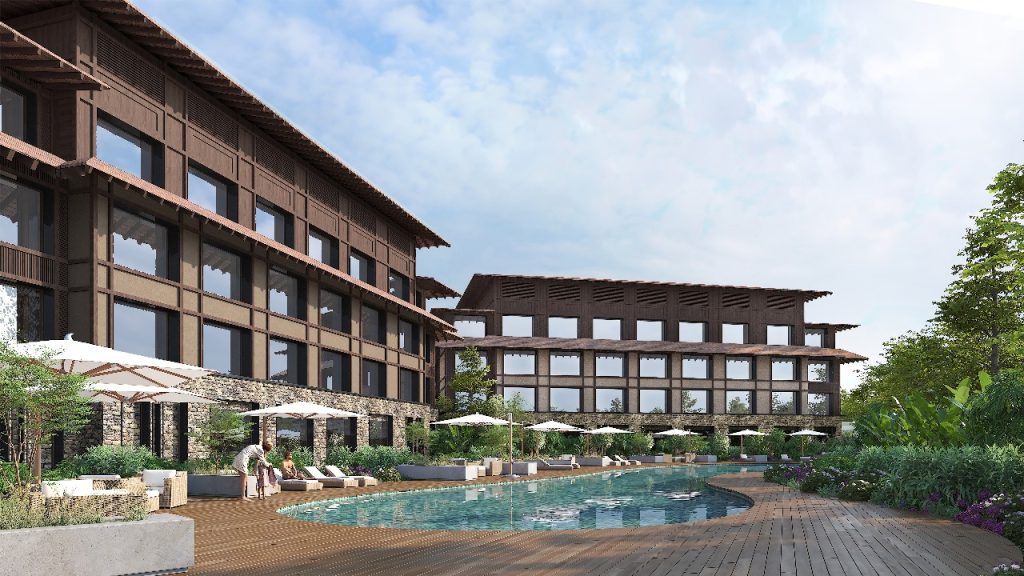
An Expansive Property of Hyatt Regency Lumbini, Blending Modern Design with Local Heritage
The new hotel, Hyatt Regency Lumbini, will be built on an expansive 11-acre property and will feature 175 well-appointed rooms, offering guests a level of scale and luxury not currently available in the Lumbini area. According to project details, the hotel’s design will combine contemporary architecture with traditional Nepali architectural styles, an approach intended to strike a careful balance between indigenous cultural identity and international standards of hospitality service. This design philosophy reflects a broader trend among luxury hotel developments in culturally significant destinations, where global brands increasingly seek to root their properties in local architectural and aesthetic traditions rather than imposing a generic international look.
Voices Behind the Partnership in Hyatt Regency Lumbini
Dhruva Rathore, Vice President of Development for Hyatt’s India and South-West Asia region, described Nepal as a significant market for Hyatt’s continued growth. He expressed particular enthusiasm about establishing a Hyatt Regency property in Lumbini, citing the deep religious and cultural significance the location holds for millions of people around the world. His comments underscore that the decision to develop in Lumbini was driven not merely by commercial opportunity but by a recognition of the site’s unique global stature as a spiritual destination.
Akshay Golchha, Managing Director of the Golchha Group, echoed this sentiment, expressing confidence that the collaboration with Hyatt would not only bring world-class hotel services to Lumbini but would also contribute meaningfully to the promotion and preservation of local cultural heritage. His remarks reflect an understanding, shared by both partners, that the project carries responsibilities extending beyond conventional hospitality development into the realm of cultural stewardship.
Lumbini: A Site of Global Spiritual Significance
Lumbini, recognised globally as the birthplace of Lord Gautam Buddha, stands as one of the most important destinations for Buddhist devotees and tourists from around the world. Listed as a UNESCO World Heritage Site, Lumbini is home to a wealth of historical and religious landmarks, including the sacred Maya Devi Temple and the ancient Ashoka Pillar, both of which draw pilgrims, historians, and travellers seeking to connect with one of humanity’s most significant spiritual legacies.
Meeting a Growing Need for World-Class Infrastructure
In recent years, Lumbini has witnessed steadily expanding religious, cultural, and international tourism activity, as growing numbers of Buddhist pilgrims and global travellers seek to visit the site. This sustained growth has, in turn, highlighted a pressing need for upgraded, high-quality hotel infrastructure capable of serving an increasingly diverse and demanding international visitor base. Against this backdrop, the arrival of Hyatt Regency is being viewed as a significant achievement, one that directly addresses a long-standing infrastructure gap that has, until now, constrained Lumbini’s ability to fully capitalise on its global spiritual significance.

Anticipated Benefits for the Region
Once completed, the project is expected to provide both domestic and international visitors to Lumbini with access to internationally standardised accommodation, a development that industry stakeholders believe will encourage longer stays and higher-value tourism in the area. Beyond the direct hospitality benefits, the project is also expected to generate meaningful positive impacts for the broader regional economy, including the creation of local employment opportunities, growth in ancillary tourism businesses such as transport, retail, and food service, and a general strengthening of the regional economic base surrounding Lumbini.
A Strategic Bet on Nepal’s Spiritual Tourism Potential
The Hyatt Regency Lumbini project reflects a growing confidence among major international hospitality brands in Nepal’s long-term tourism potential, particularly within the niche but highly significant category of spiritual and pilgrimage tourism. As more global travellers seek meaningful, culturally rich travel experiences, destinations like Lumbini, backed by world-class hospitality infrastructure, are well positioned to capture a growing share of this segment, offering Nepal a distinctive avenue for tourism growth that is less dependent on conventional adventure or trekking-based travel.