While the arrival of the monsoon season traditionally marks the beginning of Nepal’s tourism off-season, the story is unfolding differently in Dhorpatan Hunting Reserve. Unlike many popular destinations witnessing a decline in visitor flow during the rainy months, Dhorpatan has begun attracting a growing number of trekkers seeking a unique monsoon travel experience.
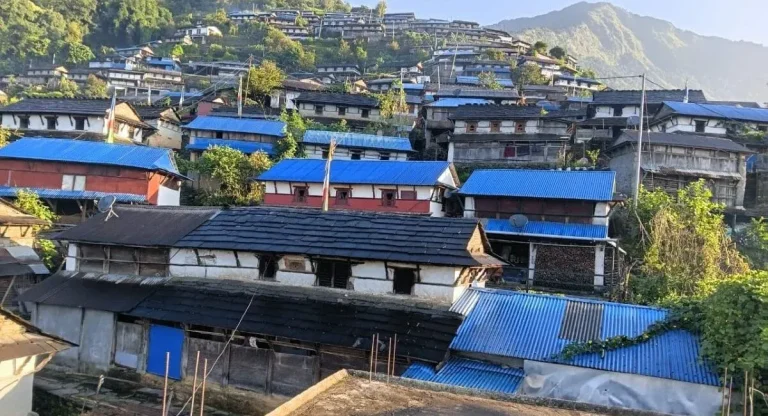
The vast green alpine meadows, mist-covered highlands, blooming seasonal wildflowers, and scenic trails leading to remote grazing settlements have created a distinctive attraction for nature enthusiasts and adventure travelers. The monsoon landscape has turned Dhorpatan into one of Nepal’s most visually captivating trekking destinations during a season often overlooked by mainstream tourism.

Tourism debate shifts beyond hunting-based identity
For decades, Dhorpatan has enjoyed international recognition primarily because of hunting tourism, as it remains Nepal’s only legal hunting reserve where foreign hunters participate in licensed trophy hunting of species such as blue sheep and Himalayan tahr.
However, tourism stakeholders increasingly argue that Dhorpatan’s future should no longer depend solely on hunting tourism. Instead, experts believe the Himalayan valley holds enormous untapped potential in nature tourism, trekking, biodiversity conservation, cultural tourism, and community-based sustainable tourism.
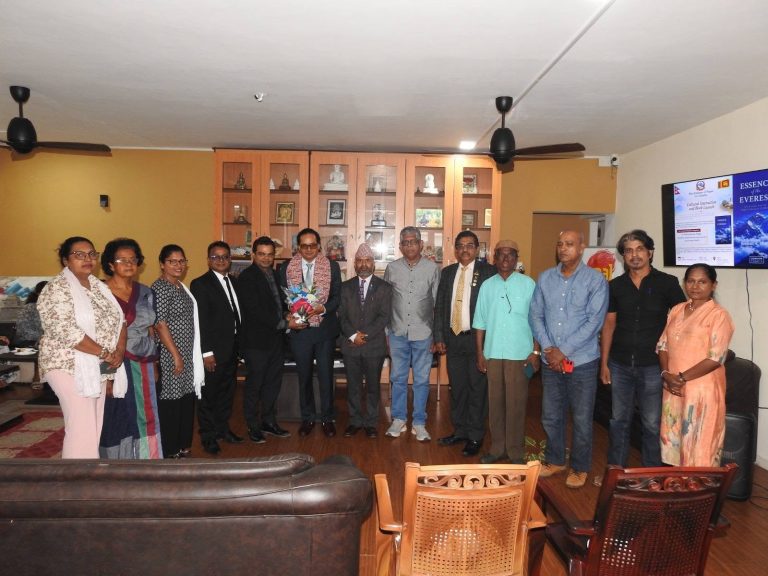
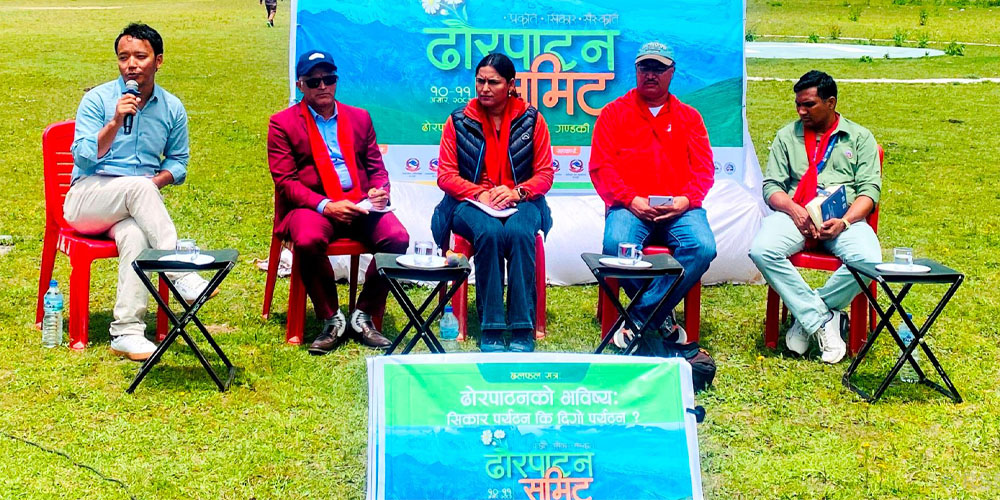
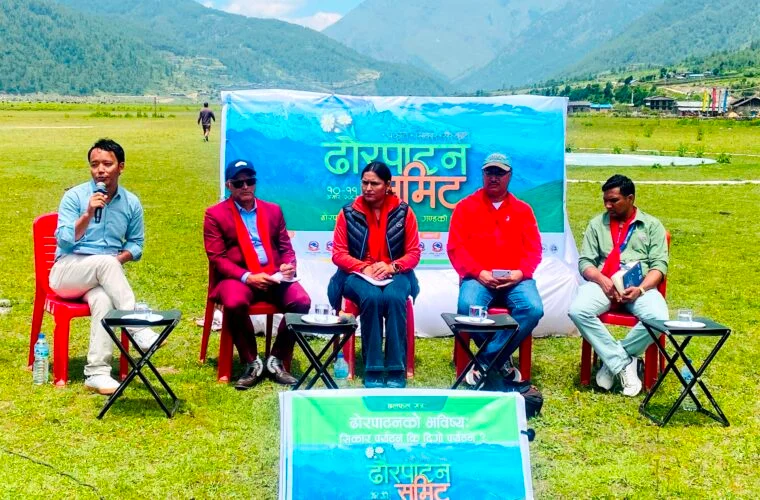
This growing debate recently took center stage during the Dhorpatan Summit, where policymakers, tourism entrepreneurs, conservationists, journalists, and local community representatives engaged in serious discussions about the region’s tourism future.
Experts call for long-term sustainable tourism strategy
Participants at the summit collectively agreed that Dhorpatan’s tourism development must move beyond its hunting-based international identity. Speakers stressed the need to prioritize long-term tourism strategies built around the area’s unique ecological diversity, untouched landscapes, indigenous culture, and local community participation.
Chairperson of Trekking Agencies’ Association of Nepal (TAAN) Gandaki, Krishna Prasad Acharya, said Dhorpatan remains one of Nepal’s most promising yet neglected tourism destinations due to limited government attention.
According to him, as established trekking routes such as the famous Annapurna Circuit continue shrinking because of road expansion, Dhorpatan can emerge as a strong alternative destination. He emphasized the possibility of creating an extensive trekking network connecting Myagdi’s Muna, Gurja, Jaljala, Dhorpatan, and Dolpa areas near Dhaulagiri, the world’s eighth-highest mountain.
Community benefits crucial for tourism sustainability
Acharya stressed that tourism infrastructure alone is insufficient unless local communities directly benefit through employment opportunities and economic participation.
He noted that quality tourism development requires parallel investment in infrastructure, hospitality standards, safety measures, and service quality. Without improving the livelihoods of residents, tourism growth would remain unsustainable in the long term.
“Tourist arrivals alone are not enough. Tourism must positively transform local lives. Only when communities benefit directly can tourism truly become sustainable,” he emphasized.
Global shift in wildlife ethics raises questions over hunting tourism
Journalist Amrit Bhadgaunle argued that Dhorpatan’s tourism future should be viewed from a much broader perspective than hunting activities alone.
He highlighted growing international concern over animal welfare and biodiversity conservation, suggesting that legal hunting tourism may not remain a sustainable long-term tourism strategy. Instead of attracting visitors to hunt wildlife, Dhorpatan should promote wildlife observation in natural habitats and strengthen eco-tourism opportunities.
According to him, its greatest tourism assets lie in its natural beauty, biodiversity, environmental value, local culture, and authentic mountain lifestyle rather than hunting alone.
Opportunity for wellness, spiritual and nature retreat tourism
Solo trekker Srijana Sijju pointed out that Dhorpatan’s distinct geography makes it unlike any other destination in Nepal. She suggested the region could develop into a destination for yoga retreats, meditation tourism, nature-based wellness travel, and spiritual tourism. Rather than focusing on mass tourism, she advocated prioritizing quality, environmentally responsible tourism.
She also raised concerns regarding the proposed Uttarganga Reservoir Hydropower Project, warning that infrastructure development must carefully assess potential damage to Dhorpatan’s fragile natural environment and tourism potential. “Artificial structures may attract visitors temporarily, but nature, culture, and local hospitality are what bring tourists back repeatedly,” she noted.
Rising domestic tourism brings positive momentum
Amid discussions about future strategy, Dhorpatan’s present tourism indicators are already encouraging. According to reserve officials, tourist arrivals have increased significantly in recent years, particularly among domestic travelers. Improved road connectivity, expanding hotel and homestay facilities, and increasing interest in monsoon trekking have contributed to growing tourism activity.
According to Ranger Sagar Subedi, hunting tourism played a major role in giving Dhorpatan international recognition and generating revenue for the government. However, he confirmed that domestic tourism is now rising rapidly as more travelers discover the region’s broader attractions. Last year alone, approximately 25,000 tourists visited Dhorpatan, most of them domestic travelers, while the number of foreign trekkers visiting during the monsoon season has also gradually increased.

Tourism infrastructure expanding to meet growing demand
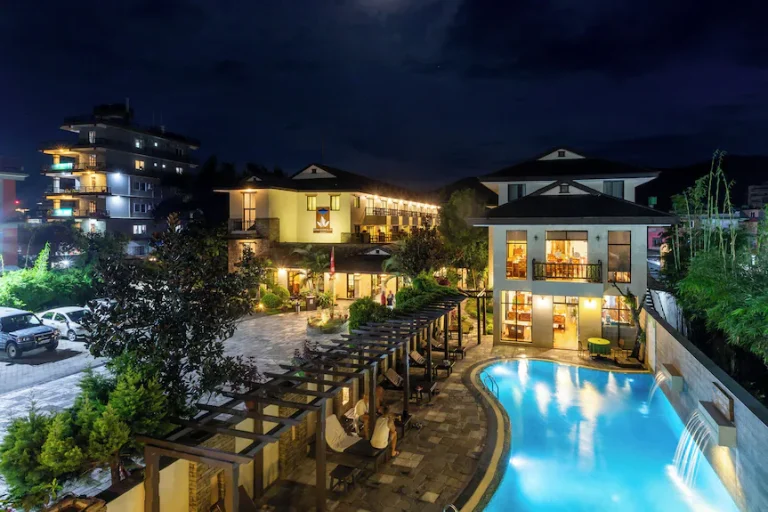
Tourism infrastructure in Dhorpatan has expanded considerably in response to rising visitor numbers. The valley currently has 39 hotels and homestays, with accommodation capacity for around 1,500 guests. Reserve authorities say conservation management is being carried out in close coordination with local communities, ensuring tourism development and biodiversity protection move together. Officials maintain that conservation and tourism are complementary, not competing priorities. As roads improve and visitor services expand, tourism entrepreneurs believe the average duration of tourist stays in Dhorpatan is also increasing steadily.
Dhorpatan stands at a critical tourism transition point
At present, Dhorpatan finds itself at an important transition phase. On one side lies its long-established international reputation as Nepal’s only hunting tourism destination. On the other lies a rapidly emerging opportunity centered around trekking, biodiversity, local culture, eco-tourism, and community-driven sustainable tourism. The challenge now is how Nepal manages this transition and redefines Dhorpatan’s tourism identity for future generations.