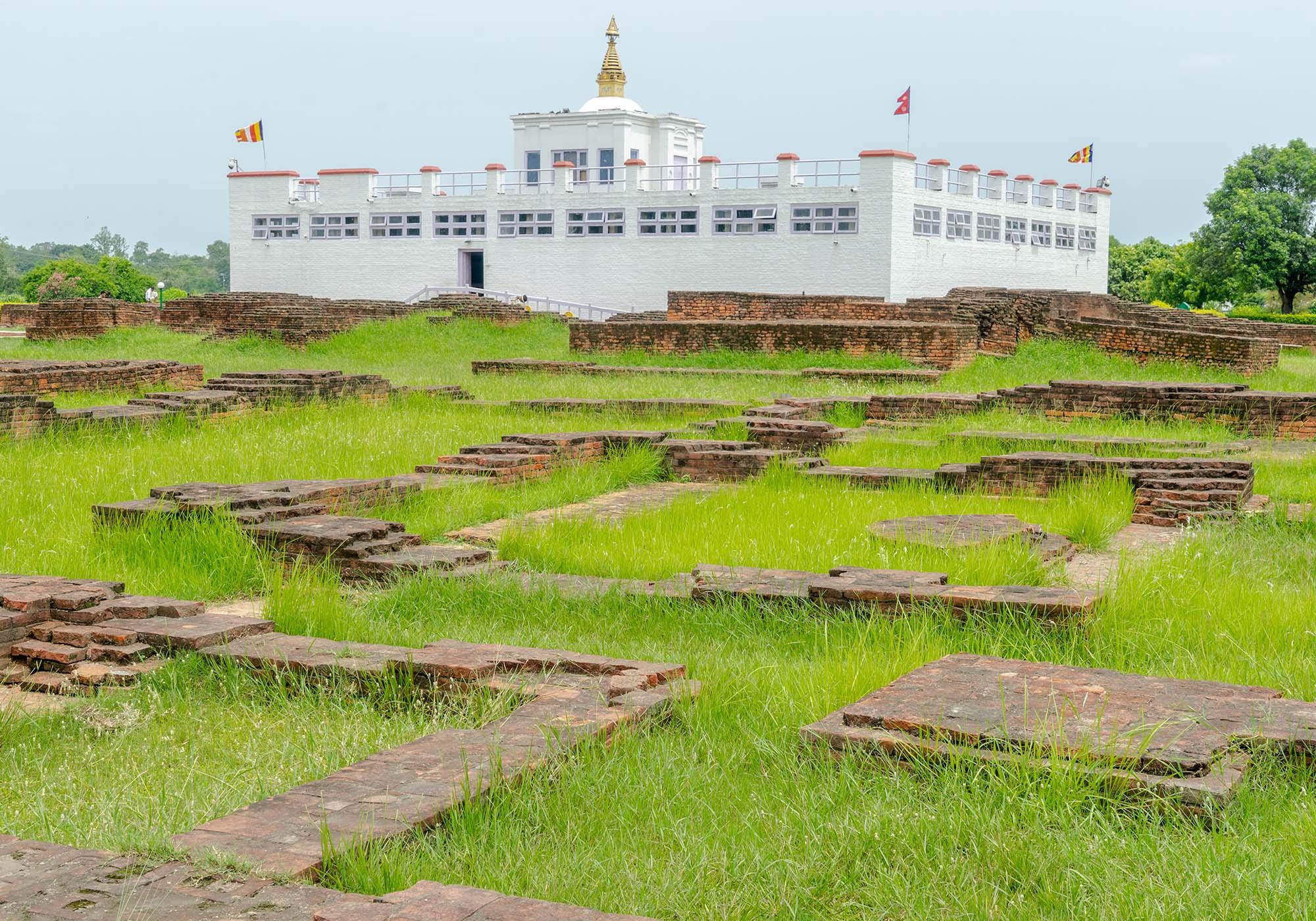
Despite welcoming more than 1.5 million domestic and international visitors annually, Lumbini, the birthplace of Gautama Buddha and a UNESCO World Heritage Site, continues to face a major tourism challenge: most visitors leave within a few hours without spending a night.
Tourism experts and industry stakeholders say the short duration of visitor stays has limited the economic benefits generated by Nepal’s most internationally recognized tourism destination, despite significant investments in hotels, resorts and tourism infrastructure.

Short stays limit tourism’s economic impact
Lumbini attracts large numbers of pilgrims, particularly from India, who often visit the sacred Maya Devi Temple and surrounding monastic zone before returning home the same day. Domestic tourists also follow a similar pattern, spending only a few hours exploring the site before traveling to other destinations.
As a result, it has largely remained a pilgrimage stop rather than a destination where visitors spend several days experiencing the broader region. Tourism experts believe extending the average length of stay would significantly increase spending on accommodation, restaurants, transportation, handicrafts, agriculture, cultural programmes and other local businesses while generating greater employment opportunities.

Greater Lumbini concept gains momentum
Industry stakeholders have emphasized the need to develop the “Greater Lumbini” concept by connecting nearby religious, historical, cultural and natural attractions into an integrated tourism circuit. The proposed tourism network would include Tilaurakot, Devdaha, Ramagrama Stupa, Gautam Buddha International Airport, meditation centres, cultural villages, rural tourism destinations and local agricultural products under a unified tourism strategy. Experts argue that integrating these attractions would encourage visitors to spend additional days in the region while diversifying tourism experiences beyond religious pilgrimage.
Lumbini should become Nepal’s global tourism brand
According to Leelamani Sharma, President of the Lumbini Hotel Association, Lumbini is Nepal’s strongest international tourism brand and should be promoted as the centerpiece of the region’s tourism identity. “We should promote Lumbini as a single global brand rather than marketing Butwal, Bhairahawa or other surrounding cities separately. A unified branding strategy would strengthen Nepal’s international tourism image and also support the successful operation of Gautam Buddha International Airport,” Sharma said. He noted that although substantial investments have been made in four-star and five-star hotels, resorts and tourism infrastructure in recent years, the short average visitor stay has prevented businesses from achieving the expected economic returns.
Expanding Lumbini beyond pilgrimage tourism
Dayanidhi Sharma, Head of the Central Campus at Lumbini Buddhist University, said Lumbini should evolve beyond being solely a pilgrimage destination. He stressed that the birthplace of Buddha has the potential to become a global centre for Buddhist philosophy, peace studies, non-violence, education and research. According to him, integrating education, academic research, meditation, cultural heritage and tourism into a single development model would significantly enhance Lumbini’s international stature.
Coordinated efforts needed for world-class destination
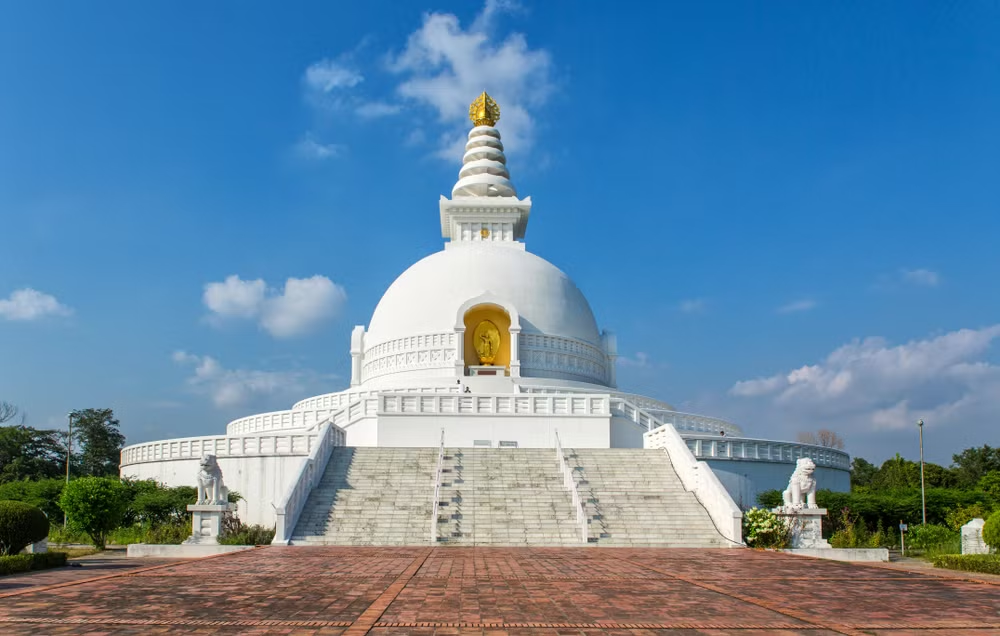
Gyanin Rai, Member Secretary of the Lumbini Development Trust, emphasized that transforming Lumbini into a world-class tourism destination requires coordinated efforts among the government, private sector, local communities and international development partners. He said that while infrastructure expansion remains important, equal emphasis must be placed on improving tourism services, strengthening international marketing campaigns and developing new tourism products that encourage longer visitor stays.
Private sector expanding international promotion
To attract more international visitors, Nepal’s private tourism sector has begun direct collaboration with travel and tour operators in Indian cities including Varanasi, Bodh Gaya, Delhi and Lucknow. Initiatives such as the Lumbini–Varanasi B2B Travel Mart and familiarization (FAM) trips are being organized to strengthen cooperation in religious and cultural tourism while expanding Lumbini’s reach in international markets. Tourism entrepreneurs believe such collaborative programmes will help position Lumbini as a broader travel destination rather than simply a pilgrimage site.

Creating experiences beyond the birthplace of Buddha
Tourism stakeholders agree that the future of it lies not only in preserving Buddha’s birthplace but also in creating immersive experiences that encourage visitors to stay longer and explore the wider region. They argue that success should no longer be measured solely by the number of arrivals but by the ability to convert day visitors into overnight guests through diverse tourism experiences.
With the world already recognizing it as the birthplace of Buddha, experts believe developing it into a destination for spiritual exploration, wellness, cultural immersion, rural experiences and heritage tourism could lay the foundation for long-term economic prosperity while establishing Greater Lumbini as one of South Asia’s leading sustainable tourism destinations.