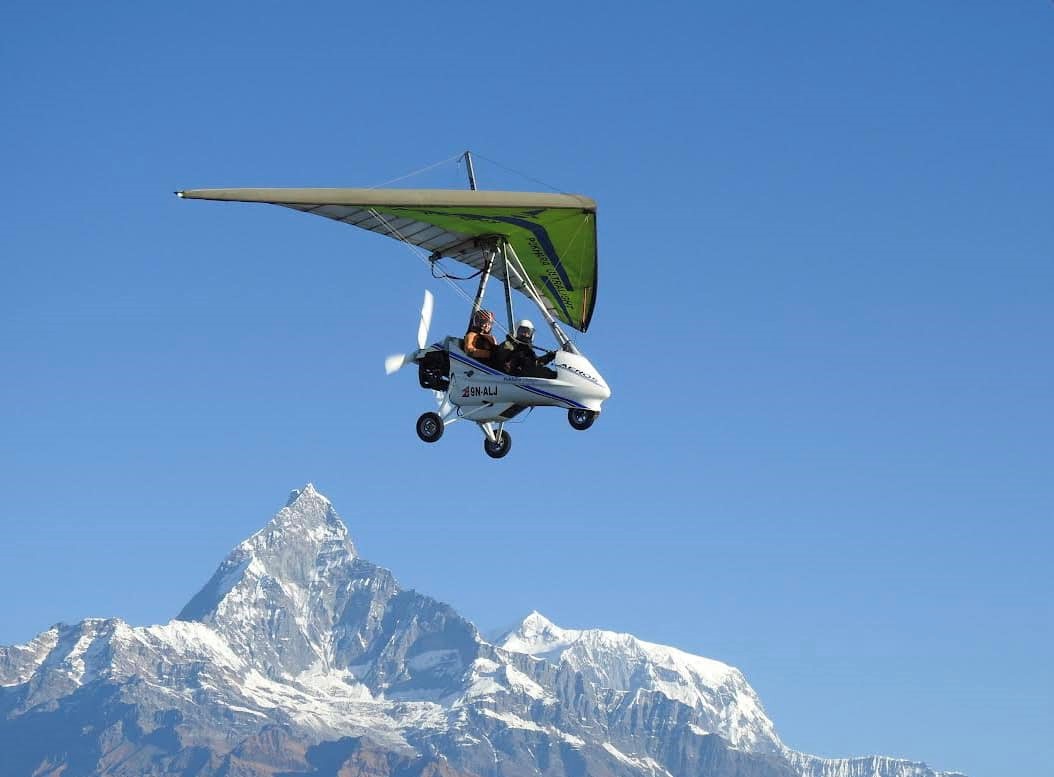
Few experiences capture the raw beauty of Nepal quite like an ultralight flight over Pokhara. Strapped into an open-cockpit aircraft with nothing but a windscreen between you and the sky, you rise above Phewa Lake, drift over terraced hillsides, and come face to face with some of the tallest mountains on Earth. It is not just a sightseeing flight, but the closest most people will ever come to flying like a bird, and it has become one of the signature adventure activities that draws travelers to Pokhara every year.
What Is an Ultralight Flight?
An ultralight, sometimes called a microlight, is a small, lightweight, engine-powered aircraft built to carry just two people at a time: a licensed pilot and a single passenger. Unlike a regular airplane, the cockpit is open or only partially enclosed, so you feel the wind on your face, hear the engine humming beside you, and get completely unobstructed views in every direction as you fly. Because the aircraft cruises at relatively low speeds, usually somewhere between 50 and 130 kilometers per hour depending on the package chosen, it becomes an unhurried and comfortable way to take in the scenery rather than rush past it.
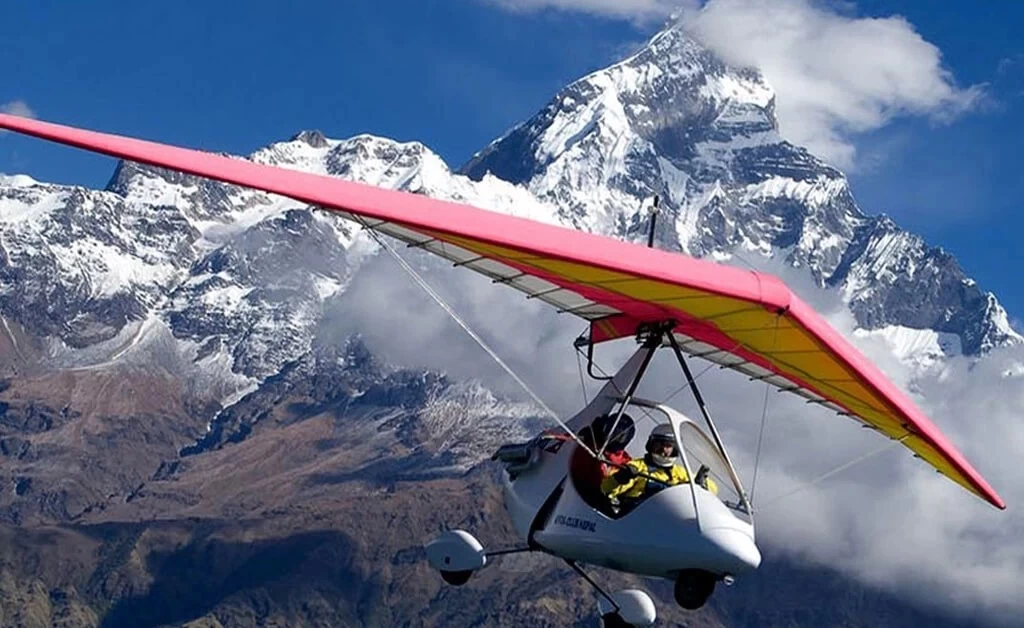
Despite how exposed the aircraft feels, ultralight flying in Pokhara is considered a safe and well-regulated activity. Pilots are professionally trained and licensed, aircraft are inspected and maintained on a regular schedule, and most planes are fitted with a ballistic parachute system that can bring the entire aircraft down safely even in the rare event of an emergency, which gives passengers real peace of mind while they are hundreds of feet above the valley floor.
Where the Flights Take Off
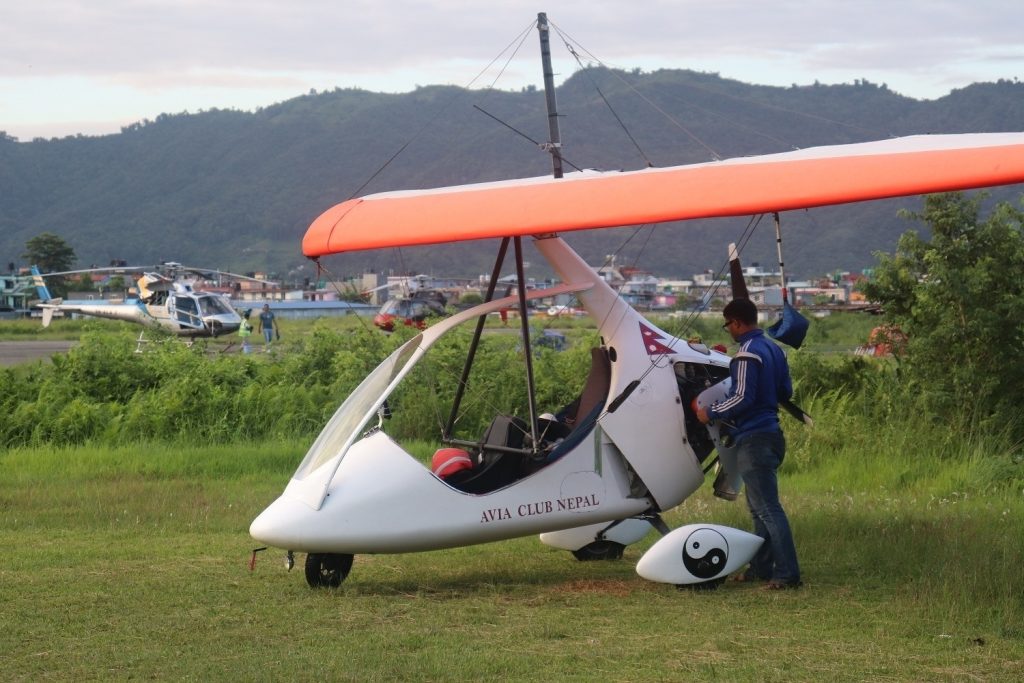
Ultralight flights in Pokhara depart from Pokhara Airport, often referred to locally as the Old Pokhara Airport, which sits just a short drive from the Lakeside area where most travelers choose to stay. The flights generally operate from September through June, deliberately avoiding the heart of the monsoon season, when heavy rain and poor visibility make flying both impractical and unsafe.
Early morning departures, typically scheduled somewhere between 6:30 and 11:00 in the morning, tend to offer the calmest air and the clearest mountain views, since clouds and haze often build up over the peaks later in the day, so booking an early slot is usually the smartest way to guarantee good visibility.
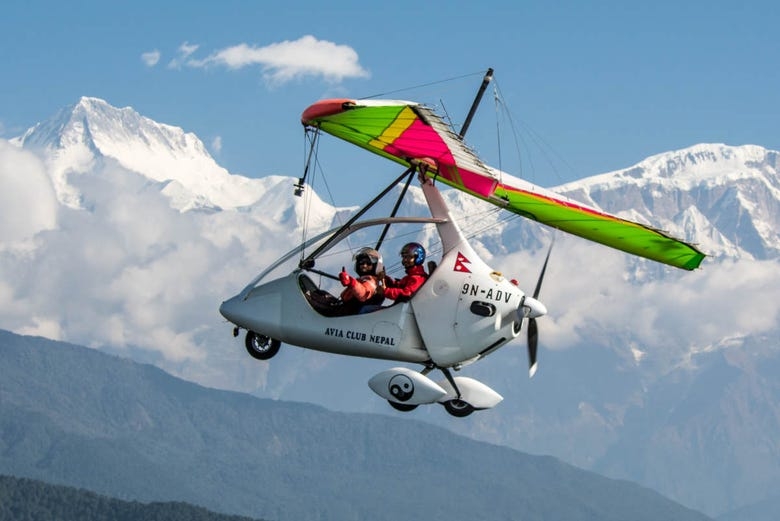
What You Will See From the Sky from Ultralight Flights
This is really the heart of the experience. From above, Pokhara Valley unfolds in a way that is simply impossible to appreciate from the ground. Depending on how long your flight is, you can expect to glide over the shimmering waters of Phewa Lake, look down on Pokhara city and the dramatic gorge carved by the Seti River, and pass close to Sarangkot Hill and the gleaming white World Peace Stupa perched on the hillside.
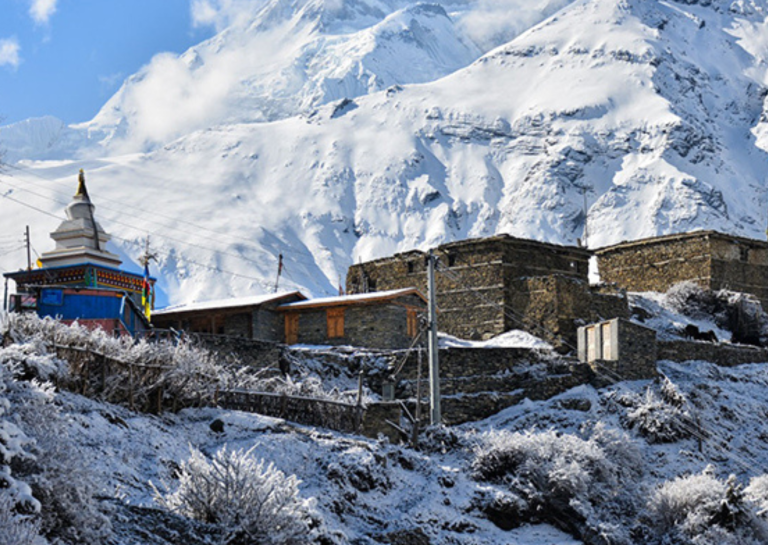
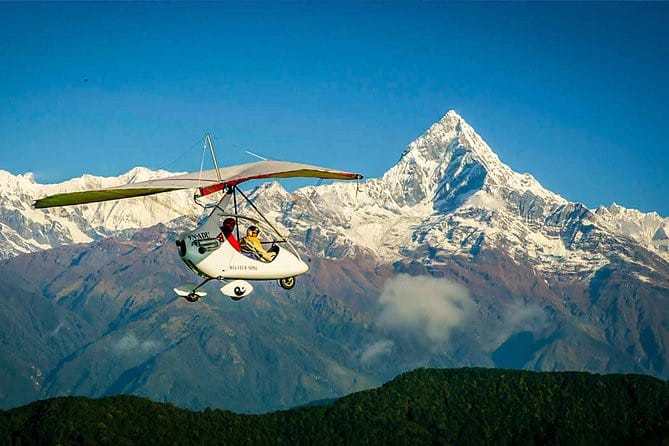
Further into the Ultralight Flights, the towering wall of the Annapurna range comes into view, including Annapurna I, II, III, and IV, alongside Machhapuchhre, or Fishtail Mountain, one of Nepal’s most sacred and instantly recognizable peaks. On the longer flight packages, pilots often venture even further into the mountains, offering glimpses of more remote highlights such as Kapuche Glacier Lake, Begnas and Rupa Lakes, and on clear days even distant views of Dhaulagiri, one of the world’s fourteen 8,000-meter giants.
As the Ultralight Flights progresses and the aircraft climbs higher, the landscape below transforms dramatically, shifting from lush, terraced farmland near the valley floor to stark, glaciated terrain where only rock and ice remain, making the longer flights feel like a genuine journey deep into the heart of the Himalaya.
Flight Durations of Ultralight and What Each One Covers
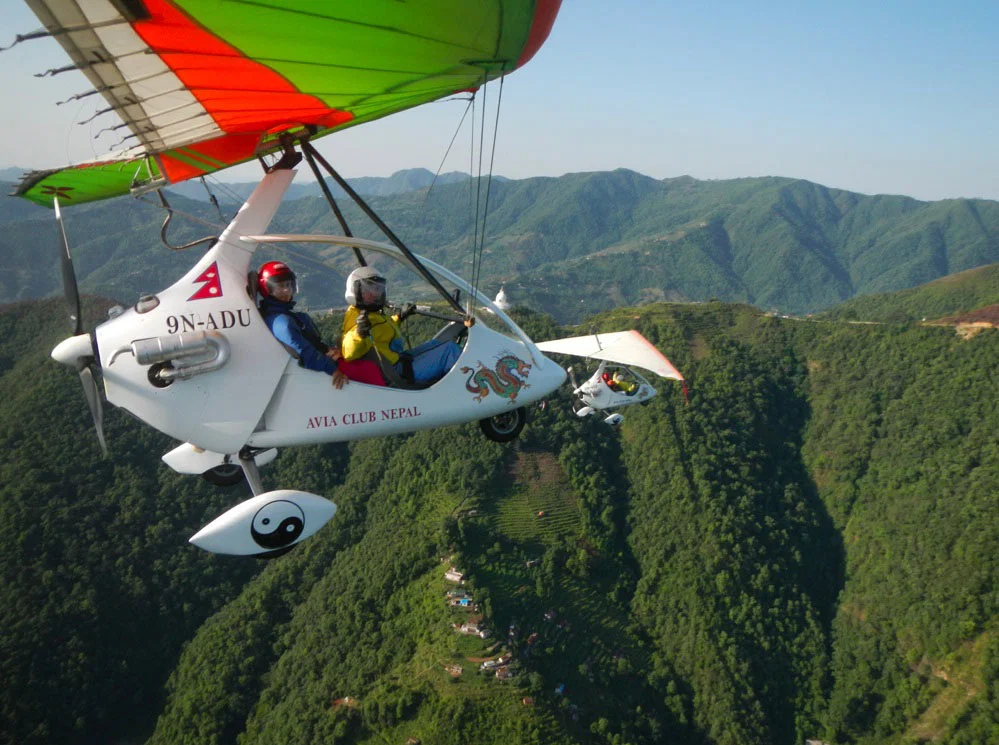
Ultralight operators in Pokhara typically offer four standard flight durations, each designed to cover a different amount of ground. The shortest option, at around fifteen minutes, takes passengers on a quick loop over Pokhara city, Phewa Lake, and Sarangkot Hill, reaching altitudes of roughly five thousand feet, and works well for anyone wanting a taste of the experience without committing a lot of time or money.
The thirty-minute Ultralight Flights extends the route closer to Machhapuchhre, offering noticeably better mountain views while still keeping the overall experience fairly brief. The one-hour flight covers much more ground, pushing toward the foothills of the Annapurna range and Fishtail Mountain and often climbing to around twelve thousand feet, giving passengers a real sense of flying among the mountains rather than simply admiring them from a distance.
Finally, the ninety-minute flight is the most immersive option of all, taking passengers deep into the Himalayan foothills with extended time spent near Annapurna and Machhapuchhre, and sometimes even approaching the Poonhill area, making it the clear favorite among photographers and anyone determined to get the fullest possible experience out of their time in the air.
How Much Does Ultralight Flights Cost?
Pricing depends heavily on the flight duration, the specific operator, and whether you hold Nepali or Indian citizenship, since local pricing tends to run considerably lower than what is charged to international visitors. For foreign travelers, a rough guide would put the fifteen to twenty minute flight somewhere between one hundred twenty-five and one hundred seventy-five US dollars, the thirty-minute flight around two hundred to two hundred twenty dollars, the one-hour flight in the region of three hundred to three hundred thirty dollars, and the full ninety-minute flight anywhere from three hundred fifty to four hundred forty dollars.
Most quoted prices already include the flight itself, the required safety equipment, and the services of a licensed pilot, though optional extras such as professional photographs or a video recording of your flight usually come with an additional charge of around fifteen to twenty-five dollars. Some operators also add a thirteen percent VAT on top of the base price, so it is always worth double-checking exactly what is and is not included before you confirm a booking.
Good to Know Before You Fly
There are a handful of practical details worth keeping in mind before heading up. Most operators enforce a passenger weight limit, often capped around one hundred kilograms, so it is worth checking this in advance if it might apply to you. Age restrictions vary somewhat by operator, but most require passengers to be at least ten to twelve years old, and there is generally no strict upper age limit as long as the passenger is in reasonably good health and able to sit comfortably in the aircraft.
Because the cockpit is open or only partially enclosed, it gets noticeably cold once you are airborne, even though Pokhara itself sits at a relatively low altitude, so dressing warmly with a jacket or sweater is strongly recommended, particularly if you are flying during the autumn or winter months.
Weather can also affect scheduling, since flights depend on clear conditions and good visibility; if the weather turns unsuitable on the day of your flight, operators will typically offer to reschedule you for another time or provide a refund rather than risk flying in poor conditions. Cameras are generally welcome on board, but given the open-air setup and the rush of wind during flight, it is a good idea to secure any camera or phone with a strap so nothing is accidentally lost during the ride.
Why Pokhara Is the Perfect Setting
Pokhara’s geography makes it one of the best places in the entire world for this kind of flying. The city sits in a valley ringed by lakes and hills, with the Annapurna range and Machhapuchhre rising dramatically just to the north, close enough that even a short fifteen-minute flight can deliver genuinely jaw-dropping views.
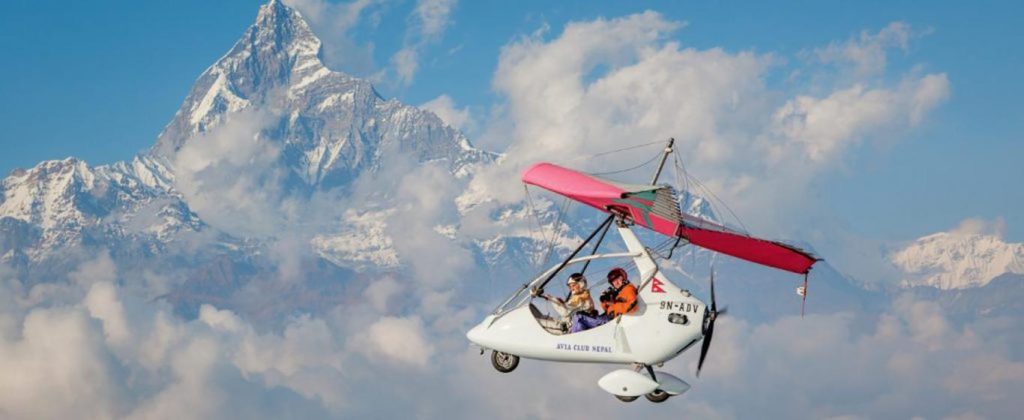
Ultralight flying has been offered here since the mid-to-late 1990s, making Pokhara one of the pioneering ultralight destinations in South Asia, and today it remains one of the signature adventure activities in the city, standing proudly alongside other thrill-seeking pursuits like paragliding, bungee jumping, and zip-lining that have made Pokhara such a magnet for adventure travelers.
An ultralight flight over Pokhara is not just another adventure activity to check off a list, but a genuinely different way to experience the Himalayas altogether. There is no cabin, no rows of seats, and no glass separating you from the mountains, just open air, an engine humming quietly beside you, and one of the most spectacular mountain panoramas on the planet spread out below. Whether you choose a quick fifteen-minute flight or commit to the full ninety-minute journey into the heart of the Annapurna range, it is an experience that stays with you long after your feet are back on solid ground.