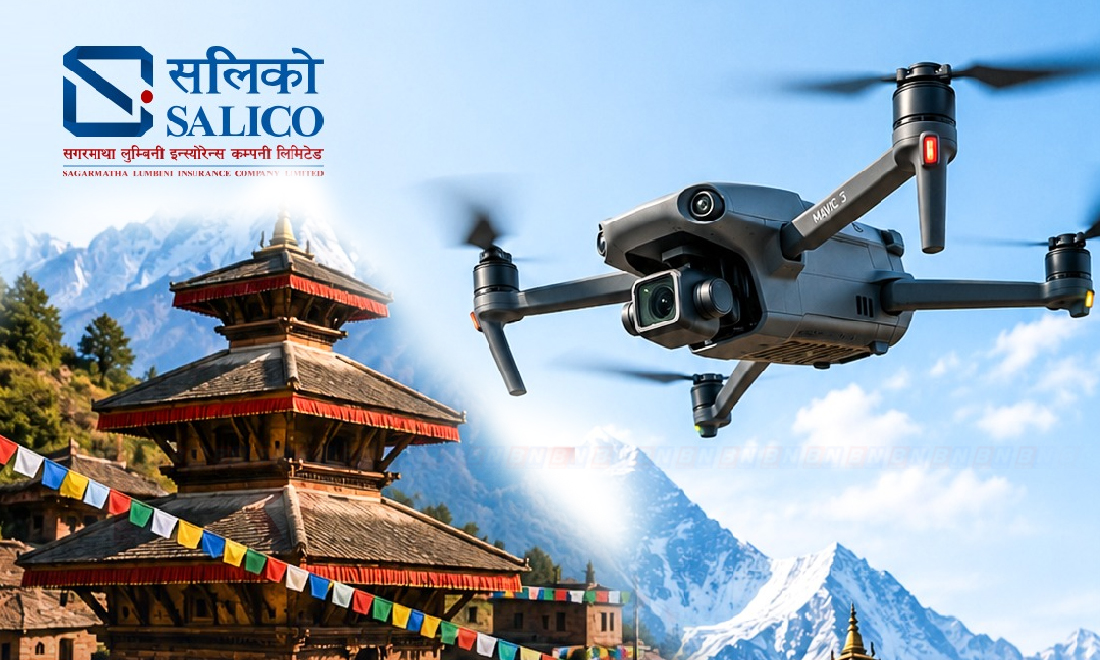
Sagarmatha Lumbini Insurance Company Limited (Salico) has launched Nepal’s first dedicated drone insurance policy after receiving approval from the Nepal Insurance Authority to issue drone insurance products.
The company said the new policy has been introduced in response to the growing use of drones across various sectors, including agriculture, infrastructure development, film and media production, education and research, tourism, waste collection, surveillance, and other commercial and personal activities.
According to Salico, the policy aims to protect individuals and institutions using drones for commercial or personal purposes against potential financial risks associated with drone operations.
Three Major Areas Covered Under the Policy
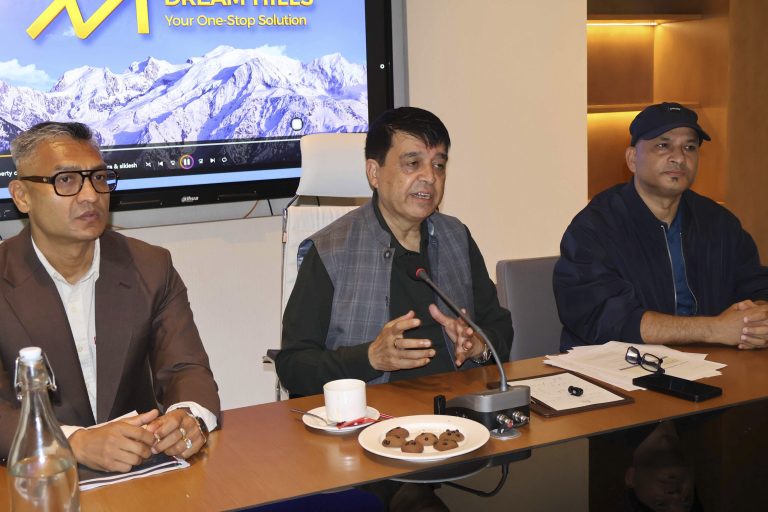
According to Sujan Khakurel, Deputy Manager of Salico, the drone insurance policy has been designed as a comprehensive package covering three major areas.

The policy provided by Salico covers damage to the drone caused by natural disasters and other risks, including rain, earthquakes, lightning, and other unforeseen events. It also covers losses resulting from theft, subject to the terms and conditions of the policy.
The second major component of the policy covers third-party liability. If a third party suffers injury or their property is damaged during drone operations, the policy provides coverage for the liability arising from such incidents.
The policy also provides personal accident coverage for the drone operator. In the event of an accident resulting in the operator’s death, permanent disability, or temporary disability, the policy provides the applicable insurance coverage.
Drone Use Determines Insurance Category and Premium and supported by Salico
According to Khakurel, drone insurance has been categorised based on the purpose for which the drone is used. Drones are generally classified into different categories, including goods transportation, photography and videography, police surveillance, construction-related activities, wildlife conservation, mapping, and agriculture.
He said the insurance coverage and premium vary according to the category and risk associated with the drone’s use. The policy is available to both companies and individuals who use drones for photography, videography, and other purposes. To obtain the insurance, the insured must submit documents including the drone purchase invoice, market value, serial number, Unique Identification Number (UIN), and the operator’s licence.
Khakurel said the drone and its operator must comply with the requirements of the Humanless Aerial Vehicle-related Working Procedure, 2075, and the operator must hold a licence issued by the Civil Aviation Authority of Nepal (CAAN).
Premium Ranges from 3 to 5 Percent
The premium rate under the drone insurance policy varies depending on the risk level and category of use. According to Khakurel, the premium is generally estimated at around 3 to 5 percent of the drone’s market value, depending on the purpose and associated risks. “The premium varies depending on whether the drone is used for transporting goods, surveillance, agriculture, or other purposes,” he said.
Claims Must Be Reported Within 30 Days
Under the policy, the insured must notify the insurance company of any damage or loss within 30 days of the incident. For the claims process, the insured must submit relevant documents, including the drone purchase documents, insurance policy, claim form, and a detailed description of the incident.
In cases involving theft, a police report is mandatory. For major losses, the company will deploy a technical team or surveyor to inspect the incident site and assess the extent of the damage. Salico said it aims to settle claims as quickly as possible once all the required documents and procedures have been completed.
Policy Developed After Extensive Study and Reinsurance Consultation
Khakurel said Salico conducted extensive research before introducing the drone insurance policy and consulted international reinsurance companies while designing the product. He said the policy was developed by considering international practices and the specific needs of the Nepali market.
According to the company, customers had repeatedly expressed interest in insuring their drones in the past. However, as a dedicated drone insurance product was not previously available in Nepal, insurers were unable to provide them with such coverage.

Rising Drone Use Creates Demand for Insurance
With the use of drones expanding across multiple sectors, Salico believes that dedicated drone insurance has become increasingly necessary in Nepal. The company said interested individuals and institutions can now insure their drones under the newly launched policy.
As drone insurance is a new concept in Nepal, the company has also begun awareness and promotional activities to inform potential users about the benefits and coverage available under the policy. “We have been receiving continuous inquiries from customers regarding drone insurance. As the product was previously unavailable, we recognised the need for such coverage in the market,” Khakurel said. He added that the company is actively working to raise awareness and expand the market for drone insurance as the use of unmanned aerial technology continues to grow in Nepal.