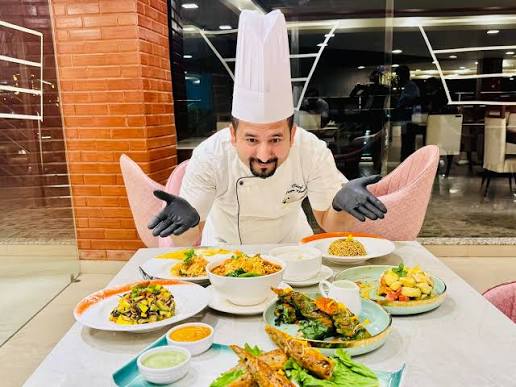
Promoting Nepal’s indigenous cuisine by blending traditional flavors with modern hospitality has become a lifelong mission for veteran chef Ram Bahadur Khadka, who has spent nearly 25 years in the culinary profession. Through his work, Khadka has been introducing authentic Nepali food to both domestic and international guests while preserving the country’s rich culinary heritage and encouraging healthier eating habits. Currently serving as the Executive Chef at Hotel Yellow Pagoda in Jamal, Kathmandu, Khadka has led the hotel’s kitchen for the past 13 years. Skilled in preparing Nepali, Chinese, Indian, and Continental cuisine, he believes Nepal’s traditional dishes are not merely food but a reflection of the nation’s culture, history, and identity.

Promoting Nepal Through Indigenous Cuisine
Originally from Okhaldhunga, Khadka has made it his mission to showcase Nepal’s authentic flavors to the world. He says every opportunity to serve traditional Nepali dishes to foreign visitors is an opportunity to introduce them to Nepal’s culture. “I always wish I could encourage every foreign guest to taste authentic Nepali cuisine,” Khadka says. According to him, chefs have an important responsibility to establish the unique taste and identity of Nepali food on the international stage. He has also been actively promoting indigenous ingredients and traditional recipes in the hospitality sector, believing that Nepal’s culinary heritage deserves greater recognition both nationally and internationally.
A Journey from Okhaldhunga to Kathmandu
Born on January 11, 1980 in Okhaldhunga, Khadka developed an admiration for chefs from an early age, particularly inspired by the iconic white chef’s coat. Around 25 years ago, he moved to Kathmandu in search of higher education and employment. His career began humbly with a monthly salary of Rs. 300, working as a cleaner in a small eatery. Despite the hardships of adapting to a new city and profession, he remained committed to his dream of becoming a chef. “I faced many struggles in a new place with a new job, but I never gave up on my dream,” he recalls. Alongside his work, Khadka pursued professional culinary training, mastering Chinese, Indian, Continental, and Nepali cuisine. Through continuous learning, practice, and dedication, he gradually established himself as one of Nepal’s experienced hospitality professionals.
Serving Guests with Nepali Hospitality
As Executive Chef at Hotel Yellow Pagoda, Khadka has prepared meals for numerous national and international guests while promoting Nepal’s tradition of hospitality through professional culinary service. He believes chefs play a significant role in strengthening Nepal’s tourism industry by offering visitors an authentic taste of local culture through food. According to him, introducing foreign travelers to indigenous Nepali dishes creates a deeper cultural experience and helps promote Nepal as a unique culinary destination.
Rising Demand for Healthy Eating
Khadka observes that people today are increasingly conscious about healthy eating habits. Compared to the past, diners now prefer boiled or lightly seasoned meals over oily and heavily spiced dishes. “The food we prepare has a direct impact on people’s health,” he says. “That is why chefs have an even greater responsibility to promote balanced and nutritious meals.” He believes the hospitality industry should continue adapting menus to meet growing consumer demand for healthier food without compromising traditional flavors.
Preserving Nepal’s Indigenous Food Heritage
Khadka stresses that Nepal’s indigenous ingredients, including millet (kodo), buckwheat (fapar), peas (kerau), and other locally grown crops, should be promoted more widely in hotels and restaurants. “We have our own unique culinary civilization, history, and identity,” he says. “Chefs should continue experimenting with local ingredients and promote Nepali cuisine as a distinct national brand.” He believes preserving indigenous food traditions not only protects Nepal’s cultural heritage but also creates new opportunities for tourism and the local agricultural economy.
Choosing Nepal Over Opportunities Abroad
Despite receiving opportunities to work overseas, Khadka says he has chosen to remain in Nepal throughout his career. “Opportunities came from abroad, but I couldn’t leave Nepal,” he says. Instead, he remains focused on strengthening his institution, mentoring young chefs, and increasing the professional and commercial value of Nepali cuisine.
Inspiring the Next Generation of Chefs
Khadka notes that an increasing number of students are now studying culinary arts in schools and colleges, describing the profession as one filled with opportunities. “Culinary art is a form of creativity,” he says. “Anyone can build a unique identity through continuous learning, innovation, dedication, and patience.” He encourages young people not to become discouraged by unemployment but instead to develop professional skills. “The white chef’s coat carries its own dignity and prestige. Being a chef is a highly respected profession. Rather than losing hope because of unemployment, learn the skills. Opportunities will eventually follow you,” he says.

Cuisine as Nepal’s Global Identity
Khadka believes authentic Nepali cuisine is one of the country’s strongest ambassadors on the international stage. He says expanding, refining, and promoting Nepal’s traditional dishes is essential to strengthening the country’s tourism industry and global cultural identity. From a small village in Okhaldhunga to becoming a respected executive chef in Kathmandu, Khadka’s journey stands as an inspiring example of perseverance, dedication, and passion. Today, he continues creating new flavors while working to elevate the prestige of Nepali cuisine and introduce its rich culinary traditions to visitors from around the world.