From heritage streets and busy markets to peaceful hills and the high Himalayas, Nepal offers extraordinary variety. The right packing strategy can help travelers experience it all with greater comfort, confidence, and respect.
Planning a trip to Nepal? Discover what to pack, what to wear, seasonal essentials, trekking gear, travel documents, cultural etiquette and practical tips for a comfortable Nepal journey. Arriving in Nepal can mean stepping into a country where one journey may cross several climates, landscapes and travel experiences. A morning spent exploring historic temples in Kathmandu can be followed by an afternoon in a cool hill destination, while a longer itinerary can take travelers from subtropical plains to snowy Himalayan landscapes. For first-time visitors, this extraordinary variety is exciting, but it also makes preparation especially important. Knowing what to pack before departure can help travelers avoid unnecessary purchases, manage changing weather conditions and move comfortably between destinations.
The answer is not to fill a suitcase with everything imaginable. A better approach is to pack according to the season, destination and activities planned for the trip. Comfortable clothing, dependable footwear, rain and sun protection, personal essentials, travel documents and basic electronics will cover much of what an ordinary tourist needs. Travelers heading into the mountains will require additional equipment, while those spending their holiday primarily in Kathmandu, Pokhara or other urban destinations can keep their luggage considerably lighter and easier to manage.
The smartest Nepal packing list is therefore not simply about how much you bring, but about how well each item fits the journey ahead. A carefully planned bag can make long sightseeing days, changing weather, road journeys and outdoor activities significantly easier, allowing travelers to spend less time worrying about their luggage and more time enjoying the country.
Know Nepal’s weather before you pack
One of the first things travelers should understand is that Nepal does not have one uniform climate. Season, altitude and geography can dramatically change conditions, meaning a packing list suitable for Kathmandu may not be enough for a high-altitude trek. Temperatures and weather can vary considerably between the Terai, Kathmandu Valley, mid-hill destinations and Himalayan areas, sometimes within the same journey. Checking conditions for the specific places on your itinerary is therefore much more useful than relying on a general forecast for Nepal.
Spring, generally associated with March through May, brings increasingly warm conditions in lower areas, while mornings and evenings can still be cooler in the hills. The season is also popular for sightseeing, nature trips and trekking, so travelers may experience a mixture of comfortable daytime temperatures and cooler periods depending on elevation. Light clothing combined with a few versatile layers is useful, particularly for travelers moving between different elevations or spending early mornings and evenings outdoors.
Summer and the monsoon season, generally from June through August, can bring rain, humidity and wet roads and trails in many parts of the country. A lightweight rain jacket or poncho, compact umbrella, waterproof bag covers and quick-drying clothing can become particularly valuable. Travelers should also protect electronics, documents and other sensitive belongings from moisture, especially when traveling by road or walking outdoors during periods of heavy rain. Packing items in separate waterproof pouches can make it easier to protect important belongings even when conditions become unexpectedly wet.
Autumn, particularly September through November, is widely regarded as a popular period for travel because conditions are often favorable for sightseeing, outdoor activities and mountain journeys. Days can be pleasant, but temperatures may still change noticeably between morning, afternoon and evening, particularly in hill and mountain destinations. Even during this period, travelers should avoid assuming that warm daytime weather means they will not need additional layers, especially if their itinerary includes early departures or higher elevations.
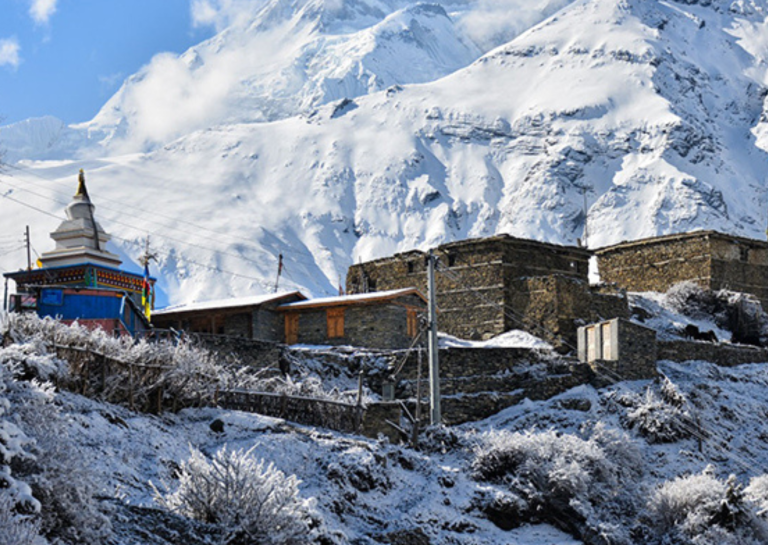
Winter, generally from December through February, can be cold, particularly during mornings and evenings and at higher elevations. Travelers visiting cities may need a warm jacket and additional layers, while those heading into the mountains require much more substantial cold weather preparation. Accommodation conditions can also feel colder than travelers expect, so having warm sleepwear and comfortable insulating layers can be useful even when the daytime weather appears manageable.
Weather tip: Don’t check only the weather for Nepal as a whole. Check the forecast for each major destination on your itinerary, especially when your journey includes both lowland and mountain areas. This simple step can help you decide how many layers to carry, whether rain protection is necessary, and whether additional cold-weather equipment is required.
The everyday essentials every tourist should carry
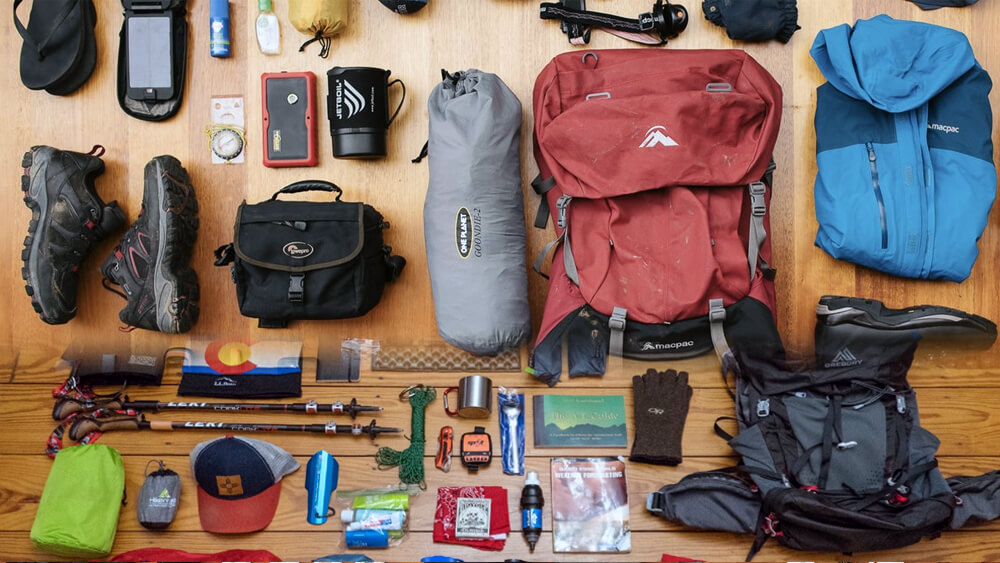
For most first-time visitors, the foundation of a Nepal packing list is surprisingly simple. Comfortable clothes, reliable shoes, personal-care items, weather protection and important documents will usually matter far more than a suitcase full of specialized gadgets. Travelers should focus on items they will use regularly rather than filling their luggage with equipment intended for situations they may never encounter.
Pack comfortable T-shirts or tops, trousers, underwear and enough socks for your itinerary. Lightweight clothing is useful for warmer destinations, while fleece, sweaters or other warm layers can be added when traveling during colder months or into higher elevations. Rather than packing several heavy outfits, travelers can choose clothes that can be worn together in layers, allowing them to adapt when temperatures change. Neutral and versatile clothing can also make it easier to combine different pieces throughout a longer trip without carrying an unnecessarily large wardrobe.
Footwear deserves special attention. A Nepal holiday can involve considerably more walking than a traveler initially expects, from exploring historic squares and temple complexes to walking through markets, neighborhoods and viewpoints. A comfortable, well-broken-in pair of walking shoes or sneakers should be considered one of the most important items in your luggage. Good footwear can make a major difference when navigating uneven paths, stone-paved heritage areas, stairs and long sightseeing routes.
Travelers planning hiking or trekking should go a step further and bring footwear appropriate to the terrain and route. Proper trekking shoes or boots can provide greater support and protection on uneven trails, particularly on longer journeys. The ideal choice will depend on the difficulty of the trek, the season and the conditions expected along the route, so travelers should avoid choosing footwear based only on appearance or general recommendations.
A second, lighter pair of footwear can also be useful for relaxing at accommodation or after a long day of walking. It can give travelers an opportunity to change out of their main walking shoes and allow those shoes to dry if they become wet. For longer itineraries, this small addition can provide considerably more comfort without adding excessive weight.
Comfort tip: Don’t bring brand-new shoes to Nepal and expect them to become comfortable during the trip. Break them in before you leave. This is particularly important for travelers planning long walks or trekking, where uncomfortable footwear can quickly turn a pleasant journey into a difficult experience.
Prepare for rain, sun and changing conditions
Nepal’s weather can sometimes change quickly, particularly in mountainous areas. Even travelers who are not trekking can benefit from carrying basic protection against the elements. A sunny morning does not necessarily guarantee identical conditions later in the day, particularly when traveling through hills or spending extended periods outdoors.
A lightweight rain jacket, poncho or compact umbrella can be useful during wet weather. A waterproof cover for your backpack can provide an additional layer of protection, while small waterproof pouches or zippered bags can help protect passports, phones, cameras and other sensitive belongings. Keeping these items somewhere easily accessible is important because rain protection is far less useful when it is buried underneath everything else in your luggage.
Extra socks are another small but useful addition, particularly during rainy periods or outdoor trips. Quick-drying clothing can also make it easier to remain comfortable after unexpected rain. Travelers who expect to spend significant time outdoors may find that carrying one spare lightweight layer is more practical than bringing several heavy alternatives. At the other extreme, travelers should not underestimate the importance of protection from the sun. Sunscreen, sunglasses and a hat or cap are useful for sightseeing, hiking, road journeys and outdoor activities. Sun exposure can become particularly noticeable at higher elevations, where travelers may spend several hours outdoors without immediately realizing how much exposure they are receiving.
Rainy season tip: Keep one small waterproof pouch containing your passport, phone, money and essential documents. If the weather suddenly changes, your most important belongings will already have an extra layer of protection.
Personal care, health and everyday comfort
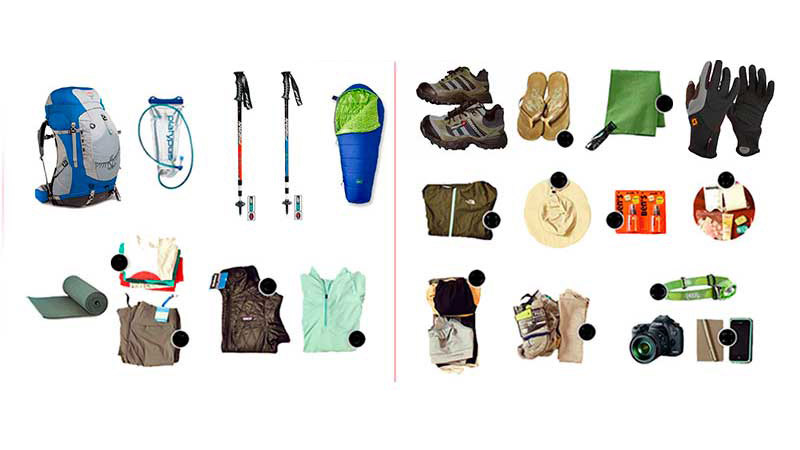
A trip becomes much easier when basic personal needs are already taken care of. Travelers should pack their usual toiletries and personal care products, including items they may not want to search for after arriving. This is particularly useful for travelers with specific brands or products they rely on, as availability and selection can vary between locations. Useful additions include sunscreen, lip balm, moisturizer, tissues, wet wipes, and hand sanitizer. A reusable water bottle can also be convenient throughout the journey, particularly during sightseeing and outdoor activities. These small items take up relatively little space but can make long travel days more comfortable, especially when travelers are moving between destinations or spending extended periods away from their accommodation.
Travelers who regularly use prescription or other personal medication should bring an adequate supply for the trip and keep it properly stored. It is sensible to carry medication in its original packaging and to check Nepal’s current requirements for bringing particular medicines into the country, especially when traveling with prescription or controlled medicines. Keeping essential medication in carry-on luggage rather than checked baggage can also help ensure it remains accessible throughout the journey.
A small personal first-aid kit can also be useful for ordinary travel needs. Items such as basic wound-care supplies may come in handy during long walking days or outdoor activities. Travelers do not necessarily need to carry a large medical kit for an ordinary holiday, but having a few basic supplies available can save time when dealing with minor problems. For trekking and remote travel, however, travelers should prepare according to the specific route and available facilities rather than assuming a basic city-trip kit will be sufficient. Longer or more remote journeys require more careful preparation, particularly when access to shops and medical facilities may be limited.
Don’t forget your documents, money and electronics
A passport may seem obvious, but important documents are among the easiest things to overlook when packing. Before leaving home, travelers should make sure they have their passport, appropriate visa or entry documentation, flight information, accommodation details, travel insurance information and emergency contacts. It is also worth checking that passport validity and entry requirements meet the current rules before departure. Keeping copies of important documents is a sensible backup. Travelers can store digital copies securely on their phone or online, while carrying appropriate physical copies can provide another layer of security. Having this information available can make the process easier if an important document is lost, damaged, or unexpectedly needed during the trip.
Money should also be planned in advance. Cards can be useful in established businesses and urban areas, while carrying some Nepalese rupees is practical for smaller purchases and situations where card payments may not be available. Travelers should organize their money securely rather than carrying all their cash in one place. A small amount of accessible cash can also be useful for transportation, snacks, local purchases and other everyday expenses.
Electronics can remain relatively simple. A smartphone, charging cable, power bank and appropriate travel adapter will be sufficient for many tourists. Photographers may additionally want a camera, spare batteries and memory cards. Travelers should consider how much equipment they will genuinely use rather than carrying heavy electronics simply because they might be useful. A power bank can be particularly useful on long travel days, while a protective pouch can help keep electronics safe from rain, dust and accidental damage. Travelers heading into remote areas should also consider charging opportunities along their route and plan accordingly.
Pro tip: Keep your passport, essential documents, phone, wallet, medication and one basic change of clothes in your carry-on or daypack rather than placing everything in checked luggage. This provides a useful backup if checked baggage is delayed or temporarily unavailable.
Dress for the destination and respect the culture
Nepal welcomes travelers from around the world, but visitors will encounter many temples, monasteries, shrines and traditional communities during their journey. Clothing that is comfortable for sightseeing may not always be appropriate for every religious setting.
A little planning can therefore help travelers move easily between casual tourism activities and more culturally sensitive locations. Travelers should therefore carry some clothing that is relatively modest and suitable for cultural and religious sites. Covering the shoulders and knees is a sensible approach in many traditional settings, while visitors should follow specific instructions displayed at individual sites. Loose, breathable clothing can also provide comfort while meeting the expectations of many cultural and religious environments.
Some religious places may also require visitors to remove their shoes. Travelers should watch what local worshipers are doing, follow posted guidance, and ask when they are unsure. They should also be mindful of photography restrictions, signs and other instructions, particularly inside temples and monasteries. The goal is not to make visitors feel restricted. Rather, appropriate clothing is a simple way of showing respect for the places and communities that make Nepal culturally distinctive. Being respectful of local customs can also create more positive interactions with residents and make the overall travel experience more meaningful.
Pack according to the kind of Nepal trip you are taking
Not every traveler needs the same suitcase. One of the most useful ways to build a packing list is to start with the itinerary. A traveler spending a week exploring cities will have very different requirements from someone preparing for a multi-day Himalayan trek, so copying a generic packing list can result in either overpacking or leaving out important equipment.
For a city and cultural holiday
Travelers focusing on Kathmandu, Patan, Bhaktapur, Pokhara and other cultural destinations can generally travel with a relatively simple setup. Comfortable walking shoes, everyday clothing, a light jacket, rain protection when appropriate, sun protection and a small daypack will cover most sightseeing needs. Because many attractions involve walking, stairs and uneven surfaces, comfort should remain a priority even on an itinerary that does not include formal trekking.
A scarf or light additional layer can also be useful when visiting religious and cultural locations. It can provide additional comfort in changing weather while also offering a practical option when visiting places where more modest clothing is appropriate.
For hiking and trekking
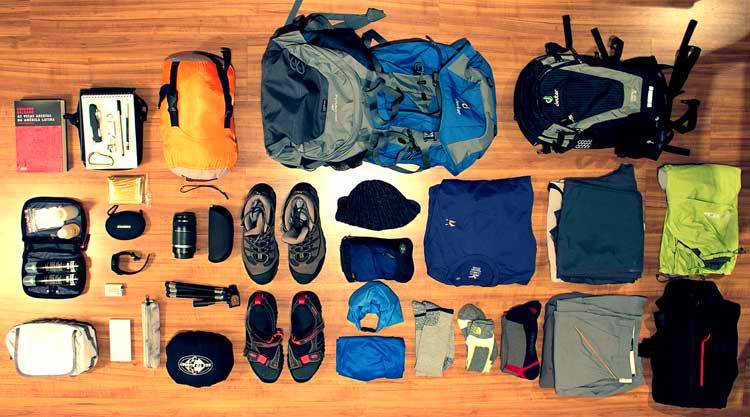
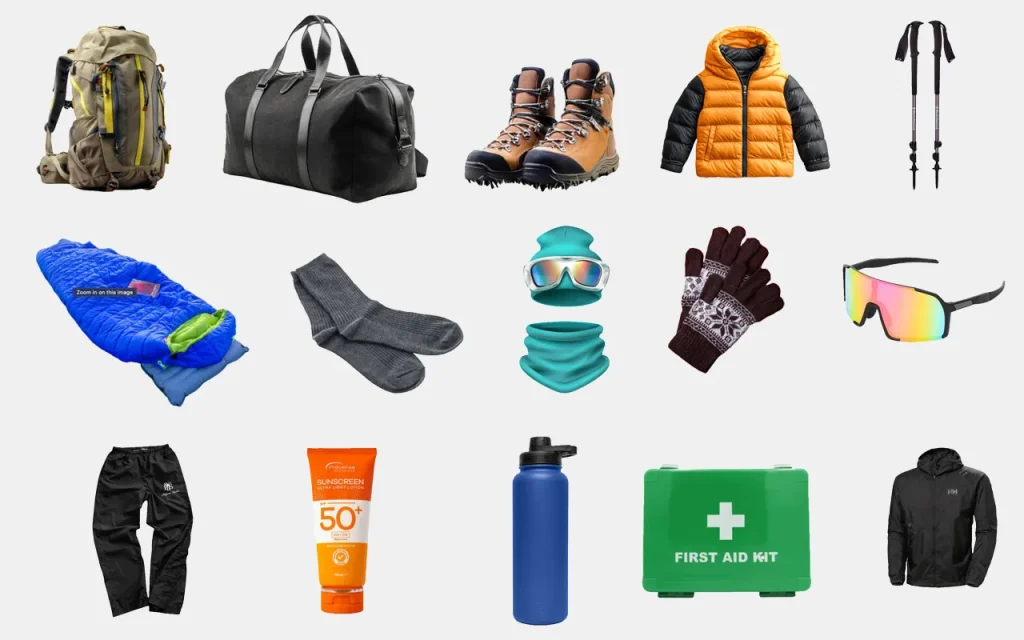
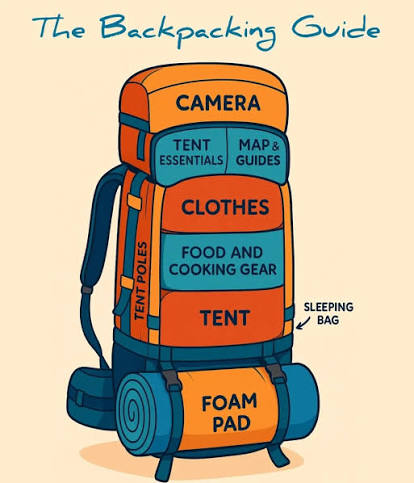
A trekking itinerary requires more preparation. Depending on the route, season, duration and altitude, travelers may need trekking footwear, moisture-managing clothing, warm layers, waterproof outerwear, warm socks, gloves, a hat, a suitable backpack and a headlamp. The equipment needed for a short low-altitude hike should not be confused with the requirements of a demanding high-altitude trek.
Trekking poles may also be useful for some routes. Equipment should be selected according to the actual trek rather than purchased or packed simply because it appears on a generic Himalayan checklist. Travelers should consider the expected temperatures, trail conditions, accommodation arrangements and whether equipment can be rented locally before deciding what to carry from home.
For high altitude journeys
High-altitude travel demands greater attention to clothing and equipment. Temperatures can be considerably colder than in Nepal’s cities, and conditions can change rapidly. Travelers should avoid assuming that clothing suitable for Kathmandu or Pokhara will automatically be adequate in higher mountain areas.
Travelers should prepare appropriate thermal layers, insulating layers, waterproof outerwear, warm socks, gloves and head protection, along with route-specific equipment. High-altitude trips should be planned carefully using reliable information about the particular destination and season. Preparation should also account for the length of the journey and the availability of facilities along the route.
For monsoon travel
Rain protection becomes a priority during the wet season. A waterproof backpack cover, rain jacket or poncho, quick-drying clothing, extra socks and waterproof storage for electronics and documents can make the journey much more comfortable. Travelers should also consider how easily their luggage can be protected during road journeys and outdoor sightseeing.
Travelers should also organize luggage so that rain protection can be reached quickly rather than buried at the bottom of a suitcase. A small waterproof daypack or internal dry bags can be particularly useful when spending long periods outdoors during wet conditions.
Your main luggage and your daypack should serve different purposes
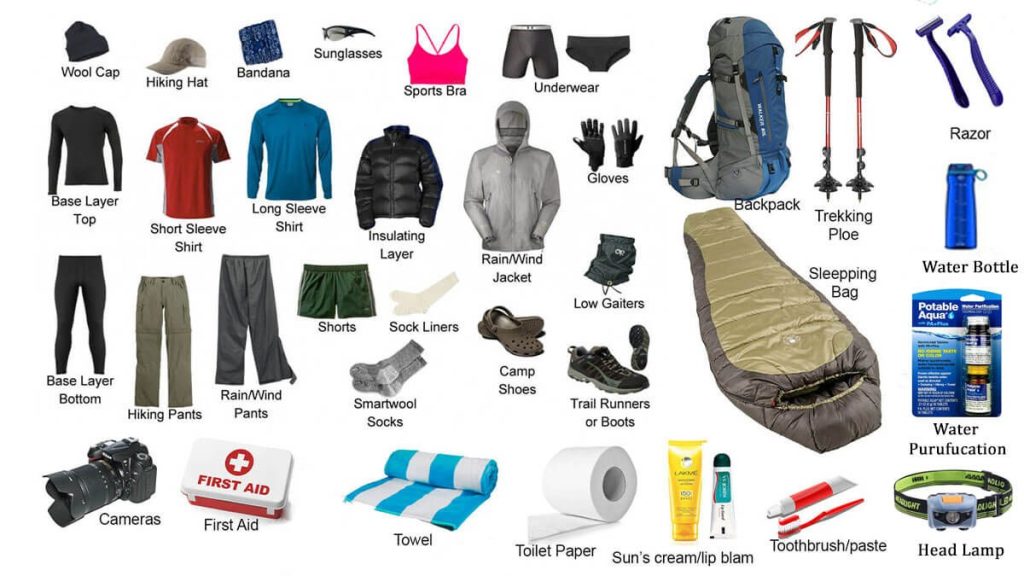
A common mistake among first-time travelers is putting everything into one large bag and then carrying it everywhere. Separating daily essentials from the rest of your luggage can make travel between destinations much easier and reduce the weight you need to carry while sightseeing. Your main luggage should contain clothing, additional footwear, toiletries and items you will not need constantly during the day. Depending on your itinerary, a suitcase, duffel bag or travel backpack can work well. The best choice will depend on how frequently you change accommodation and whether your trip includes trekking or rougher travel conditions.
Your daypack, meanwhile, should contain the things you may need while sightseeing or traveling between destinations: water, sunscreen, sunglasses, tissues, a power bank, phone, wallet, rain protection, essential documents and any personal medication required during the day. Keeping these essentials together means you will not need to repeatedly open your main luggage during short stops or day trips. For travelers moving frequently between destinations, this simple separation can save considerable time. It also makes it easier to leave larger luggage at accommodation while carrying only what is necessary for a particular outing.
Packing tip: Keep your daypack light enough that you can comfortably carry it for several hours. A day of sightseeing is not the time to discover that your backpack is heavier than necessary.
What not to overpack
The temptation to prepare for every possible situation can quickly turn a practical suitcase into a burden. Travelers do not necessarily need multiple heavy jackets, excessive footwear, large quantities of toiletries, or specialized equipment that their itinerary does not require. Carrying too much can become particularly inconvenient when changing hotels, using local transportation, or walking through busy areas. The better rule is simple:
Pack for your itinerary, not for every possible situation.
If you are spending most of your time in cities, there is little reason to carry a full set of high-altitude trekking equipment. Likewise, travelers embarking on a serious Himalayan trek should not rely on the same lightweight packing list designed for a short city break. Matching your luggage to your actual activities is one of the easiest ways to reduce unnecessary weight.
Necessities can often be obtained in larger cities and established tourist areas, although travelers should not assume that the same availability will exist in remote mountain destinations. Anything essential to your health, comfort, or specific activity should be packed in advance. This is particularly important for specialized personal items or equipment that may be difficult to replace during a remote journey.
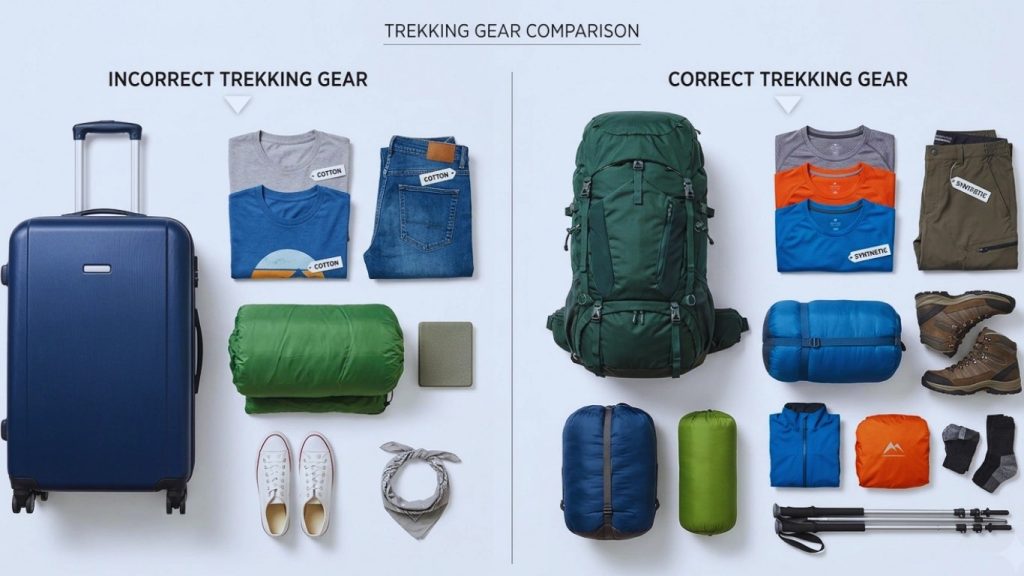
Leaving some room in your luggage can also be worthwhile. Nepal offers a wide range of handicrafts, textiles, artwork, souvenirs, and locally made products, and travelers may want space to bring something home. Keeping your suitcase slightly below its maximum capacity before departure can therefore make returning with meaningful souvenirs much easier.
Be prepared for the realities of traveling in Nepal
Nepal’s appeal comes partly from its variety, but that variety means travelers should expect conditions to differ from what they are accustomed to at home. A trip may involve everything from modern hotels and established tourist areas to rural roads, traditional villages and mountain trails, depending on the itinerary. There may be long walking days, uneven stone paths, busy streets, changing temperatures, crowded heritage areas and long road journeys depending on the itinerary. Remote destinations can have fewer facilities than major tourist centers, so travelers should plan accordingly. Understanding these practical realities before departure can help visitors choose more suitable footwear, clothing and luggage.
This does not mean visitors need to travel with excessive equipment. It simply means that flexibility is one of the most useful things to pack both physically and mentally. Travelers who leave room for changing weather, different travel speeds and unexpected itinerary changes are often better prepared to enjoy the journey. A lightweight layer can handle a temperature change. Comfortable shoes can make a long sightseeing day easier. A rain cover can protect a backpack when the weather turns. A small amount of preparation can therefore have a surprisingly large effect on the overall travel experience.
Before you leave home: the final check
Before closing the suitcase, travelers can run through a final checklist:
- Passport and entry documents
- Visa or applicable entry requirements
- Flight and accommodation information
- Travel insurance
- Emergency contact information
- Bank cards and access to local currency
- Weather forecast for major destinations
- Comfortable walking footwear
- Season-appropriate clothing
- Rain and sun protection
- Personal medication and essential health items
- Phone, chargers and power bank
- Travel adapter
- Small daypack
- Copies/backups of important documents
For trekkers, add a second checklist specifically for the route, including the clothing, footwear and equipment required for the season, altitude and trail conditions.
The smart Nepal packing checklist
| Category What to consider | |
|---|---|
| 👕 Clothing | T-shirts, trousers, underwear, socks, layers, warm jacket/fleece |
| 🥾 Footwear | Comfortable walking shoes, trekking shoes where required, optional light footwear |
| 🌦️ Weather protection | Rain jacket/poncho, umbrella, backpack cover, sunscreen, sunglasses, hat |
| 🧴 Personal essentials | Toiletries, personal medication, basic first-aid supplies, tissues, sanitizer, lip balm |
| 🔌 Electronics | Smartphone, charger, power bank, travel adapter, camera equipment if needed |
| 📄 Documents & money | Passport, entry documents, insurance, accommodation details, cards, local currency |
| 🎒 Daypack | Water bottle, phone, wallet, sunscreen, rain protection, documents and daily essentials |
| 🏔️ Trekking | Thermal layers, warm socks, gloves, headwear, waterproof layers, trekking-specific equipment |
Nepal is easier to enjoy when you pack with purpose
There is no single perfect Nepal packing list because Nepal itself is not a single type of destination. The traveler exploring the temples and heritage streets of Kathmandu Valley, the visitor relaxing beside Phewa Lake in Pokhara, the wildlife traveler heading toward the Terai and the trekker walking beneath the Himalayas will all need different things. Each experience comes with its own combination of weather, terrain, activities and cultural considerations.
What they have in common is the need to prepare intelligently rather than pack excessively. Choose clothing that can adapt to changing temperatures, bring footwear you can trust, protect yourself from rain and sun, keep essential documents secure, and respect the customs of the places you visit. A thoughtful packing strategy can reduce unnecessary stress and allow travelers to move more comfortably throughout their itinerary.
Most importantly, leave room not only in your luggage but also in your plans for Nepal’s unexpected moments. A journey here can move from ancient courtyards to mountain viewpoints, from lively streets to quiet trails, often within the same itinerary. Pack light, prepare carefully, and travel respectfully, and your luggage becomes less of a burden and more of a tool for discovering Nepal.