The traditional Gaura festival, one of the most important cultural celebrations of Nepal’s Sudurpaschim region, has officially begun with the observance of Biruda Panchami.
Celebrated from the fifth day of the bright fortnight of Bhadra, the festival begins with women preparing Biruda, a sacred mixture of five types of grains and pulses. The ritual marks the beginning of several days of religious observances, folk traditions, and community celebrations across the region.
Biruda Panchami Marks the Beginning
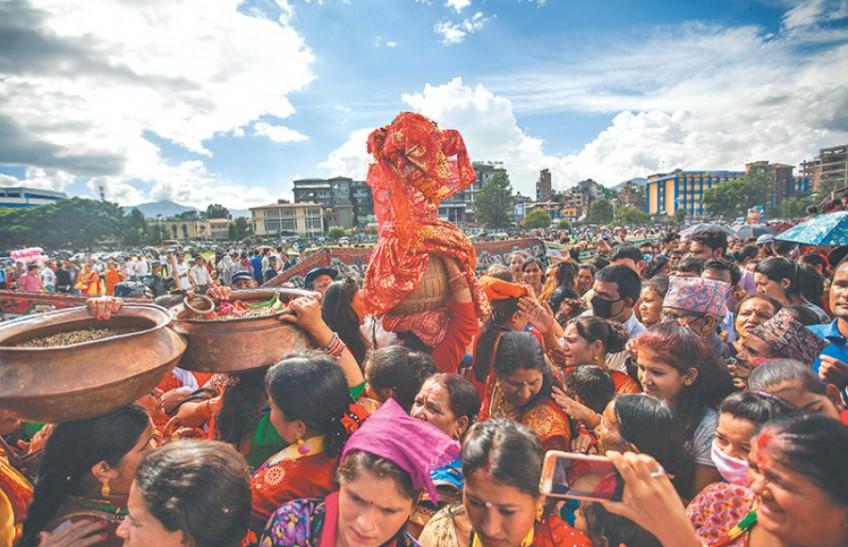
On the first day, women observing the festival soak maas (black gram), kalau, gahat, wheat, and gurus in a copper vessel. Traditionally, the vessel is coated with cow dung and decorated with dubo grass and akshata (unbroken rice) before the grains are placed inside.
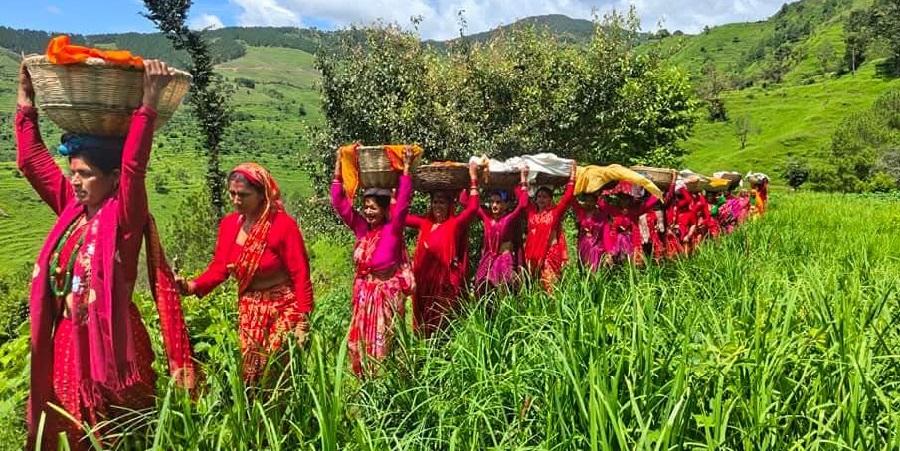
Biruda is regarded as a sacred offering of Gauri (Gaura) Devi and is used during the worship of the goddess throughout the festival. According to 78-year-old Khageshwari Bhatt of Alital, Dadeldhura, traditional preparations for Gaura begin well before Biruda Panchami. Devotees traditionally maintain a period of vegetarianism and celibacy before the festival.
Women also sing traditional Doteli folk songs and auspicious verses known as ‘phag’ while preparing the Biruda. Cultural expert Muralidhar Awasthi said the songs preserve stories and traditions associated with Gaura, including the traditional narrative of Gauri asking Mahadev to bring the grains needed for the ritual. The Biruda prepared on Panchami is washed on the sixth day, while the seventh and eighth days are considered the major days of the festival.
Gaura Worship, Folk Songs and Deuda
On the seventh day, devotees collect sau, a grass that grows alongside paddy and resembles a rice plant, from nearby fields. They use the grass to create a symbolic figure of Gaura, which they then ceremonially take into the Gauraghar, the designated place of worship.
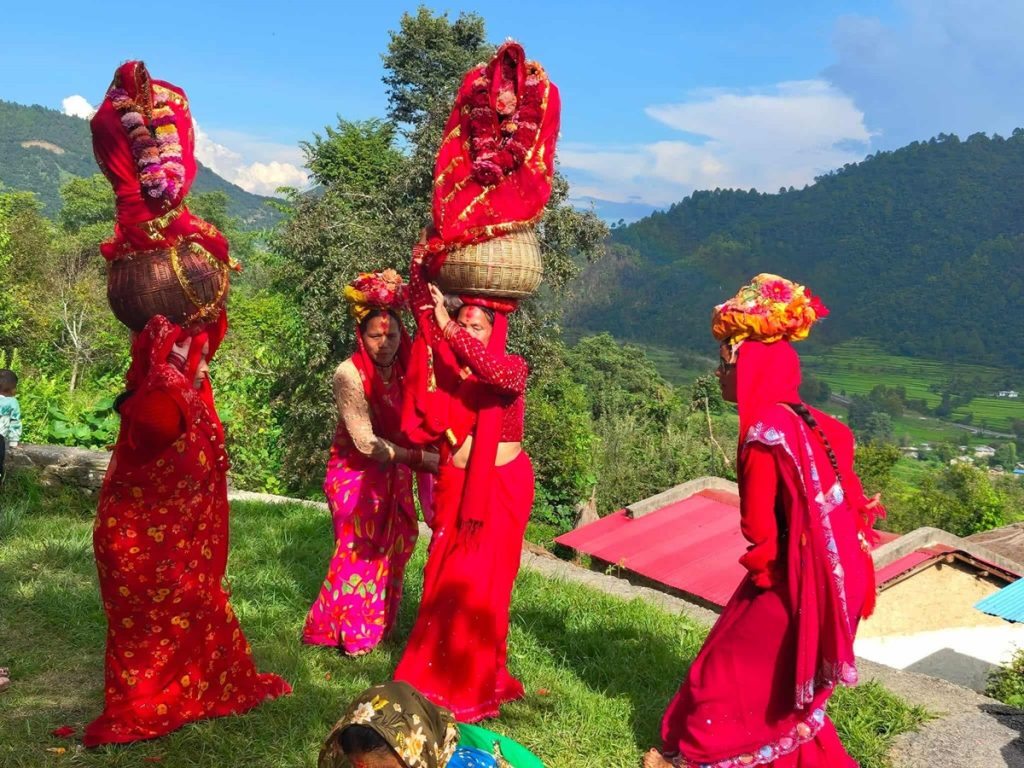
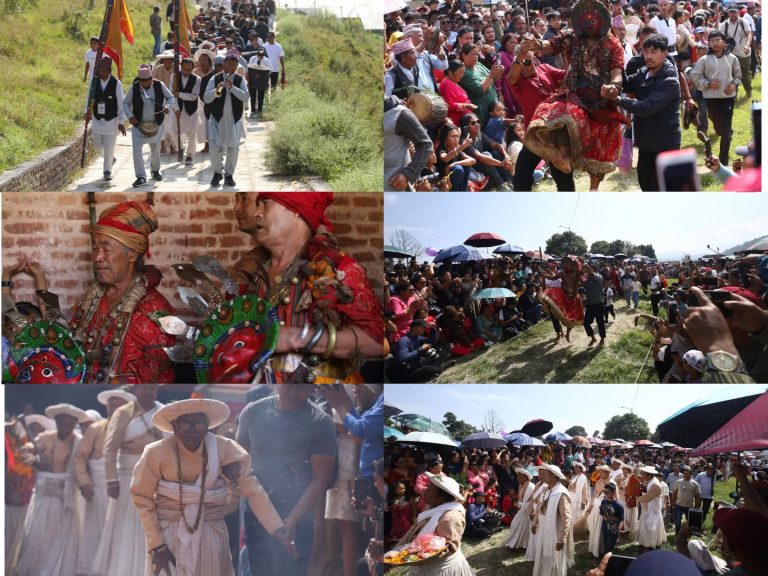
The eighth day, known as Gaurashtami, is marked by special prayers, auspicious songs and the traditional dancing of Gaura. Various forms of folk performance, including Athwali songs, Chait, Dhamari and heroic ballads associated with kings and warriors, are performed during the celebrations. The festival also marks the beginning of Deuda, a distinctive folk dance and musical tradition of Sudurpaschim, in many communities.
Gaura also holds particular significance for women, who traditionally wear dubdhago, a sacred grass thread. The practice carries a symbolic significance comparable to the sacred-thread tradition followed by men. Devotees pray for the health and longevity of their husbands and family members, along with peace, happiness, and prosperity in their households.
A Festival Rooted in Shiva-Gauri Tradition
Gaura is traditionally associated with Gauri, the divine form of Goddess Parvati and consort of Lord Shiva. The festival has been observed since ancient times through local customs and folk traditions in western Nepal. According to traditional calculations linked to the rising of the Agastya star, Gaura can fall in either the bright or dark fortnight of Bhadra.
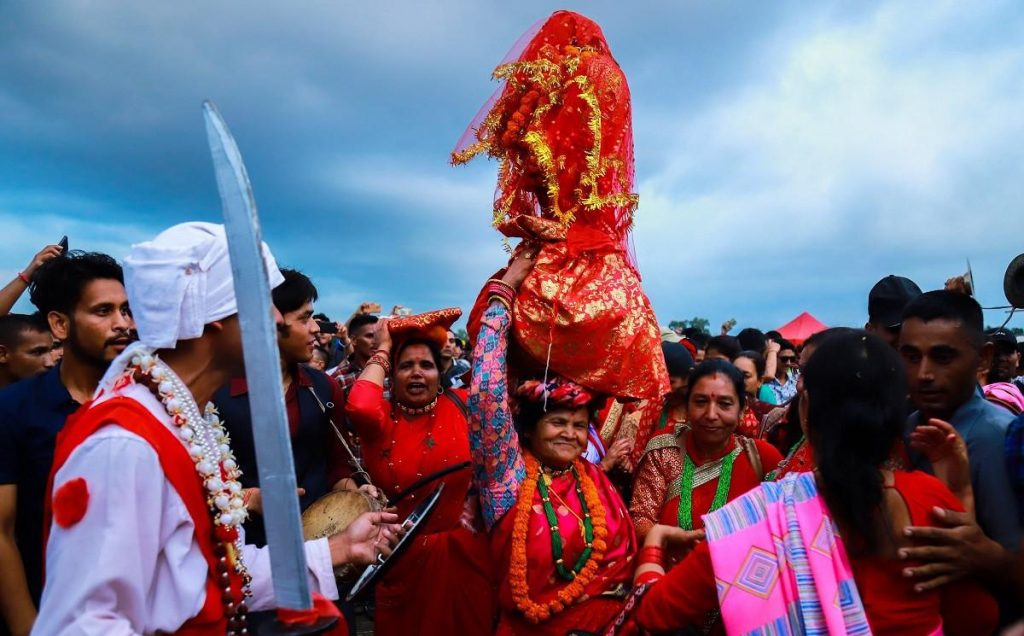
Gaura observed during the bright fortnight is known as Ujyali Gaura, while the festival celebrated during the dark fortnight is called Anyari Gaura. Both are considered sacred, although Ujyali Gaura is traditionally given greater importance. Various communities across Sudurpaschim have organized special programmes for the festival, featuring Deuda, Dusko, Dhamari, folk songs, and other traditional activities.
Gaura Festival Adds to Sudurpaschim’s Cultural Tourism Appeal
Beyond its religious importance, Gaura offers significant potential for cultural tourism in Sudurpaschim. Its distinctive rituals, traditional songs, folk dances, community gatherings, and local customs allow visitors to experience the region’s living cultural heritage.
The festival can also encourage travellers to explore Sudurpaschim’s temples, historic settlements, landscapes and traditional communities while experiencing local celebrations. With greater promotion and responsible tourism initiatives, Gaura could contribute to positioning Sudurpaschim as a destination for authentic cultural and community-based tourism.