Indonesia’s Anak Krakatau volcano erupted early Sunday, sending volcanic ash across parts of western Indonesia and forcing the temporary suspension of flight operations at Jakarta’s Soekarno Hatta International Airport. The eruption, which occurred in the Sunda Strait between Java and Sumatra, disrupted 209 flight movements and affected about 22,800 passengers, while aviation authorities coordinated with airlines, airport operators and meteorological agencies to assess the impact of the ash on air travel. No casualties or evacuation orders were reported, but authorities urged residents, visitors and travelers to follow safety instructions and monitor the latest updates.
Volcanic Eruption Forces Jakarta Airport To Suspend Flights
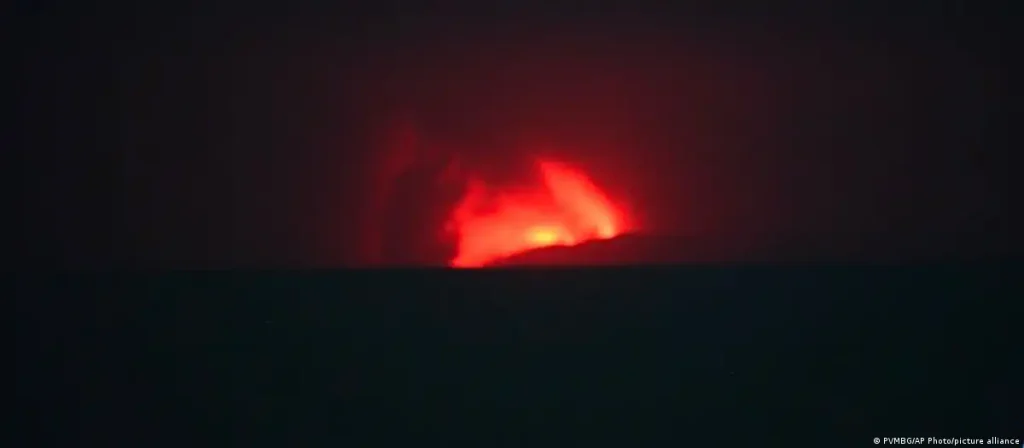
Indonesia’s Geological Agency said Anak Krakatau had shown increased activity since Friday before erupting for approximately 30 seconds at 3:53 a.m. Sunday. Closed-circuit monitoring cameras recorded lava flares at the volcano as activity increased. The volcanic island is located in the Sunda Strait, a strategically important waterway separating Indonesia’s main islands of Java and Sumatra. Authorities said the nearest settlement is more than 16 kilometers (10 miles) away, but residents and visitors were warned to remain at least 3 kilometers (1.9 miles) from the volcano’s active crater.

Soekarno Hatta International Airport temporarily suspended flight operations after volcanic ash spread into areas affecting aviation. The airport initially announced a suspension from 5:30 a.m. to 9:30 a.m. local time, while authorities continued evaluating the conditions and monitoring the movement of the ash. Indonesia’s Directorate General of Civil Aviation said it was coordinating closely with airlines, airport operators, air-navigation service providers and the meteorology agency as officials assessed the risks and worked to manage the disruption.
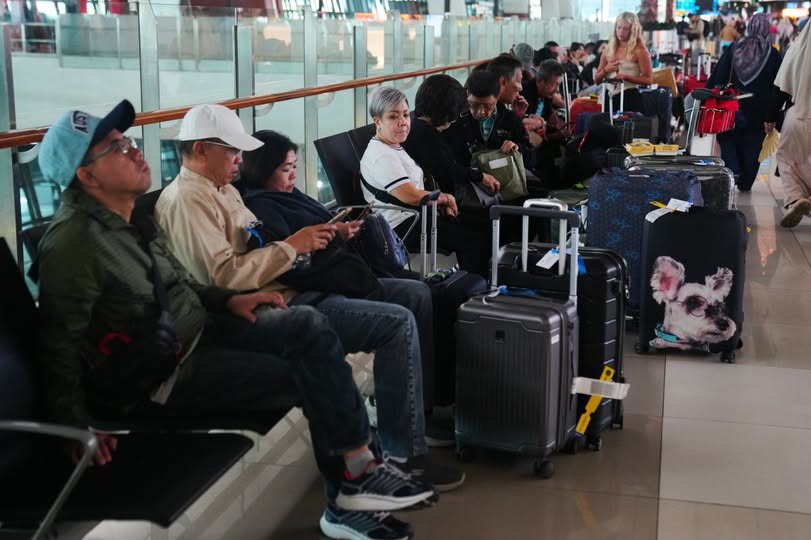
The disruption quickly affected passengers at the country’s busiest airport, where departure boards showed a growing number of canceled services. Travelers sought refunds and retrieved checked baggage while waiting for airlines to provide revised schedules. Authorities said 170 aircraft that had been parked overnight remained on airport aprons, highlighting the scale of the operational challenge facing airlines as they worked to determine when flights could safely resume.
209 Flight Movements And 22,800 Passengers Affected
The eruption disrupted a broad range of domestic and international services. Authorities said 209 flight movements involving approximately 22,800 passengers were affected on Sunday. Among domestic routes, flights involving destinations such as Lampung, Bali and Surabaya were canceled or diverted, while the busy route to Makassar in South Sulawesi was also affected.
International services faced cancellations, delays and schedule changes involving Singapore, Hong Kong, Sydney and Amsterdam, as well as Seoul in South Korea, Doha in Qatar and Kuala Lumpur in Malaysia. Singapore was reported to be the international destination with the highest number of disrupted flights. The widespread impact demonstrated how volcanic activity at a site outside Jakarta can quickly affect one of Indonesia’s most important aviation hubs and create delays that extend beyond the immediate area of the eruption.
Lukman F. Laisa, Director General of Civil Aviation at Indonesia’s Ministry of Transportation, said safety remained the priority in every operational decision. He warned that the initial disruption could produce cascading effects across airline schedules, including aircraft rotations, fleet availability and terminal capacity, as carriers attempt to restore normal operations. Travelers were advised to check directly with their airlines for the latest flight information and to avoid going to the airport unless necessary while disruptions continued.
Ash Clouds Spread Across Java And Sumatra
Indonesia’s volcanology authorities and the Darwin Volcanic Ash Advisory Centre in Australia identified two major ash clouds using satellite imagery. One plume rose to approximately 20,000 feet (6,100 meters) and moved northeastward, affecting areas including Jakarta, Banten and West Java as well as surrounding waters. A second ash cloud reached approximately 50,000 feet (15,200 meters) and moved westward and northwestward, covering parts of Banten, Lampung and Bengkulu, the southern Sunda Strait and portions of the Indian Ocean west of Sumatra.
The movement of volcanic ash was particularly significant for aviation because ash clouds can interfere with aircraft operations and create safety risks for aircraft engines and other critical systems. Authorities therefore continued to monitor the location and movement of the plumes while coordinating with aviation operators. The eruption also raised concerns beyond air travel, although authorities reported no immediate evacuation order and no casualties from the latest event. Reuters reported that the eruption also led to disruptions involving schools and fishing activities in affected areas, while officials advised residents to take precautions against ash exposure.
The latest eruption follows a period of heightened activity at Anak Krakatau. The volcano began showing increased activity before the latest eruption, with authorities closely monitoring its seismic and eruptive behavior. Despite the renewed activity, officials continued to assess the situation and maintain restrictions around the active crater rather than ordering a broader evacuation.
Anak Krakatau’s History Keeps Volcano Under Close Watch
Anak Krakatau, whose name means “Child of Krakatau,” emerged from the remains of the famous Krakatau volcano after the catastrophic 1883 eruption, one of the most powerful volcanic events in recorded history. The original eruption destroyed much of the Krakatau island and generated enormous tsunamis, while its atmospheric effects were felt far beyond Indonesia. Anak Krakatau later emerged in the same volcanic region and has remained an active and closely monitored volcano.
The volcano was also responsible for a deadly disaster in December 2018, when an eruption caused part of its southwestern flank to collapse into the sea. The resulting underwater landslide displaced a large volume of water and triggered a tsunami that struck coastal areas of Java and Sumatra, killing at least 430 people. The 2018 event demonstrated the particular danger posed by Anak Krakatau because a volcanic eruption does not necessarily need to produce a massive explosive event to generate a destructive tsunami.

Anak Krakatau has remained at Level III, the second-highest alert level on Indonesia’s four-level volcanic warning system, due to the heightened alert associated with its continuing activity. The island is also substantially smaller than it was before the 2018 collapse. Its location between Java and Sumatra, combined with its history of eruptions and flank instability, means that authorities continue to maintain close monitoring of the volcano and surrounding waters.
For now, Indonesian authorities are focused on monitoring the eruption, tracking the movement of volcanic ash and managing its effects on aviation and communities in western Indonesia. Airlines and passengers face the possibility of further schedule changes as officials assess conditions, while travelers have been urged to rely on updated information from airlines and authorities before heading to affected airports.