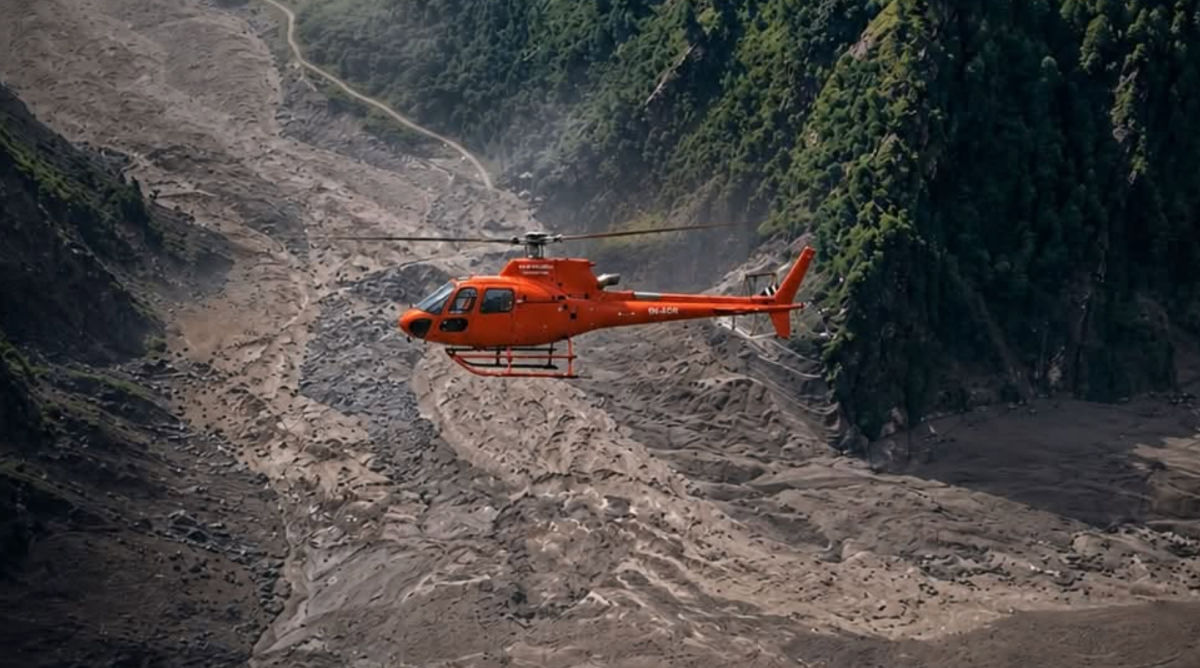
Private helicopter operators deployed for rescue and relief operations in flood hit Rasuwa are charging US$1,800 per flight hour, around 28% below their normal rate of approximately US$2,500. The reduced rate follows an agreement between the Airlines Operators Association of Nepal (AOAN) and the National Disaster Risk Reduction and Management Authority (NDRRMA) for providing helicopter services during disasters. Under the arrangement, private operators are continuing to make their aircraft available for emergency missions while charging a lower rate than they normally would for commercial flights.
The emergency rate represents a reduction of US$700 per flight hour, bringing the cost to approximately Rs 273,600 per hour based on the figures provided. Operators are being paid according to the actual flying time of each helicopter used for rescue and relief missions, rather than receiving a fixed amount for making an aircraft available. They submit bills based on the hours their helicopters have actually flown, with payment calculated at the agreed emergency rate. The arrangement provides authorities with a standardized system for using private helicopter services while keeping the cost of emergency flights below the normal commercial charge.

Helicopters Mobilized For Rasuwa Rescue
Private helicopter operators have been mobilized to support rescue and relief operations in flood affected Rasuwa, where difficult terrain can make access to affected communities challenging during a disaster. Their aircraft are being used as part of the wider emergency response, providing authorities with additional air capacity when ground-based access is difficult or disrupted. The availability of private helicopters is particularly important in mountainous areas, where damaged roads and difficult terrain can delay the movement of rescue teams and relief assistance.
The agreement between AOAN and NDRRMA allows these operators to provide services under a predetermined disaster response rate. Instead of applying their usual commercial charge of around US$2,500 per hour, participating companies are charging US$1,800 for flights covered by the arrangement. The system also establishes how operators will document and claim payment for the emergency services they provide, with the final amount determined by the actual flying time recorded for each mission.
Operators Prioritize Emergency Response
Murali Dhar Joshi, general secretary of AOAN, said private helicopter operators are supporting the emergency response at a time when rescue and relief operations remain the priority. He said the reduced rate reflects the responsibility of operators to assist communities affected by the disaster rather than treating the emergency as a commercial opportunity. According to Joshi, the operators have agreed to work at the lower rate while continuing to provide aircraft and crews for the response.
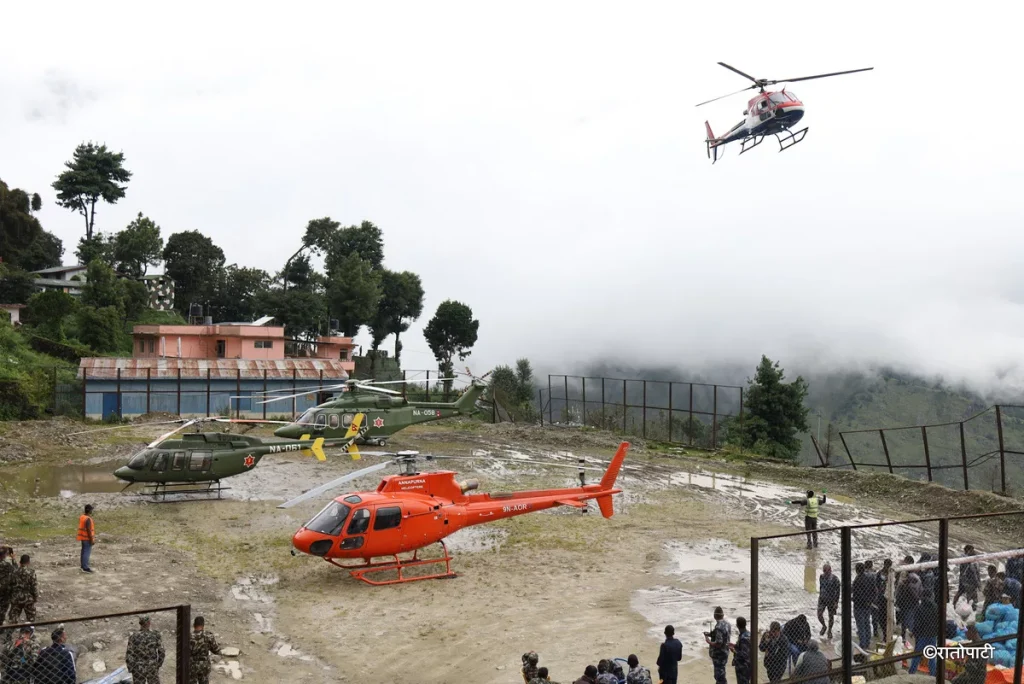
“During a disaster, the issue is not about making a profit. It is our responsibility to support the response,” Joshi said. He added, however, that helicopter operations still involve unavoidable expenses, including pilot costs and other operational requirements. The agreed rate therefore allows operators to contribute to the rescue effort while receiving payment for the essential costs associated with operating their aircraft during emergency missions.
Emergency Rate Remains Below Normal Charge
The US$1,800 per hour emergency rate is significantly lower than the approximately US$2,500 normally charged by private helicopter operators. The difference amounts to US$700 for every flight hour, meaning the government can access private helicopter services at a substantially reduced rate during the disaster response. The reduction becomes more significant when helicopters are required to conduct multiple flights or remain involved in rescue and relief operations for extended periods.
Despite the lower charge, operators continue to incur the costs associated with keeping helicopters and crews operational. Flights require pilots, aircraft maintenance, fuel and other operational resources, while emergency missions may also require rapid deployment and repeated flights to affected locations. The agreed rate is therefore intended to balance the need for affordable emergency aviation services with the basic operating costs faced by private helicopter companies.

Payment Based On Actual Flight Hours
Under the agreement, helicopter companies are compensated based on the actual flying time recorded during rescue and relief missions. Operators submit their bills after documenting the hours flown, allowing authorities to calculate the payment using the agreed US$1,800 hourly rate. This means the amount paid to each operator corresponds to the actual use of its helicopter rather than being based on a predetermined number of hours.
The payment mechanism also provides a common framework for coordination between private helicopter operators and disaster-management authorities. With the emergency rate agreed in advance, operators can focus on carrying out assigned rescue and relief flights without applying different commercial rates to individual missions. Authorities, meanwhile, have a defined basis for calculating and processing payments for private helicopter services used during the response.