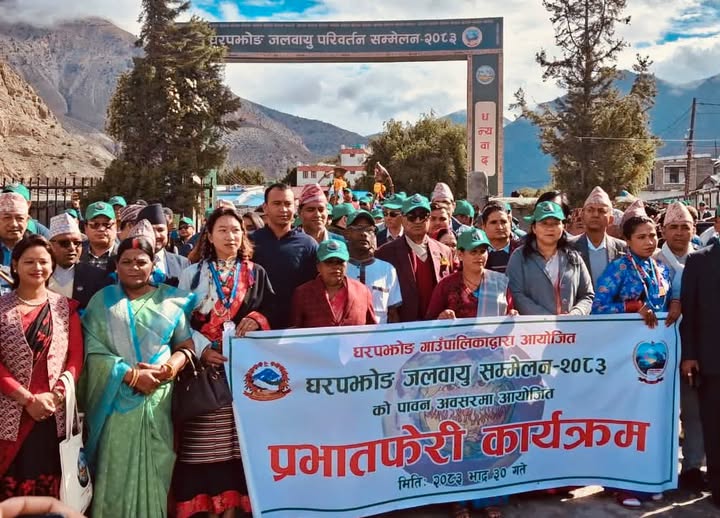
The Gharapajhong Climate Change Conference 2026 has opened in Mustang, drawing together over 2,000 delegates and guests from throughout Nepal to discuss climate change, local resilience and the escalating challenges confronting mountain communities.
Hosted by Gharapajhong Rural Municipality, the two day conference is reviewing how climate change is affecting Nepal’s Himalayan, hill and Tarai regions, with tourism standing among the sectors increasingly vulnerable to environmental risks. The event has transformed Mustang into a national stage where local governments can share concerns and explore practical responses to a shifting climate. The conference was inaugurated Tuesday by Agriculture, Forest and Environment Minister Gita Chaudhary at the Jomsom Covered Hall, after representatives from across the country had arrived.
By Monday evening, representatives from 421 local governments and 36 District Coordination Committees had made their way to Mustang, making the event one of the largest gatherings the area has hosted in recent times. Their presence has also spurred activity for local hotels, food providers and community based services, tying the national conference directly to the destination’s local economy. Communities throughout Gharapajhong are backing the event, with local organizations taking an active part in welcoming and assisting visitors.

Thousands Reach Mustang As Local Hospitality Sector Gears Up
More than 2,000 guests, among them representatives from metropolitan cities, sub metropolitan cities, municipalities and rural municipalities spanning all seven provinces, arrived in Mustang ahead of the conference. Local hotels have been assigned to provide lodging, while community groups have been mobilized to handle food and hospitality arrangements for the duration of the event. The influx of delegates has created added demand for accommodation and related services at a time when Mustang is already known for its expanding visitor economy. These arrangements show the ability of local businesses and community organizations to host large scale gatherings in a mountain destination.
As Gharapajhong Rural Municipality Vice Chairperson Jamuna Thakali explained, women’s groups are managing breakfast, lunch and snacks at the conference venue, while evening meals and accommodation are being organized through designated local hotels. Youth clubs, village communities and other local organizations have likewise been mobilized to help coordinate the event and ensure visitors receive essential services during their stay. The engagement of these groups has spread the gathering’s benefits beyond the conference venue, enabling local residents to take part directly in the event’s hospitality operations. It also underscores the part community-based participation can play in supporting organized events in remote tourism destinations.
Mustang Displays Its Culture While Gearing Up For A Major Gathering
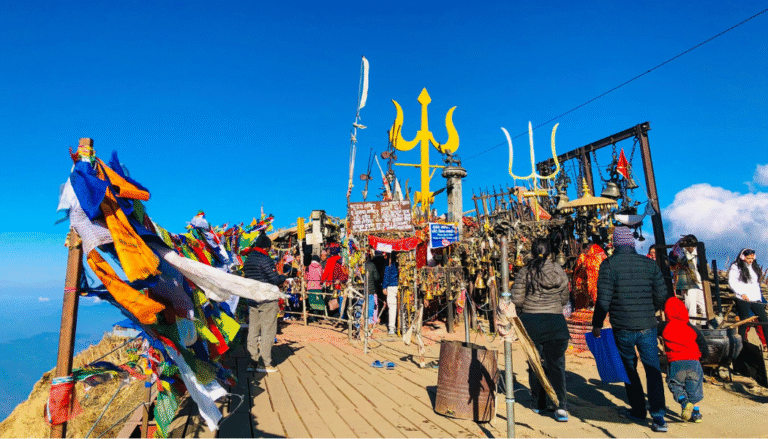
Gharapajhong Rural Municipality has carried out extensive preparations to welcome delegates and lend the conference a strong local identity. Streets and settlements throughout all five wards have been adorned with traditional art, cultural elements and colorful flags, setting a distinctive scene for visitors arriving in Mustang. The municipality has also put up streetlights along major highways and internal roads, enhancing the look of settlements and helping to foster a more welcoming atmosphere for the large gathering.
These preparations have woven local cultural identity into the event while enabling visiting representatives to experience aspects of community life in Mustang. The municipality has also arranged essential services for the incoming visitors, including health services, drinking water, internet and electricity, as well as parking and traffic management measures.
Volunteer health workers have been assigned to assist guests, and the Jomsom Covered Hall has been outfitted with a stage, sound system, banners and other facilities needed for the program. Such preparations matter greatly for a large gathering in a Himalayan destination, where transportation, communications and basic services demand careful coordination. This coordinated effort has united local authorities, community groups and service providers to handle the practical requirements of hosting visitors from across Nepal.
Climate Crisis Puts Mountain Tourism And Communities Under Spotlight
The conference is paying particular attention to the increasingly severe effects of climate change across Nepal’s mountains, hills and Tarai. Discussions are centered on curbing the impacts linked to rising greenhouse gas emissions, bolstering climate adaptation and assessing the risks that climate change poses to local governments and communities. Representatives from more than a dozen local levels are set to speak about the consequences already being felt in various parts of the country, bringing local experiences into the national conversation.
The aim is to encourage local governments to weigh climate responses according to the conditions and vulnerabilities of their own areas. Tourism is among the sectors specifically identified as being affected by the climate crisis, along with agriculture, livestock, education, health, infrastructure and the environment. For Mustang, where natural landscapes, mountain conditions and local communities are tightly linked to the visitor economy, shifts in the climate carry broader implications for the destination’s future.
The conference thus offers an opportunity to explore how local authorities can reinforce adaptation measures while safeguarding economic activities that rely on the region’s natural and cultural resources. Discussions about climate impacts also put greater emphasis on preparing communities and destinations for environmental risks that could threaten livelihoods and development.

Mustang Turns Climate Conference Into Platform For Local Action
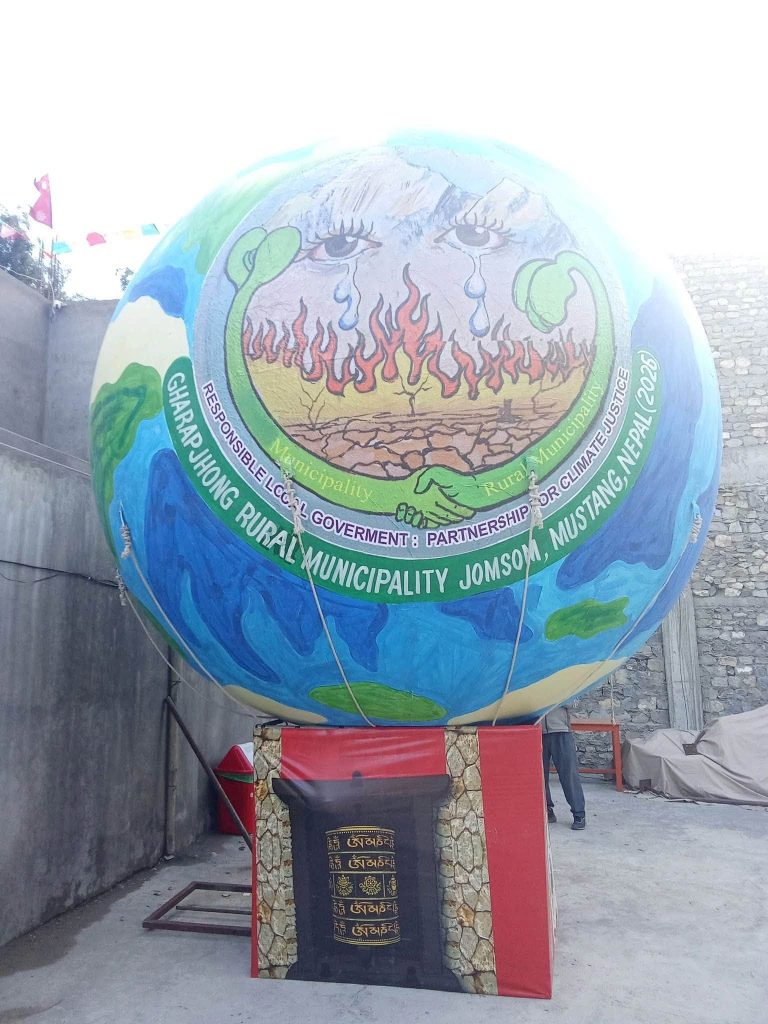
A striking visual centerpiece at the conference venue is a 28 foot high globe depicting a crying Earth, intended to raise public awareness about the consequences of climate change. The conference is also showcasing Mustang’s agricultural products through more than 50 stalls, giving local producers a chance to present their goods to the large gathering of representatives and guests. The exhibition lends a local economic dimension to the event by linking discussions of environmental challenges with the livelihoods and production systems of Mustang’s communities. It also offers visitors a chance to view locally made products while taking part in the broader conference program.
The two day conference will end with the issuance of a Climate Declaration 2083, uniting local governments from Mustang around climate action and climate justice. The declaration is expected to set future priorities and adaptation measures for local governments as they tackle the escalating climate crisis, while the conference will examine various approaches to reducing vulnerability and boosting local preparedness.
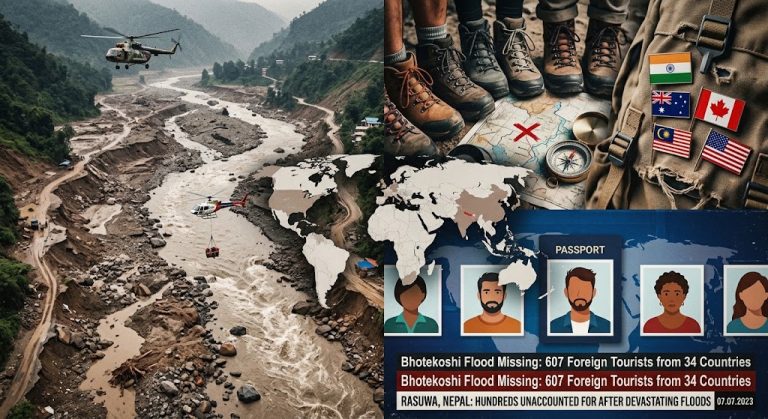
The event will also assess the human and physical damage caused by the Rasuwa floods on Aug. 26, linking the discussions in Mustang to recent disaster experiences in Nepal. By gathering climate policy, local government action, community participation and the concerns of vulnerable sectors into a single forum, the conference is establishing Mustang as a platform for a wider national conversation on climate resilience.