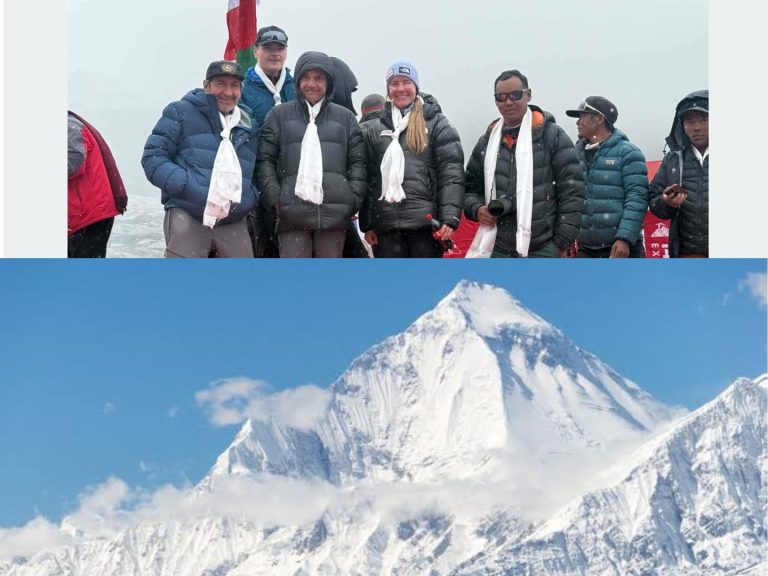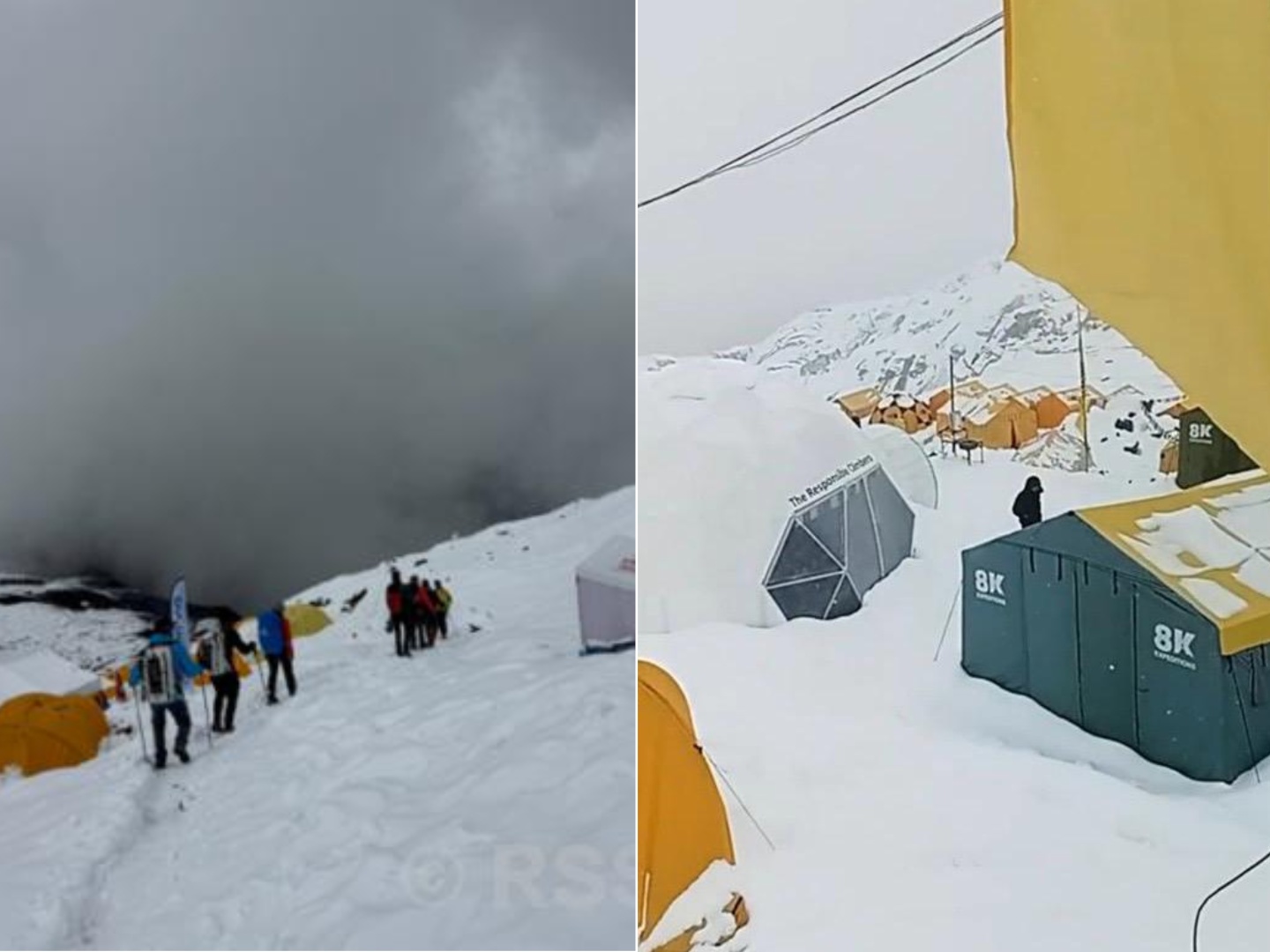
Heavy snowfall and persistent rainfall have disrupted the autumn climbing season on Mount Manaslu, forcing some climbers to abandon their expedition plans and return from the route after waiting for favorable weather conditions for nearly two weeks. The unusual weather has created difficult and potentially risky conditions across the Manaslu region, with heavy snow accumulating along the climbing route and at higher camps. Local authorities and tourism entrepreneurs say a number of climbers have already started returning after unfavorable weather showed little sign of improvement.
Persistent Weather Disrupts Manaslu Expeditions
Karma Chhewang Lama, ward chairperson of Chumnubri Rural Municipality–1, Samagaun, said climbers had waited for around two weeks hoping for the weather to improve, but continuous rain and snowfall had made it increasingly difficult to continue their expeditions. He said the Manaslu area has received unusually heavy snowfall, with around five feet of snow reported in some areas. The situation has become particularly challenging at higher elevations, where snow accumulation is significantly greater.

Lama said such persistent rainfall and snowfall is unusual for the region, where rainfall during this period has generally been limited in previous years. With authorities also urging people to remain alert amid the possibility of continued adverse weather, some climbers have decided to return rather than take additional risks. Local representatives say those who have already left are unlikely to return for another summit attempt during the current autumn season, even if the weather improves later.
Heavy Snow Covers Manaslu Camps
Local tourism entrepreneurs say the scale of this year’s snowfall is far greater than what they have experienced in recent years. Prabal Lama, a local tourism entrepreneur, said continuous rainfall has affected the Manaslu area for nearly two weeks and that such conditions have not been witnessed during the years since the region began receiving regular mountaineering expeditions. He said the persistent rain has been accompanied by heavy snowfall across the higher sections of the mountain.
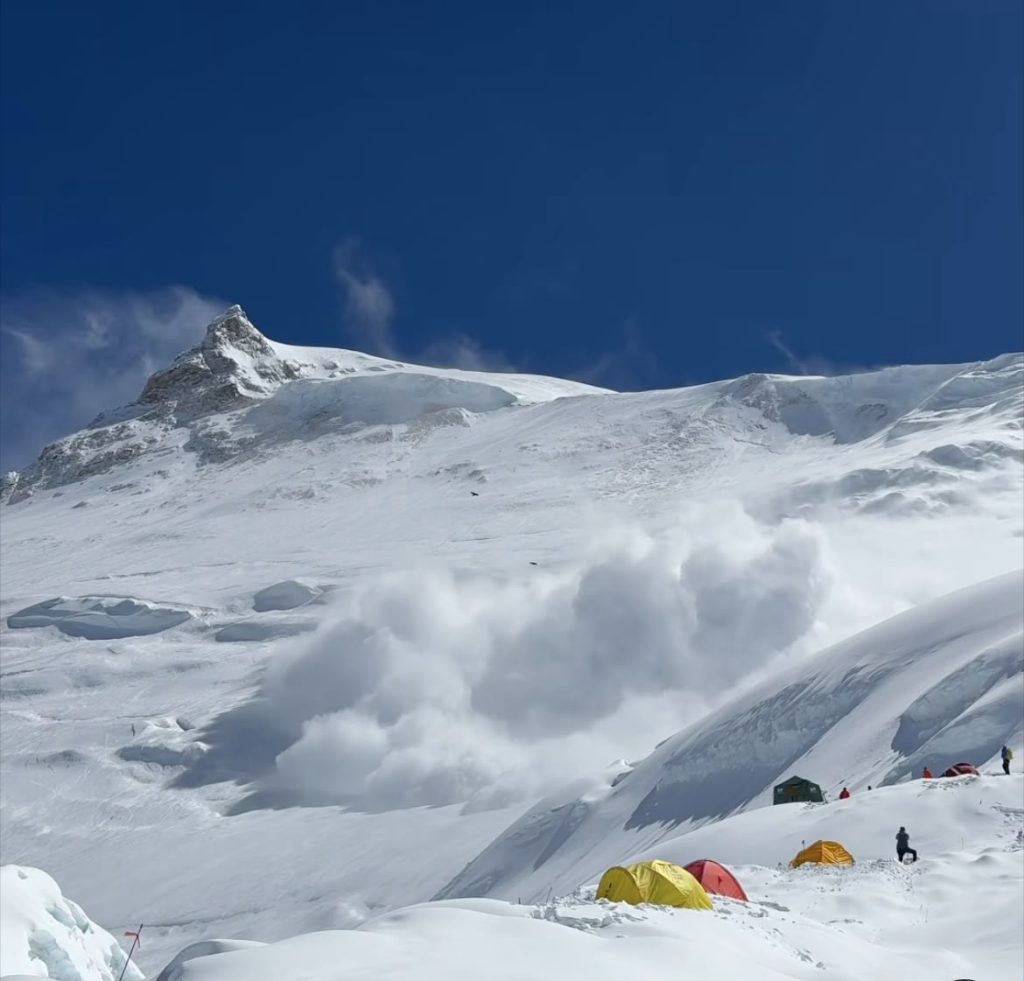
According to Lama, around three feet of snow has accumulated at Manaslu Base Camp, while the snowfall has been considerably heavier at higher camps. Camps I, II and III are reportedly covered by around seven to eight feet of snow in some sections. The heavy accumulation has increased the risks for expedition teams and made movement along the climbing route more difficult, prompting some climbers to withdraw after assessing the conditions.
Around 10 Percent of Climbers Reportedly Return
Despite the difficult weather, a large number of climbers and expedition staff remain in the Manaslu region, waiting for a possible improvement in conditions. Mingmar Chhiring Lama, a hotel entrepreneur from Samagaun, said climbers have returned in previous years when weather conditions prevented successful attempts, but the number returning this season appears comparatively higher.
He estimated that around 10 percent of the climbers may have already returned because of the prolonged unfavorable weather. The situation is also being closely watched by local tourism businesses, which rely heavily on the autumn mountaineering season. Expeditions bring climbers, guides, porters and support workers to the region and generate business for hotels, teahouses, transport operators and other tourism-related services in and around Samagaun.

Nearly 500 Climbers Receive Manaslu Permits
At 8,163 meters, Mount Manaslu is one of Nepal’s eight-thousanders and a major attraction for international mountaineers during the autumn season. Around 500 climbers have received permits to attempt the mountain this season, underlining its importance to Nepal’s high-altitude adventure tourism sector. Last year, 493 climbers from 67 countries, including 366 men and 127 women, received permits to climb Manaslu through 41 expedition groups. The government collected around Rs 224.814 million in climbing permit revenue from the mountain during the previous season.
The current weather has created uncertainty for expedition teams still in the region, with climbers and support teams closely monitoring conditions before deciding whether to proceed. The final outcome of the season will depend largely on whether weather and climbing conditions improve sufficiently to allow safe movement toward the higher camps and summit route.